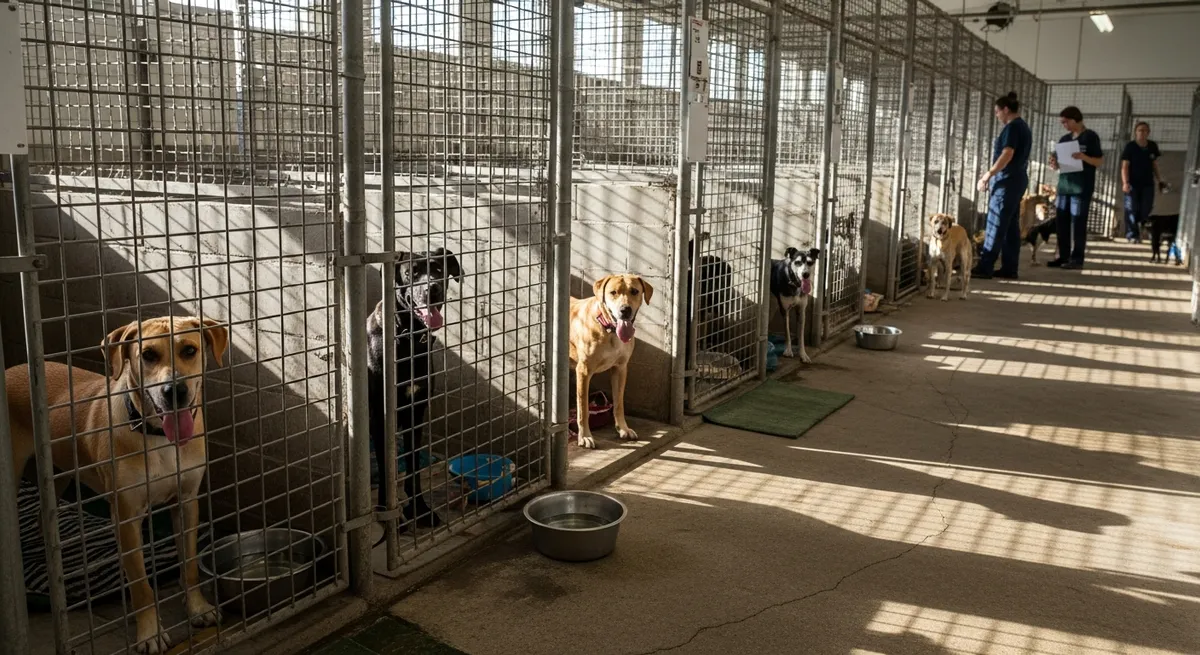
If you have ever checked an adoption site in March and again in July, you have probably noticed something striking: the number of animals looking for homes seems to explode over the summer. It is not your imagination, and it is not because people suddenly stop caring. Summer is, predictably and every single year, the season when animal shelters fill to capacity and beyond. Understanding why is the first step to helping fix it.
There is no single cause. It is several pressures landing at the same time.
1. Kitten season — the biggest driver by far
The largest reason shelters overflow in summer is biology. Cats breed seasonally, and warm weather with long daylight hours triggers a massive wave of breeding. The result is litter after litter of kittens — born to owned cats who were never spayed, to strays, and to community cats — all arriving within a few short months. A single unspayed female and her offspring can produce a staggering number of cats in just a few years.
We go deep on this in what is kitten season and why does it matter, but the short version is: from roughly spring through fall, shelters receive a flood of neonatal kittens that require round-the-clock bottle care they cannot provide in-house. That is why foster homes are so critical right now.
2. Stray intake climbs
More animals are simply outside in summer. Doors and windows are open, pets spend more time in yards, and curious animals roam farther in good weather. More roaming means more lost pets, and more lost pets means more strays arriving at the shelter. This overlaps with another problem we cover in why more pets go missing during summer — fireworks around the Fourth of July send a spike of panicked, bolting dogs into shelters every single year.
3. Moving season and life changes
Summer is the most common time for people to move. Leases turn over, families relocate for jobs, college students move out. Some of those transitions end badly for pets — a new apartment with breed restrictions, a no-pets policy, or a landlord who says no. Heartbreaking surrenders cluster in these months as a result. (If you are facing a move, a documented, vaccinated pet with organized records is far easier to get approved in pet-friendly housing — more on that below.)
4. Vacation-driven surrenders and abandonment
Travel season collides with pet ownership. Some people who did not plan for boarding or a sitter make a desperate, last-minute decision to surrender. In the worst cases, animals are simply left behind. This is one of many reasons we encourage planning ahead in boarding vs pet sitters: which is better? and preparing your pet for vacation season.
5. The "free puppies/kittens" cycle
Unplanned litters from unaltered family pets often get given away casually in summer. Many of those animals — taken on impulse, without preparation — end up surrendered weeks or months later when reality sets in. It feeds the same cycle from a different direction.
Why this becomes a crisis, not just a busy season
A shelter has a fixed number of kennels. When intake outpaces adoptions for months on end, the math becomes brutal. Length of stay climbs, stress-related illness spreads in crowded conditions, and staff face agonizing capacity decisions. This is the heart of why summer adoptions save lives: every animal that goes home opens a slot for one that just arrived.
What actually breaks the cycle
The pressures above are real, but they are not hopeless. The proven levers are:
- Spay/neuter and TNR, which cut off the supply of unplanned litters at the source.
- Fostering, which expands a shelter's effective capacity beyond its physical walls.
- Adoption, which keeps animals flowing out the front door as fast as they come in the back.
- Keeping pets in their homes, by helping owners solve the housing, cost, and behavior problems that lead to surrender.
You will find the full action list in the best ways to help shelter pets this summer.
The records angle most people miss
A surprising amount of summer surrender traces back to friction — a pet whose vaccine history is unknown, whose records are scattered, who is hard to re-home or hard to get approved in new housing. When shelters run PawMates Pro, each animal carries a complete, connected profile, and adopters leave with a real lifetime medical record tied to a durable PawMates Pet ID rather than a chip number alone. That continuity makes pets easier to place, easier to keep, and easier to reunite if they go missing — all of which eases the very pressure that fills shelters in the first place.
The bottom line
Shelters fill up in summer because biology, weather, and the human calendar all peak at once. None of it is a moral failing on the part of shelters or, usually, of owners — it is a system under predictable, seasonal strain. And because it is predictable, it is solvable, one foster, one adoption, one spay surgery at a time.
Frequently asked questions
Why are there so many kittens in summer shelters?
Cats breed seasonally in response to warmth and long daylight, producing waves of litters from spring through fall. Neonatal kittens need round-the-clock care shelters cannot provide, which is why foster homes are so urgently needed.
Do more pets really get surrendered in summer?
Yes. Summer is peak moving season and peak travel season, and both drive a cluster of surrenders from housing changes, no-pet policies, and last-minute vacation decisions.
Why do strays increase in warm weather?
Pets spend more time outdoors, doors and windows stay open, and summer fireworks panic dogs into bolting. More animals out and about means more get lost and end up at the shelter.
How can I help reduce shelter overcrowding?
Spay and neuter your pets, support TNR, foster or adopt, and help friends keep pets in their homes through housing or behavior challenges. Every animal placed opens a kennel for the next.
Related reading
- What is kitten season and why does it matter? — the biology behind the flood.
- The best ways to help shelter pets this summer — the full action list.
- Why summer is a great time to adopt a pet — how you can be part of the solution.
For more adoption and pet-care guides, browse the PawMates adopter blog.