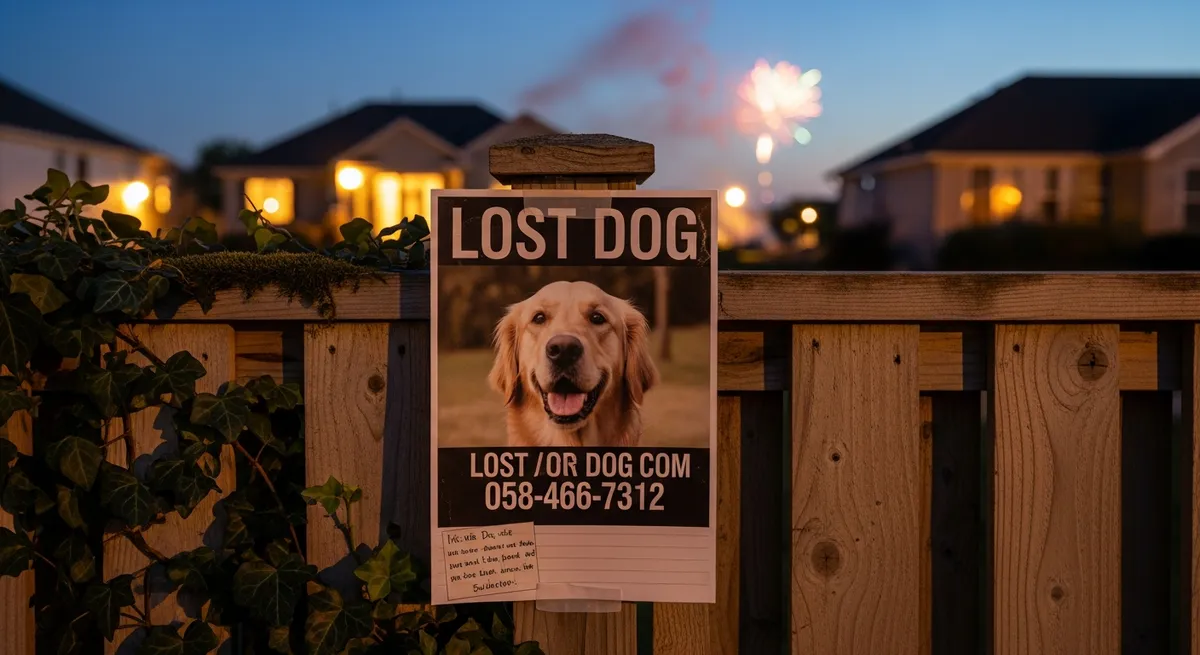
Animal shelters and lost-pet hotlines have a grim seasonal rhythm: the busiest day of the entire year for lost dogs is July 5th — the morning after Independence Day. Across the warm months, intake of strays climbs, "found pet" posts flood neighborhood apps, and the number of frantic owners papering telephone poles with photos spikes. Summer, the season we most want to spend outside with our animals, is also the season they are most likely to slip away from us.
It is not bad luck, and it is not bad owners. It is a predictable collision of fireworks, open doors, travel, and longer days outdoors. Once you understand why summer is so dangerous for keeping pets where they belong, you can get ahead of it — and dramatically cut the odds that you will ever be the one searching.
Why summer drives pets to bolt
A few specific summer realities stack the deck against you:
- Fireworks and thunderstorms. This is the giant one. The percussive booms of fireworks — and the rolling crash of summer thunderstorms — trigger genuine panic in millions of animals. A dog in full fight-or-flight will scale a six-foot fence, shatter a screen door, or break a leash he has worn calmly for years. Cats bolt under the deck and keep running.
- Open doors and windows. Summer is the season of propped doors, barbecues, house guests, screen windows pushed out by a determined paw, and kids running in and out. Every one of those is an exit a curious or startled pet can take.
- Travel and unfamiliar places. A pet in a new yard, campsite, rest stop, or vacation rental has no mental map home. If they slip away there, they cannot navigate back the way they might from your own neighborhood. (If you travel this summer, our guides to the ultimate summer dog travel guide and summer camping with dogs cover containment in detail.)
- More time outside, more chances. Longer daylight means more walks, hikes, dog-park trips, and backyard hours. More exposure simply means more opportunities for a gate left ajar or a squirrel too tempting to ignore.
- Mating drive in unaltered pets. Intact animals roam to find mates, and warm months are peak roaming season. Spaying and neutering blunts that wandering instinct considerably.
Prevention: how to keep your pet from becoming a statistic
You cannot childproof the whole world, but you can stack the odds heavily in your favor.
1. Plan for fireworks before the boom. On the Fourth, New Year's, and during storm season, bring pets indoors well before dark, into an interior room with windows and curtains closed. Turn on a fan, the TV, or white noise to mask the bangs. Never take an anxious dog to a fireworks show. For pets with severe noise phobia, talk to your vet ahead of time about calming aids or medication — that is a veterinary conversation, not a guess.
2. Audit your exits. Walk your fence line for gaps, loose boards, and dig spots. Check that gate latches actually catch (and add a spring or carabiner so a guest cannot leave one open). Make sure window screens are secure. Use baby gates or a leash near doorways when guests are coming and going.
3. Spay or neuter. Beyond the population benefits, it meaningfully reduces the urge to roam.
4. Keep ID current — this is the make-or-break step. A flat collar with a legible tag (name + your phone number) is the fastest possible reunion: a neighbor can read it and call you in sixty seconds. Behind that visible tag, your pet needs a microchip that is registered to your current phone number. A chip nobody can trace is just a number. We cover this in depth in why every pet should be microchipped before summer travel and in the biggest misconceptions about pet microchips.
5. Train a rock-solid recall and use a long line in open areas. A reliable "come" and a 30-foot lead give you control in new environments without taking away freedom.
6. Take fresh photos. A current, clear photo of your pet (including any distinctive markings) is the single most useful thing you can hand to a shelter or post online. Snap new ones at the start of every summer.
What to do in the first 24 hours if your pet goes missing
Speed matters enormously. Most pets are found close to home and within the first day — if their people act fast and smart.
- Search immediately and call their name calmly. Frightened animals often hide nearby rather than run far. Check under decks, porches, bushes, parked cars, and garages within a few blocks. Bring a flashlight even in daytime to catch eye-shine.
- For cats especially, search at dusk and dawn and stay quiet. A panicked cat usually hunkers down within a few houses and only moves when it is dark and calm. Leave a door open or set out their litter box, a worn shirt, and food near home.
- Call and visit every nearby shelter and animal control — in person. Do not rely on a phone description; staff may not match it to the animal in front of them. Go look, and file a lost report at each one. Repeat every day or two; intakes happen constantly.
- Post online right away. Use neighborhood apps, local lost-pet Facebook groups, and Nextdoor with a clear photo, your location, and a phone number. Ask neighbors to check garages and sheds — pets get accidentally locked in.
- Have your microchip number and registry login ready. Confirm your chip registration shows your current contact info, and flag the pet as lost if your registry allows it. This is exactly the moment that a current registration earns its keep.
- Be cautious with rewards and scams. Offer a reward if you like, but never wire money or share financial details with someone who "found" your pet but cannot describe them. Always confirm with a photo or the microchip number.
Where connected pet care helps
A microchip reunion only works if the finder can get to your information — and if the record behind that chip is actually yours and up to date. This is where the modern approach differs from the old manila-folder world. When you adopt from a shelter running PawMates Pro, your pet's identity is anchored to a durable PawMates Pet ID, not just a chip number stamped on a registry that may go stale. The chip is the doorbell; the PawMates Pet ID is the home behind the door.
That matters in a crisis. A pet recovered three states from home can be looked up, and — with your consent — the treating clinic or shelter can see the lifetime medical record that travels with the animal through the PawMates and VetPetz bridge: vaccines, medications, allergies, behavioral notes. A scared, dehydrated dog found after two days in July is far better off when the vet treating him is not flying blind. It is the same instinct as a closed gate or a curtain pulled against fireworks — close the gaps before you need them.
The bottom line
Summer asks more of our pets and gives them more chances to wander. The owners who never face that 3 a.m. search are not luckier — they prepared. Lock down the fireworks plan, audit your exits, keep tags and chip registration current, and know your first-24-hours playbook cold. Do that, and you can enjoy the long, bright days with your animal exactly the way summer is meant to be enjoyed.
Frequently asked questions
What day do the most pets go missing?
July 5th, the day after Independence Day fireworks, is consistently the busiest day of the year for lost-dog reports. Storm season throughout summer drives similar spikes.
My dog isn't normally scared of anything — do I still need a fireworks plan?
Yes. Fireworks panic is instinctive and can override years of calm behavior, leading even confident dogs to bolt through fences or doors. Bring pets inside before dark and mask the noise.
What's the very first thing to do when a pet goes missing?
Search the immediate area right away — most pets hide nearby — and call or visit every local shelter and animal control in person to file a lost report. Post a clear current photo online within the first hour.
Does a microchip help if my pet runs away?
Only if it is registered to your current phone number. The chip lets a shelter or vet trace your pet to you, so confirm your registration is up to date before summer — see why every pet should be microchipped before summer travel.
How do I keep an indoor cat from slipping out in summer?
Secure window screens, use a baby gate or leash near doors during gatherings, and keep your cat in an interior room during fireworks. Make sure they are chipped and registered, since indoor cats rarely wear tags.
Related reading
- Why every pet should be microchipped before summer travel — the backstop ID that brings pets home.
- The biggest misconceptions about pet microchips — what the chip does and does not do.
- The ultimate summer dog travel guide — keeping pets contained on the road.
For more adoption and pet-care guides, browse the PawMates adopter blog.