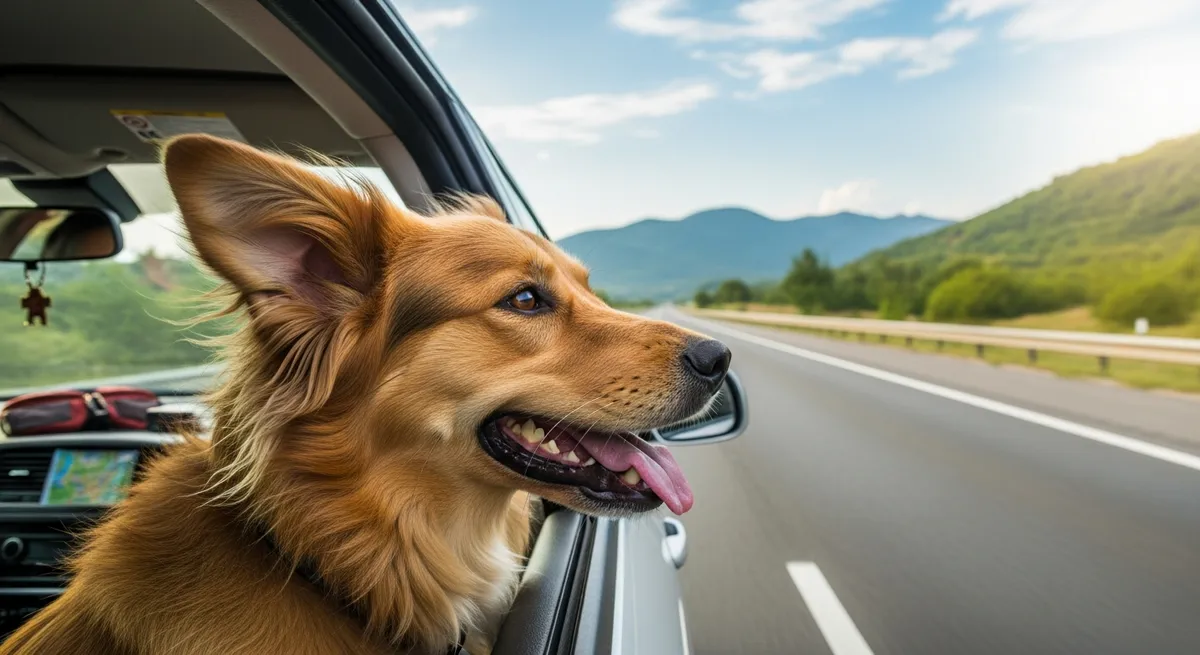
The bags are packed, the playlist is queued, and your dog is doing laps around the car because they already know something fun is happening. Summer road trips with a dog are some of the best memories you will ever make — and they go sideways faster than any other kind of travel when the temperature climbs. A trip that would be a minor headache in October can become a genuine emergency in July, simply because the margin for error shrinks when it is 95 degrees outside.
The good news: with a little planning, summer is a wonderful time to travel with a dog. This is your start-to-finish guide to doing it safely, calmly, and without the panicked mid-trip scramble that ruins so many otherwise great vacations.
Before you go: the pre-trip checklist
The best summer trips are won before you ever leave the driveway.
1. Book a vet check if anything is due. A quick wellness visit confirms your dog is healthy enough to travel, that vaccines and parasite prevention are current, and that you have refills of any medications. This is also the moment to prep for the destination — see preparing your pet for vacation season.
2. Confirm your IDs are current. A collar tag with a working phone number plus a registered microchip is your safety net if your dog bolts in an unfamiliar place. Travel is exactly when pets get lost — read why every pet should be microchipped before summer travel.
3. Gather your records. Many campgrounds, hotels, daycares, and state lines want proof of rabies vaccination. Having records in your pocket — not in a filing cabinet at home — turns a closed door into a non-issue. More on that in why updated pet records matter before you travel.
4. Do a "shakedown" drive. If your dog is not a seasoned traveler, take a few short practice drives that end somewhere fun. You want the car to predict good things, not just the vet.
Restraint: the rule people skip and shouldn't
An unrestrained dog is dangerous to everyone in the car. In a crash — or even a hard stop — a loose dog becomes a projectile, can be injured by the airbag, or can bolt into traffic the instant a door opens at the scene. A dog in your lap can also interfere with the wheel and the airbag.
Pick one of these and use it every single time:
- A crash-tested harness clipped to a seatbelt. Look for one that has actually passed crash testing, not just a "seatbelt clip" that holds a dog still on a calm drive.
- A secured crate or carrier anchored so it cannot slide or tumble. For many dogs this is the safest and least stressful option.
- A back-seat barrier for larger dogs in an SUV, ideally combined with a harness.
Whatever you choose, the back seat is safer than the front, just like it is for kids.
The heat rules are non-negotiable
Summer travel lives and dies by how you handle heat.
- Never leave your dog in a parked car. Not for "just a minute." A parked car can climb past 100 degrees in ten minutes even at a mild 78 outside, and cracking the windows barely helps. This is the single most important rule of summer travel — the full breakdown is in what happens to a pet in a hot car in 10 minutes.
- Pre-cool the cabin before loading your dog, and keep the AC reaching the back seat, not just the front.
- Plan human-and-dog stops. If you need to eat somewhere your dog cannot go, choose drive-throughs, patios that allow pets, or take turns so someone stays with the dog in the running, air-conditioned car.
- Watch for overheating even with the AC on, especially for flat-faced breeds, seniors, and overweight dogs. Heavy panting, drooling, wobbliness, or bright-red gums mean stop and cool down now.
How often to stop, and what to do at each break
Plan a real break every 2 to 4 hours. At each stop:
- Offer water (a little, often — not a gallon at once).
- Give a leashed potty and sniff break to stretch and decompress.
- Check paws if you have been walking on hot pavement; midday asphalt can burn pads in seconds.
- Never open a door without the leash already attached. Unfamiliar rest stops are prime escape territory.
Resist the urge to power through. A dog who has been crated for six straight hours is more likely to be anxious, dehydrated, and difficult at the destination.
Lodging: get the pet policy in writing
"Pet friendly" means wildly different things at different properties. Before you book:
- Confirm the pet fee, size limits, and number of pets allowed.
- Ask whether dogs can be left alone in the room (many places say no, or require a crate).
- Ask about nearby green space for walks.
- Bring your dog's own bed or blanket so the room smells familiar.
If part of your trip means leaving your dog behind for a day excursion, think through care in advance — our guide to boarding vs pet sitters walks through the tradeoffs.
Feeding, water, and tummy trouble
Travel upsets stomachs. To keep things boring (which is the goal):
- Stick to your dog's normal food. Switching brands mid-trip is a recipe for diarrhea far from home.
- Feed lightly before long drives to reduce car sickness; a fuller meal can wait until you arrive.
- Bring water from home or use bottled water for the first day or two if your dog has a sensitive gut — abrupt water changes can trigger upset.
- Pack poop bags everywhere. Cleaning up after your dog is the price of admission to staying welcome at pet-friendly places.
Anxiety and motion sickness
Some dogs love the car; others tremble, drool, or vomit. If yours struggles, talk to your vet before the trip — there are safe, effective options for both anxiety and motion sickness, and it is far better to test them at home than to discover a problem 200 miles in. A snug crate, a familiar blanket, cracking a window for fresh air, and frequent breaks all help.
A quick word on connected records
Here is the scenario every traveling pet owner dreads: your dog gets sick or hurt in a town where no one has ever met them. The emergency vet is starting from zero — no history of medications, allergies, chronic conditions, or vaccines. That lost time is dangerous.
This is exactly the gap a lifetime medical record closes. When you adopt from a shelter running PawMates Pro, your pet arrives with a real profile, not a manila folder, and that record can be shared — with your consent — with whatever clinic is treating them. It is tied to a durable PawMates Pet ID, so the history stays attached even if your phone number or microchip registry changes. The chip number is just the doorbell; the record is the house. That is the heart of connected pet care, and it is never more valuable than when you are far from home.
The night before: a calm send-off
A good night's sleep, a normal feeding schedule, a final ID and records double-check, and a packed-and-ready car make departure morning smooth. (For the full grab-and-go list, see what to pack for a road trip with your pet.) The calmer you are, the calmer your dog will be.
Frequently asked questions
Is summer a bad time to travel with my dog?
Not at all — it just demands more caution around heat. Pre-cool the car, never leave your dog in a parked vehicle, plan frequent water breaks, and avoid midday pavement, and summer can be a great travel season.
How often should I stop on a road trip with my dog?
Every 2 to 4 hours for water, a leashed potty break, and a stretch. Always attach the leash before opening any door, since rest stops are common escape spots.
Do I really need a harness or crate in the car?
Yes. An unrestrained dog can be injured or killed in a crash and endangers everyone in the car. Use a crash-tested harness or a secured crate, and keep your dog in the back seat.
What documents should I bring when traveling with my dog?
Proof of rabies and other vaccinations, your vet's contact info, and any medication details. Many hotels, campgrounds, and state lines require vaccine records, so keep them accessible.
What if my dog gets sick away from home?
Find the nearest emergency vet and, if you have a connected record, share it so they see your dog's history immediately. Having that medical record travel with your pet can save critical time.
Related reading
- What to pack for a road trip with your pet — the grab-and-go checklist.
- Why updated pet records matter before you travel — the documents that open (or close) doors.
- Never leave your pet in a hot car — the rule that matters most.
For more adoption and pet-care guides, browse the PawMates adopter blog.