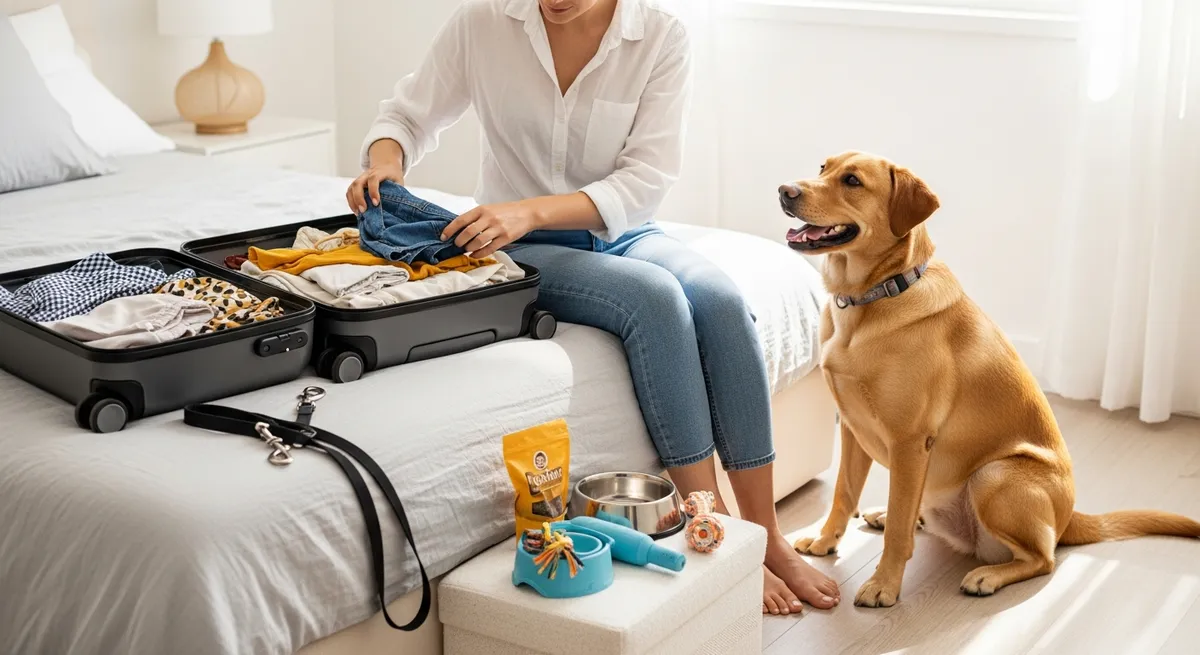
The flights are booked, the rental is paid for, and the only thing standing between you and a relaxing summer trip is the small, four-legged detail that depends on you completely. Whether your pet is coming along or staying behind, the difference between a smooth trip and a stressful one usually comes down to what you do in the two to three weeks before you leave. Vacation season is exactly when shortcuts catch up with people — so here is how to prepare your pet properly.
Start with a vet check (don't wait)
A pre-trip vet visit is the single most valuable thing you can do, and it needs lead time. Book it two to three weeks out so there is room to act on whatever the vet finds.
- Confirm vaccines are current. Boarding facilities, many sitters, campgrounds, and travel across state or national borders all have vaccination requirements. Some vaccines also need days to weeks to take full effect, so last-minute is too late.
- Refill medications with a buffer. Get enough of any chronic medication to cover the whole trip plus several extra days in case of delays. Ask for a written copy of the prescription, too.
- Discuss travel-specific needs. Motion sickness, anxiety, flea/tick and heartworm prevention for new regions, and — if you are flying or crossing borders — any required health certificate, which a vet must issue within a specific window before departure.
- Get a printed and digital copy of records. You want vaccination proof and your pet's medical summary accessible offline and online.
Update the one thing people always forget: ID
A trip is the highest-risk time for a pet to slip away — new places, open car doors, unfamiliar yards. Make sure they can get home:
1. Check the collar tag. Is it legible? Does it have a current phone number?
2. Verify the microchip registration. This is the step everyone skips. The chip itself is useless if the contact info in the registry is out of date — it is just a number until someone can connect it to a reachable owner. Log in to your registry and confirm your phone and address are current before you leave.
3. Take a current photo. A clear, recent picture of your pet makes lost-pet flyers and posts far more effective.
We cover why this matters so much in why every pet should be microchipped before summer travel — but the short version is: update the registry now, not from a hotel parking lot in a panic. Summer is also simply the season when more pets go missing, which makes this doubly important.
Prepare for the emotional side, not just the logistics
Pets feel the disruption of vacation season, whether they are traveling or being left with someone new. A little conditioning goes a long way:
- Do a meet-and-greet with your sitter, or a short trial stay at the boarding facility, so the place and person are not strangers on day one. (Not sure which to choose? See boarding vs pet sitters: which is better?.)
- Practice the carrier or crate in the weeks before, with treats and short positive sessions, so it feels safe rather than like a one-way trip to the vet.
- Keep their routine as normal as possible right up to departure — sudden changes pile stress on top of stress.
- Leave something that smells like you (an unwashed t-shirt) with the sitter or in the carrier for comfort.
- Ask your vet about anxiety support if your pet has a history of travel or separation distress. Never improvise with human medications.
Build the handoff packet
Whoever cares for your pet should not have to guess at anything. Prepare a single, clear set of instructions:
- Feeding: food brand, amount, times, and any "do not feed" list.
- Medications: name, dose, timing, and how to give it.
- Vet info: your regular vet plus the nearest 24-hour emergency clinic, with addresses and numbers.
- Emergency authorization: written permission and a spending limit for emergency care, so your sitter or facility can act fast if you are unreachable.
- Quirks and triggers: afraid of thunder? bolts at open doors? guards food? Write it down.
This is where organized records turn a stressful handoff into a thirty-second one. Pets adopted from shelters using PawMates Pro come with a structured profile — vaccines, medications, behavior notes — already assembled, and that information lives in a lifetime medical record you can share with a sitter, boarding facility, or out-of-town vet, with your consent, instead of reassembling it from memory.
The week-of checklist
- Pack medications (plus the extra days) and written instructions.
- Pack enough of their normal food so you are not switching diets mid-trip.
- Confirm reservations with your sitter or facility and re-share the emergency contacts.
- Charge and test any GPS tracker, and double-check the collar tag.
- Print and save digital copies of vaccination proof and the medical summary.
- Keep their last day calm and routine, not chaotic.
A little structure now buys you a vacation where the worst pet-related surprise is an extra-enthusiastic greeting when you get home. For the records piece specifically — the part most people underestimate — read why updated pet records matter before you travel next.
Frequently asked questions
How far before a trip should I take my pet to the vet?
Aim for two to three weeks out. That leaves time for vaccines to take effect, for medication refills, and for a required health certificate if you are flying or crossing borders, which must be issued within a specific window before departure.
Do I need a health certificate to travel with my pet?
Often, yes — most airlines and all international travel (and some interstate travel) require a recent veterinary health certificate. Rules vary widely by airline, state, and country, so check the specific requirements for your route well in advance and ask your vet.
How do I reduce my pet's travel anxiety?
Condition them gradually: practice the carrier or crate with treats, keep routines steady, bring a familiar-smelling item, and do a trial meet with any sitter or facility. For pets with a real history of distress, ask your vet about safe anxiety support — never use human medications on your own.
What information should I leave with my pet sitter?
Feeding details, medication doses and timing, your regular vet and the nearest emergency clinic, written emergency-treatment authorization with a spending limit, and a list of quirks or triggers. Sharing a current medical record makes all of this faster and reduces the chance of a costly mistake.
Related reading
- Boarding vs pet sitters: which is better? — choosing the right care while you are away.
- Why updated pet records matter before you travel — the document handoff that prevents emergencies.
- Why every pet should be microchipped before summer travel — make sure they can get home.
For more adoption and pet-care guides, browse the PawMates adopter blog.