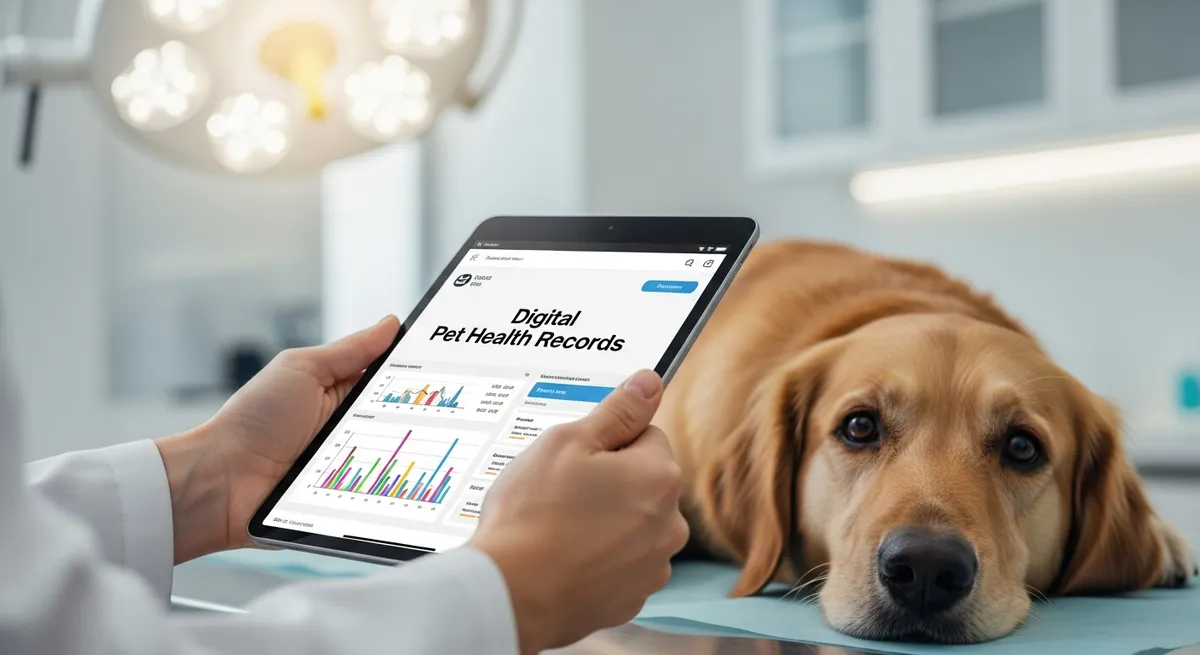
Picture the worst-case version of your summer trip. You are four hours from home when your dog suddenly will not stand up, or your cat stops eating, or there is an accident on the highway. You carry them into an emergency clinic you have never heard of, in a town you do not live in, and the vet asks the question that decides how fast they can help: "What's their medical history?" And you realize the answer is sitting in a filing cabinet, or a different clinic's system, or your memory — none of which are in the room with you.
That moment is why updated, portable pet records are not paperwork bureaucracy. They are the difference between a vet who can act immediately and one who has to start from zero on the animal you love. And travel is precisely when this gap turns dangerous.
Why records matter most when you leave town
At home, your pet's history is one phone call to your regular vet away. On the road, that safety net disappears:
- Emergency vets are strangers to your pet. An out-of-town ER has no relationship and no file. Whatever you can show them is all they have to work with.
- Time is the enemy in an emergency. Allergies, current medications, chronic conditions, and recent procedures change treatment decisions. Knowing them instantly can prevent a dangerous drug interaction or a wasted hour of guesswork.
- Proof is often required, not optional. Boarding facilities want vaccination records. Campgrounds and many hotels ask for them. Crossing state lines or borders frequently requires a health certificate and current rabies proof. Showing up without documentation can mean being turned away.
- You are distracted and stressed. Vacation is exactly when you are least likely to remember the name of that medication or the date of the last vaccine. Your memory is not a medical record.
What "updated records" actually means
Before any trip, your pet's records should include:
1. Vaccination history with dates, especially rabies, and proof you can show on demand.
2. Current medications — names, doses, and schedules.
3. Allergies and chronic conditions — anything an emergency vet must know before treating.
4. Recent procedures or test results that might affect care.
5. Your regular vet's contact information, so an ER can call for context.
6. Microchip and ID details, with up-to-date registry information.
The catch: most people have these things, but scattered across a clinic's portal, a folder at home, a vaccine card in a drawer, and a microchip registry they last logged into years ago. Scattered records are not much better than no records when you are standing in a strange clinic at midnight.
The fix: a record that travels with the pet, not the place
This is the gap that connected pet care is built to close. When you adopt from a shelter running PawMates Pro, your pet does not come home with a vague verbal summary — they come with a real, structured profile: vaccines, medications, behavioral notes, and history. That information becomes a lifetime medical record that belongs to the animal and follows them everywhere, instead of being trapped in one clinic's filing system.
Two design choices make it genuinely useful on the road:
- It is tied to a durable identity, not a fragile one. The record is anchored to a permanent PawMates Pet ID. Your pet's microchip number is a lookup key — the doorbell that lets a shelter or vet find the file — but the chip number is not where the medical history lives. So even if your phone number changes, you switch vets, or a chip registry gets sold or merged, the history stays attached to your pet. (If you assumed the chip itself stores medical data, you are in good company — see the biggest misconceptions about pet microchips.)
- You control who sees it, instantly. Through the PawMates and VetPetz bridge, you can share your pet's record with an emergency vet, a boarding facility, or a sitter — with your consent — in seconds, instead of calling a closed clinic on a holiday weekend. This is the larger promise of connected pet care: the right information reaches the right person at the right moment.
That is the practical payoff. The out-of-town ER vet does not have to guess at your dog's drug allergies. The campground gets instant proof of rabies. The sitter sees the exact insulin schedule. You stop being the single, fallible point of failure for your pet's history.
Your pre-trip records checklist
- Two to three weeks out: see your vet, update vaccines, refill medications with extra days, and request a health certificate if you are flying or crossing borders. (Full timeline in preparing your pet for vacation season.)
- Confirm and update the microchip registry so your contact info is current — covered in why every pet should be microchipped before summer travel.
- Make records portable: keep a digital copy you can pull up offline, and confirm you can share your lifetime record on demand.
- Hand your sitter or boarding facility the essentials: vaccine proof, medication schedule, your vet plus the nearest emergency clinic, and emergency-treatment authorization. (Deciding between the two? See boarding vs pet sitters: which is better?.)
- Note the nearest 24-hour emergency vet at your destination before you need it.
The bottom line
You would never travel without your own ID, insurance card, and a way to reach help. Your pet deserves the same. Updated, portable records will not ruin a single good day of your trip — but on the one bad day you hope never comes, they may be the most important thing you packed.
Frequently asked questions
Do I really need my pet's records to travel?
Yes. Boarding facilities, many campgrounds and hotels, and interstate or international travel commonly require vaccination proof or a health certificate, and an out-of-town emergency vet relies entirely on whatever history you can provide. Traveling without records risks being turned away or slowing critical care.
What records should I bring on a trip with my pet?
At minimum: vaccination history (especially rabies) with proof, current medications and doses, known allergies and chronic conditions, your regular vet's contact info, and microchip/ID details. Keep both a digital and printed copy you can access offline.
How does a lifetime medical record help in an emergency?
It gives an unfamiliar emergency vet instant access to allergies, medications, and history, so they can avoid dangerous interactions and skip the guesswork. Because the record is tied to a durable PawMates Pet ID and shareable with your consent, it reaches the treating vet fast even far from home.
Isn't all my pet's medical history stored on the microchip?
No — that is a common myth. The microchip holds an ID number used to look your pet up; it does not store medical records. The history lives in the connected record tied to your pet's PawMates Pet ID, with the chip acting only as a lookup key.
Related reading
- What if every pet had a lifetime medical record? — the record that follows your pet everywhere.
- The future of connected pet care — how consent-based sharing actually works.
- Preparing your pet for vacation season — the full pre-trip prep timeline.
For more adoption and pet-care guides, browse the PawMates adopter blog.