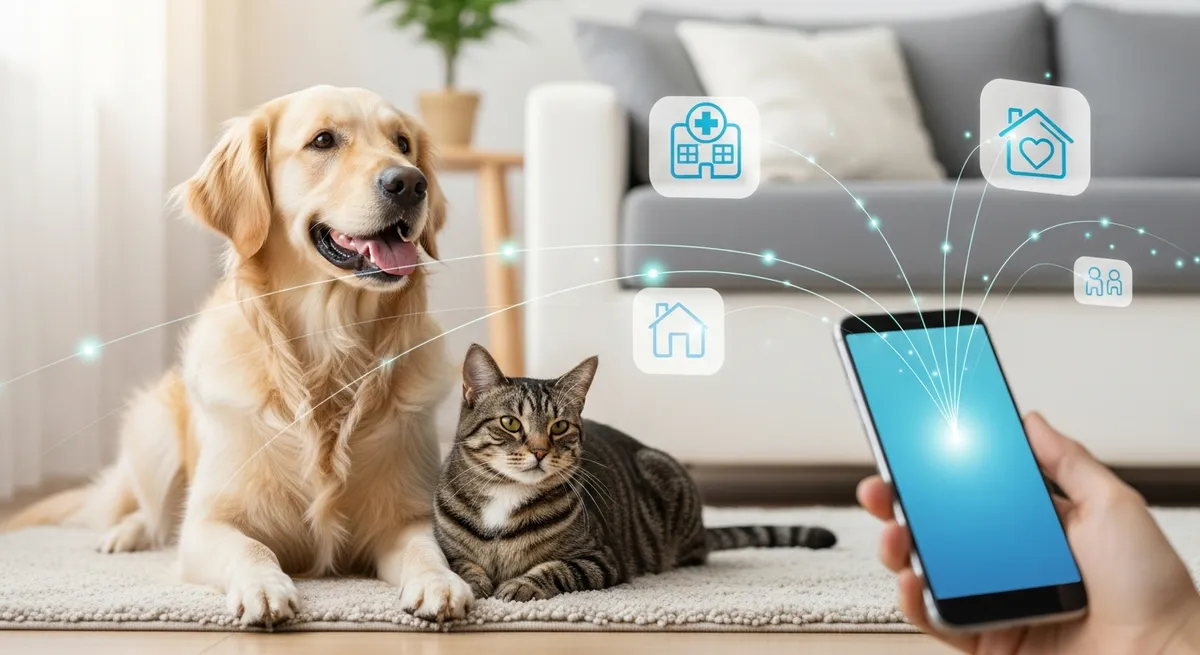
For most of history, a pet's care has been a series of disconnected episodes. The shelter knows one chapter. Your vet knows another. The groomer, the boarder, the emergency hospital, and the next owner each see a fragment — and none of them see the whole animal. Connected pet care is the idea that those fragments should finally become one continuous story. It is already starting, and over the next decade it will quietly reshape what it means to own a pet.
Here is where it is heading — and how today's tools are laying the foundation.
1. The pet's record becomes the center of gravity
Today we organize pet care around appointments and providers. Tomorrow it will be organized around the animal's own lifetime medical record: a single chart that begins at intake, follows the pet through every home and clinic, and is owned and controlled by the family. The microchip becomes the physical anchor for that digital identity — not a tracker, not a storage device, but the reliable link between the animal in front of you and the record that describes them.
This is the part PawMates Pro and VetPetz are building now: shelter intake creates the record, adoption hands it to the family, and the veterinary integration keeps it alive across the pet's life. Read how the two systems share data.
2. Interoperability becomes the expectation
The lesson from human healthcare is that records are only powerful when they move. The future of pet care is interoperable by default: shelters, clinics, and owners exchanging the right information, with consent, in a standard format. When a new vet can see the full vaccine, allergy, and diagnostic history in seconds, care gets safer and cheaper at the same time. The walled-garden era — where switching vets means losing your history — ends.
3. Continuous data from wearables meets the chart
GPS and activity collars already track location, steps, sleep, and even heart rate. The next step is feeding that stream into the medical record so a vet can see that a dog's activity dropped 40% three weeks before the limp — context that turns a guessing game into a diagnosis. The chip identifies, the collar monitors, and the record ties it all together.
4. Earlier, more preventive care
When the full history lives in one place and trends are visible over time, problems get caught earlier. Subtle shifts in weight, bloodwork, or behavior become early-warning signals instead of surprises. Preventive care — the cheapest and kindest kind — becomes the default rather than the exception.
5. Better outcomes for the animals who need it most
Connected care is not just a convenience for well-resourced owners; it is a lifeline for shelter animals. A dog whose behavioral history and medical record travel with them is easier to place, less likely to be returned, and far less likely to fall through the cracks. When records follow the pet, fewer animals are re-traumatized by a system that keeps starting over. For overcrowded shelters and animal control agencies, continuity is also capacity.
What this means for you, today
The future is not something you wait for — you opt into it with a few small choices now:
- Adopt with the record in mind. Shelters running PawMates Pro hand you a real profile, not a manila folder.
- Chip and register properly. The chip is the anchor for everything above. (Here's the checklist.)
- Keep one record, not ten. Consolidate vaccines, meds, allergies, and notes in your lifetime chart instead of across five clinics' systems.
- Use consent-based sharing. Let your shelter and vet exchange records so the next provider isn't flying blind.
Frequently asked questions
What is connected pet care?
An approach where a pet's medical, behavioral, and identity information lives in one continuous, owner-controlled record that follows the animal across shelters, owners, and veterinary clinics — linked by the microchip and shared with consent.
How is connected pet care different from a pet health app?
A typical app stores notes you type in. Connected care means the record is created at the source (shelter intake), updated by professionals (via systems like PawMates Pro and VetPetz), and interoperable across providers — not a manual diary.
Will my pet's data be private?
Sharing is consent-based; you decide which providers can access the record. Privacy and interoperability are designed to coexist.
Related reading
- What if every pet had a lifetime medical record? — the cornerstone of connected care.
- How PawMates and VetPetz share medical data via any microchip — the integration powering it.
Keep reading on the PawMates adopter blog.