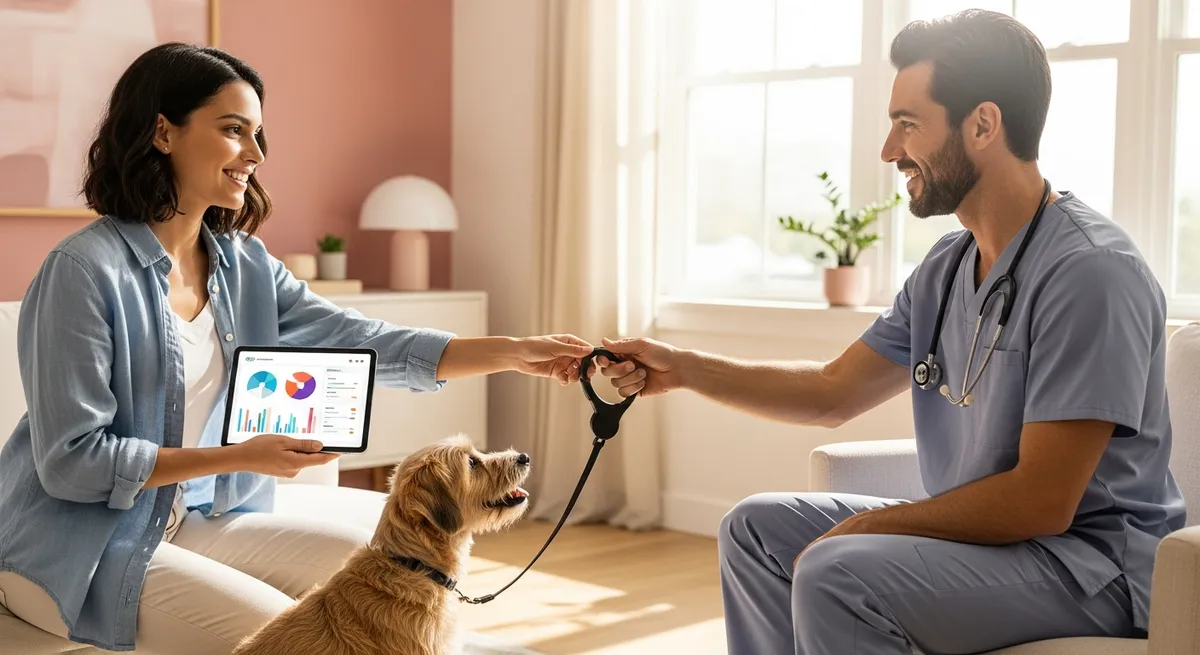
Adoption paperwork is famously unreliable. Vaccination records arrive as a smudged photocopy from a clinic that may or may not exist anymore. The kennel notes from intake — the ones that say "fearful of male strangers" or "must be muzzled for nail trims" — usually don't make it into the adopter's hands at all. The behavioral evaluation done at the shelter? Filed away in a binder somewhere.
Six months later, you take your pet to a new vet for a routine visit. The vet asks: when was the last rabies shot? What's the dog reactive to? Has the cat ever been on amoxicillin? You don't know. The shelter is closed for the weekend. The previous vet's records are in a portal you can't log into. Care decisions get made on guesswork.
That's the problem the PawMates and VetPetz integration was built to solve — and if you adopted through a PawMates Pro shelter, the pet medical record and behavioral history of your pet now travels with them, end to end, for the rest of their life.
Here's how the shelter-to-vet medical record sync actually works.
Where the pet medical record actually lives
Every pet in PawMates Pro is assigned a permanent identifier the moment they enter intake — a PawMates Pet ID — that follows them for life. Vaccinations, surgeries, behavioral evaluations, kennel notes, lab work, and any vet record uploaded to PawMates is keyed to that ID. When the shelter is on the VetPetz network, the same ID is the bridge that lets a participating vet pull or push records into your pet's chart.
The microchip plays a separate, complementary role: it's how recovery and registries identify your pet. The chip is the universal physical key that any scanner anywhere can read. The PawMates Pet ID is the digital key that ties your pet's lifetime medical and behavioral history together. Both matter; they're solving different problems.
For you as the adopter, you don't have to keep track of either. They both live in your PawMates adopter account.
What's actually in your pet's PawMates medical record
When you log into your PawMates adopter dashboard for an adopted pet, you can see (and share with your vet):
- Vaccination history with dates, manufacturers, and lot numbers — the kind of detail rabies regulators actually want.
- Spay/neuter status with surgery date, surgeon, and any complications.
- Allergies and current medications including dose, frequency, and prescribing vet.
- Chronic conditions — diabetes, arthritis, kidney disease, anxiety — with the full management plan.
- Lab results going back as far as the chart exists, so trend analysis is possible (kidney values rising over 18 months tells a different story than a single elevated reading).
- Surgical and dental history with dates, procedures, and recovery notes.
- Behavioral history — temperament evaluations, kennel notes from the shelter, training plans, kid/cat/dog compatibility, fear triggers, prior bite history if any.
What changes for you, concretely
This isn't a theoretical benefit. Here are the situations where adopters notice the difference:
- The first vet visit. You walk in and share your pet's PawMates record from your phone. The new vet sees that the shelter vet finished a 6-month heartworm preventive course in October, and skips the "let's start over with a baseline" workup that costs $400. Total visit cost: routine wellness, not a re-investigation.
- The 2 a.m. emergency. The dog is vomiting blood at 2:14 a.m. You hand the emergency vet a one-tap shareable link from your PawMates app showing the long-standing NSAID protocol for arthritis you started two months ago. Drug history is not guessed; it's documented.
- The behavior trigger you didn't know about. Six months in, you board the dog for a weekend trip. The boarding facility opens the behavioral notes you shared, sees "redirected aggression toward unfamiliar adult males during feeding," and assigns a female handler at meal time. The bite that would have ended the boarding relationship doesn't happen.
- The training plan handoff. You hire a positive-reinforcement trainer for leash reactivity. The trainer sees the shelter trainer's notes from intake and starts at week three of a real plan instead of week one of an assessment.
- The travel certificate. International travel requires a complete vaccination record signed by an accredited vet within a specific timeframe. The vet pulls the documented history, sees the complete record, and signs the USDA APHIS form in 10 minutes instead of three appointments.
- The lost-pet recovery. A vet 200 miles away scans the chip on your dog's shoulder, the registry calls you, and you authorize the recovering vet to read the PawMates medical record before they sedate for an exam.
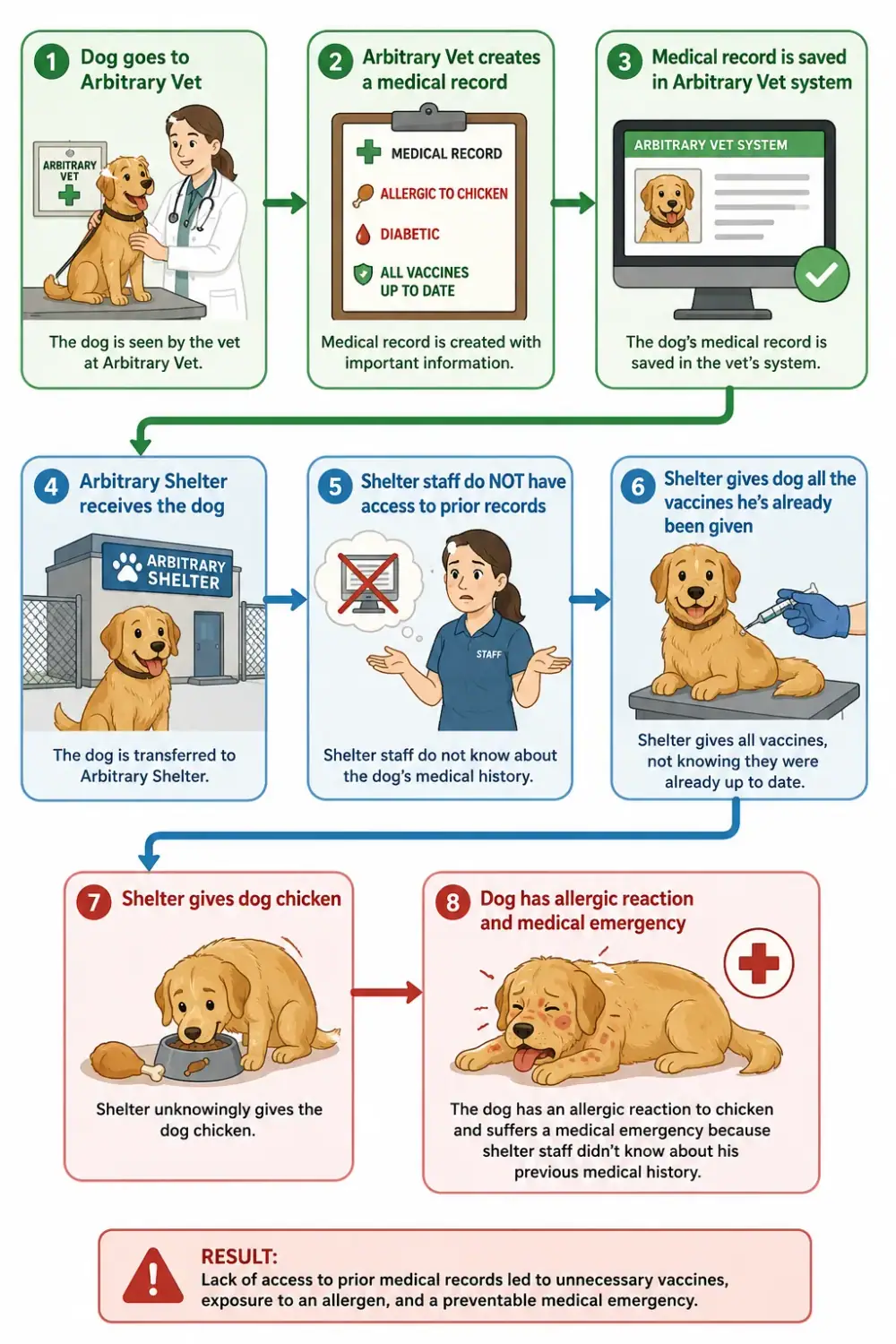
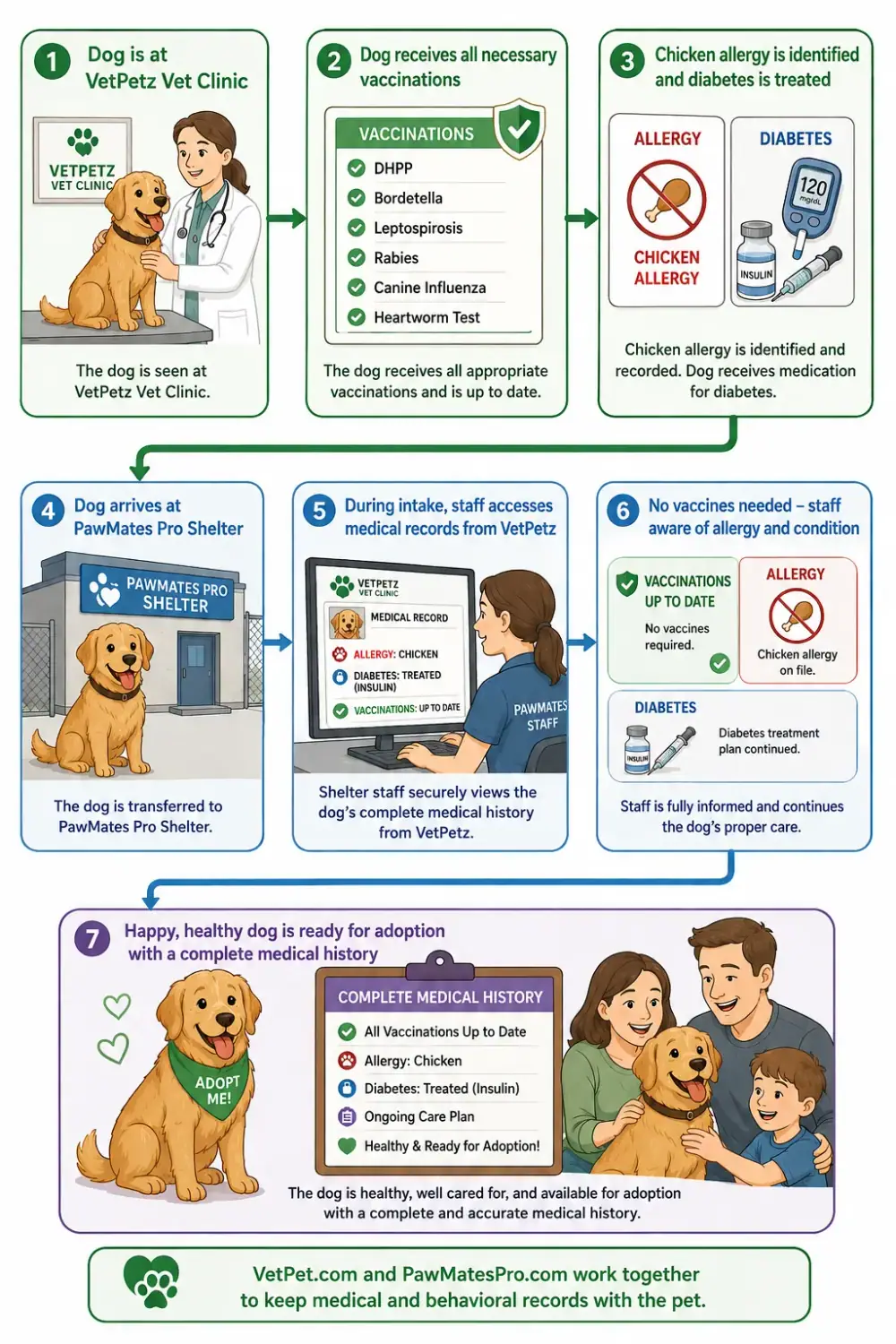
Here's what the difference looks like in practice — the same dog moving through a shelter without integrated records, vs. through a shelter with the VetPetz bridge in place.
What the VetPetz integration adds on top
For shelters whose vet partner is on the VetPetz network, the connection is two-way and live:
- Record continuity at adoption. The medical and behavioral chart from the shelter's vet partner is already attached to your pet's PawMates profile at finalization. You don't carry a paper packet; the record is on your dashboard the day you bring them home.
- New visits flow back in. When you take your adopted pet to a participating vet, the visit notes, vaccinations, and lab results sync into the same chart. The next vet who sees them — six months or six years later — has the continuous picture, not a snapshot.
- No retyping, no manual reconciliation. Records sync as structured data, not photocopies. That's the difference between a chart your next vet can actually search and a PDF nobody opens.
The VetPetz integration uses a per-shelter cryptographic credential, signed requests, and the PawMates Pet ID as the identity key — not your pet's microchip number. That detail matters because not every adopted pet has a chip — kittens adopted before their spay surgery, for example — and the medical record continuity has to work for them too.
What about pet medical record privacy?
The medical record is yours. Access is gated by:
- Adopter authentication. Only you can read the full record from your account.
- Per-clinic share. You decide which vet, boarding facility, or trainer gets a view. Access can be scoped, time-limited, or revoked from your dashboard.
- No marketing data sharing. The medical record is never sold, never used for advertising, and never shared with third parties outside the consented care chain.
This is materially different from what happens with most "pet portal" apps, which often have sweeping data-sharing clauses buried in their terms. PawMates' approach treats the medical record as health data — held to the same standard you'd want for your own.
The bottom line
The chip in your pet's shoulder gets them home. Your PawMates account, with the VetPetz integration, keeps their medical and behavioral story continuous — the kind of record that makes every future vet visit, boarding stay, training session, and emergency safer and faster.
If you adopted from a PawMates Pro shelter, the record is already on your dashboard. Open the app, log in, and it's there. If you also have your pet's chip number, register it with the right registry (use the AAHA universal microchip lookup to find which one) and you've covered both halves: identity and recovery on the chip side, lifetime medical and behavioral continuity on the PawMates side.
Pet medical record FAQ
Do I have to pay extra for the medical-record integration?
No. If your pet was adopted through a PawMates Pro shelter, your adopter account and dashboard are included.
What if my vet isn't on VetPetz yet?
Your record still exists in PawMates. You can export a PDF or share a one-tap link for any vet to use. Many vets join VetPetz once they see the workflow; you can ask them to.
Can I add records from before the adoption?
Yes. You can upload prior vaccination records, medical history, and behavioral notes from your account; they get attached to your pet's PawMates chart.
Does this work for cats?
Yes. Same model. Same lifetime pet medical record continuity.
What if I want to leave PawMates?
Your record exports as a complete PDF. The microchip stays linked to whatever registry you use; the record is yours to take with you.
Is this the same as a pet insurance app?
No. PawMates is a pet medical records app — vaccination history, allergies, behavior notes, vet records — built around your adopted pet's lifetime chart. It pairs with whatever pet insurance you use; it doesn't replace it.
For the foundational case for chipping at all, read why microchipping your pet is critical. For what to do in the first hour if your pet goes missing, read lost pet recovery: how microchips, registries, and PawMates get pets home faster.
Related reading
- Reinventing the microchip: how PawMates Pro and VetPetz are changing pet care — the broader thesis behind the chart-continuity story above.
- How often should I update my pet's microchip? — keeping the registry side of the ledger current alongside your medical chart.
More resources are on the PawMates adopter blog.