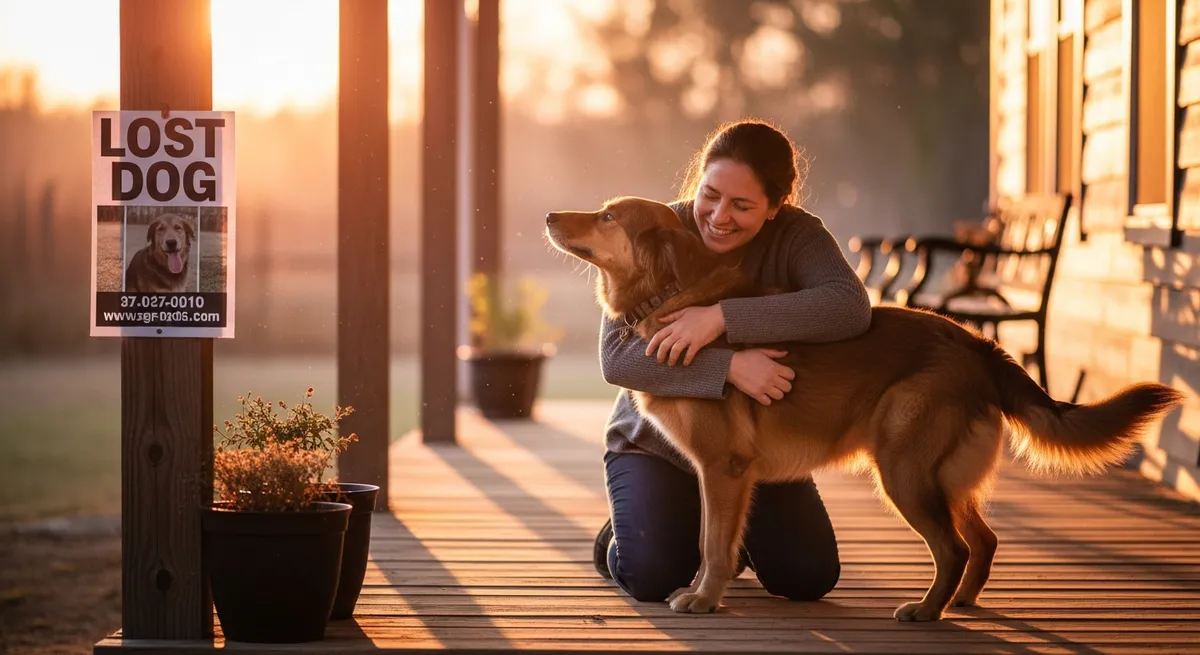
The first 24 hours after a pet goes missing are the most important. The data is unambiguous: pets recovered within the first day come home in nearly 90% of cases. By day three, the odds drop sharply. By week one, you're depending on luck — a stranger spotting a flyer, a shelter intake worker recognizing the face from a community Facebook page, a microchip scan at a vet 40 miles away.
Microchips collapse that timeline. A chipped pet picked up by a Good Samaritan, animal control officer, or vet clinic gets scanned within minutes of arrival, and the recovery clock starts immediately — regardless of whether you've even noticed your pet is missing yet.
Here's how the lost pet recovery system actually works, where it breaks, and how PawMates fits in.
The 60-second version of how lost pet recovery works
1. Your pet is found by someone — a neighbor, a passerby, animal control, a vet clinic.
2. The finder takes them to a shelter, vet, or animal control facility (the law in most states actually requires this for found pets).
3. The intake worker runs a universal scanner across the pet's shoulders, sides, and chest.
4. The scanner reads the 9-, 10-, or 15-digit microchip number.
5. The intake worker enters the number into the AAHA Universal Pet Microchip Lookup, which queries every participating registry simultaneously.
6. AAHA returns the name of the registry that has the chip on file.
7. The intake worker calls that registry, which gives them the registered owner's contact info.
8. You get a phone call.
When this works, it can take under 30 minutes from "found dog wandering on Maple Street" to "your phone rings." When it fails, it almost always fails at step 7 or 8 — because the microchip registry has stale contact info.
Why lost pet recovery fails in real life (and how to prevent it)
Recovery breaks down in five predictable ways. Each one is preventable.
- The chip was never transferred to you. This is the number-one failure mode. The shelter chipped the pet, registered it to themselves or the previous owner, and at adoption you got the number on your paperwork — but never logged into the registry to claim it. Result: the registry calls the shelter or previous owner first; the message bounces around; days are lost. Fix this in 5 minutes by following the microchip registration checklist.
- Your phone number changed and you didn't update the registry. Self-explanatory and devastatingly common. The registry tries the number on file, gets "this number is no longer in service," and now they're emailing your old Yahoo address.
- The chip is registered to one parent in the household and that parent is unreachable. Fix: register a backup contact. Most registries allow 2–3.
- The chip is an older non-ISO chip and the finder used an ISO-only scanner. Older AVID chips (9 digits) can be missed by basic scanners. Most professional shelter scanners are universal; some neighborhood vet clinics aren't. Fix: re-chip with an ISO 15-digit microchip if your pet has an old AVID chip and you travel internationally.
- The chip migrated and was missed on the first scan pass. Modern shelter protocol is to scan the entire body, but a fast scan along the shoulder can miss a migrated chip. Always ask the shelter to do a full-body re-scan if a found pet's owner shows up to claim them.
The first hour after your pet goes missing
Time matters more than effort. Do these in order:
1. Search the immediate area calmly. Scared dogs hide and freeze rather than run far. Cats almost always go down and small — under decks, under cars, into crawl spaces. Don't chase; sit and call quietly.
2. Call your microchip registry and report the pet missing. This flags the chip number; if anyone scans it, the registry alerts you immediately.
3. Call every shelter and animal control office within a 30-mile radius. Don't email — call. File a found-report yourself by name and description. Repeat in 48 hours; intake worker memory is short and shifts change. Many municipal shelters now use PawMates Pro Animal Control software and can flag a missing-pet report against incoming intakes automatically.
4. Post on neighborhood social media. Nextdoor, neighborhood Facebook groups, and community Discord servers. A clear photo, the location last seen, the time, and your phone number — that's it. Skip emotional pleas; they bury the actionable info.
5. File a report with your local animal control. This creates an official record and gets your pet's description on the dispatcher's screen.
6. Notify your vet. A found pet often gets brought to the closest open vet for a courtesy scan; if your vet has a flag on the chart, the call comes immediately. Vets on the PawMates and VetPetz network can pull your pet's record on the spot.
Where PawMates strengthens lost pet recovery
PawMates Pro is a shelter management platform — most of it is invisible to adopters — but a few of its features change the recovery math for pets adopted through participating shelters:
- Chip-on-profile at adoption. The microchip number is captured at the moment of finalization and tied to your adopter account. No paperwork to lose, no calls to the shelter to ask "what was the number again?" three years later.
- A faster bridge to the medical record once the recovering shelter finds you. The chip itself is a registry-side identifier — the registry, not PawMates, gives the finder your contact info. But once you're back in the loop, your pet's full medical and behavioral history (managed via PawMates and the VetPetz integration, keyed on your PawMates account, not on the chip number itself) can be shared with the recovering vet so they know what your pet is allergic to, what meds they're on, and any prior bite history before they sedate or treat.
- Shelter-to-shelter visibility. Participating PawMates shelters can flag intakes against open lost-pet reports from other shelters in the network. A pet picked up in the next county shows up in the system; your home shelter sees the match and gets in touch with you.
- Foster network reach. Pets fostered through PawMates Rescue carry the same chip-on-profile linkage, so a recovered foster dog isn't stuck in registry limbo while the rescue tries to track down a volunteer's old phone number.
None of this replaces the microchip registry. The registry is the foundation of recovery and the chip's contact-info job. PawMates is the layer on top that closes the gaps where the registry alone leaves recovery to chance.
What about Apple AirTags and GPS pet trackers?
Both have a place. AirTags work well in dense urban environments where iPhones are everywhere; they're useless in rural areas or where the finder doesn't carry an iPhone. Cellular GPS pet trackers (Fi, Tractive, Whistle) give you live location but require a battery, monthly subscription, and a collar that hasn't fallen off. For a layered lost-pet strategy: tag + chip + AirTag/GPS is belt, suspenders, and a backup belt.
But the chip is the layer that works when nothing else does — when the collar is gone, the AirTag battery is dead, and the only person who finds your pet is a vet 200 miles away. That's why every shelter using PawMates Pro registers a chip at intake on every single animal.
Lost pet recovery FAQ
How quickly should I act when my pet goes missing?
Within the hour. Almost every recovery decision is time-sensitive. Don't wait until tomorrow morning to call shelters. Start with the first-hour checklist above.
Should I offer a reward for my lost pet?
Modest rewards ($50–$200) help; large rewards attract scammers who claim to have found your pet to extract money. Never wire money or pay before seeing the pet in person.
What if my pet is recovered but the shelter says they have to honor a stray hold first?
Bring proof of ownership: registry record, vet bills, adoption paperwork, photos. Most shelters waive the hold once ownership is verified — and shelters running PawMates Pro can pull the matching adoption record on the spot.
My pet was found at a shelter 3 states away. How does that happen?
Pets get picked up by Good Samaritans on road trips, transferred between shelters by rescue partners, or carried unintentionally in moving trucks. The chip is what makes the impossible-distance recovery possible.
Does my homeowners or renters insurance cover lost-pet expenses?
Some pet insurance riders cover lost-pet advertising and reward costs; standard homeowners and renters policies generally do not. Check your policy.
Can I track my pet with the microchip in real time?
No — chips are passive RFID and only transmit when scanned. For live tracking, use a separate cellular GPS pet tracker as a layered backup.
For the foundational case for chipping at all, see why microchipping your pet is critical. For how your pet's medical and behavioral record travels with you through PawMates and VetPetz, see how PawMates and VetPetz share medical data via any microchip.
Related reading
- How often should I update my pet's microchip? — the most preventable cause of "the chip didn't help."
- Reinventing the microchip: how PawMates Pro and VetPetz are changing pet care — the bigger picture behind the recovery flow above.
More guides are on the PawMates adopter blog.