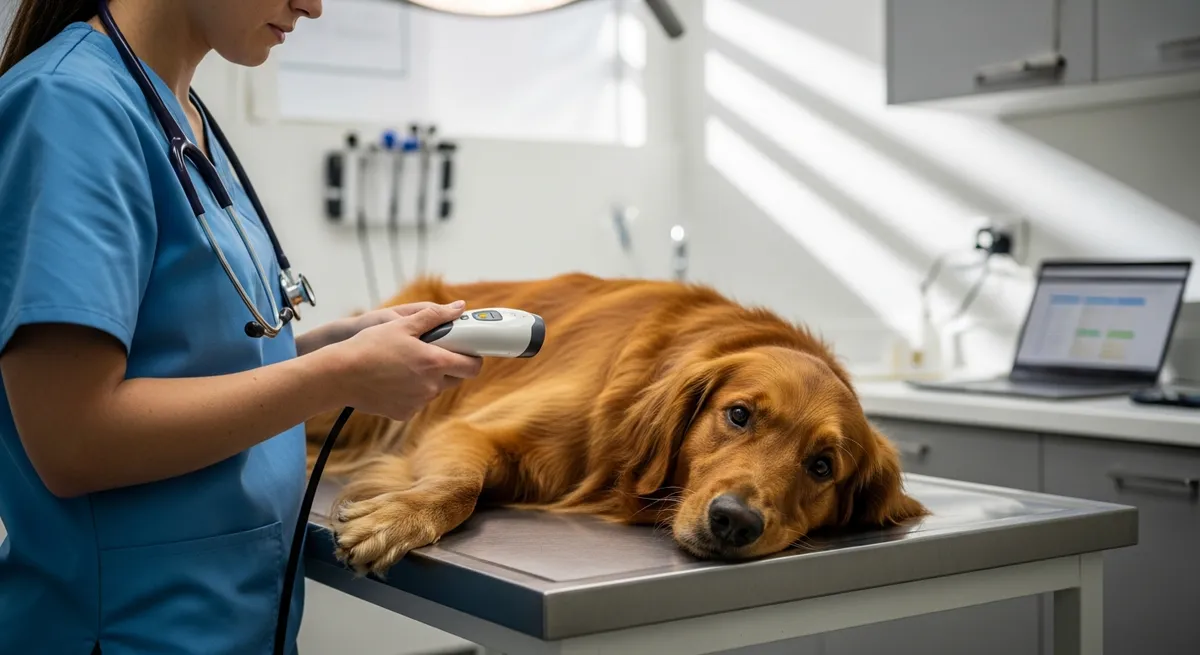
For thirty years, the pet microchip has been a single-purpose technology: a passive RFID tag that holds a number, which a scanner can read, which a registry can look up, which produces a phone call to the owner. That is the entire feature set. The chip got pets home — sometimes — and then went back to sleep.
The chip itself has not changed. The infrastructure around it is.
The combination of PawMates Pro — the shelter management platform — with VetPetz — the veterinary-side records and integration network — turns the chip into something it has never been before: the front door of a continuous lifetime health, behavioral, and ownership record that travels with the pet from intake to adoption to every vet visit, boarding stay, and rehoming for the rest of the animal's life. This is what we mean when we say PawMates Pro and VetPetz are reinventing the microchip.
This post is for adopters and pet owners who want to understand what changes, and why it matters.
The old model: registry as terminal
Under the old model, the chip's purpose was identity recovery, full stop. The lookup chain — universal scanner finds the chip number, AAHA's free universal lookup identifies the registry, the registry's database produces a phone number, the phone rings — exists in 2026 the same way it existed in 1996. The registry is the end of the line. There is no medical record at the registry, no behavioral history, no foster notes, no allergy list, no current-medication list. The chip's job ends when the owner is on the phone.
That model is fine for the recovery use case. It is also the entire model. Everything else about your pet's health, behavior, and history sits in disconnected silos: a paper folder at the previous vet, a binder at the shelter, a foster's text messages, your phone's photo roll, a portal at one clinic, a different portal at another. The lifetime story of the pet is in pieces.
The new model: chip as the front door of a continuous record
PawMates Pro assigns every pet a permanent identifier — the PawMates Pet ID — at the moment they enter intake. Vaccination records, surgical history, behavioral evaluations, intake notes, foster observations, kennel notes, training plans, allergies, current medications, and any vet record uploaded to the system are keyed to that ID and travel with the pet for life.
When the shelter is on the VetPetz network, the same Pet ID is the bridge that lets a participating vet pull or push records into your pet's chart. The vet can see the full vaccination history before the appointment. The shelter can see the vet's diagnostic findings. The adopter sees both, in their adopter dashboard, from their phone.
The microchip in your pet's shoulder is the universal physical key — the part any scanner anywhere can still read — and the Pet ID is the digital key that makes the chip number the entry point into the lifetime record. Both matter. They solve different problems. Together they make the chip something it never was: the start of a continuous story rather than a single phone number lookup.
For the technical detail of how this integration works, see how PawMates and VetPetz share medical data via any microchip.
What changes for adopters
Concretely, here is what is different.
- You inherit the full shelter record at adoption. Vaccination dates, lot numbers, behavioral evaluation, kennel notes, foster observations, prior bite history, allergies, current medications. Not "here is a smudged photocopy" — the actual data, on your phone, in your account.
- The first vet visit is faster and cheaper. Your new vet sees the existing record, skips redundant baseline workups, and continues care from where the shelter vet left off. For dogs and cats with chronic conditions, this matters enormously.
- Emergency vet visits are safer. A 2 a.m. ER visit with the full medication, allergy, and prior-procedure record on your phone is a different visit from one based on guesswork.
- Boarding and grooming handoffs are safer. The boarding facility sees the same behavioral notes the shelter saw. The bite history is on the chart, not lost in a previous owner's memory.
- Lost-pet recovery is integrated. The chip on the shoulder still does the recovery job — the registry, not PawMates, gives the finder your contact info. But once you are back in the loop, the recovering vet can read the medical record on the spot, before they sedate or treat. See lost pet recovery: how microchips, registries, and PawMates get pets home faster.
- Rehoming continues the record. If the pet is ever returned to the shelter or rehomed, the next adopter inherits the full history rather than starting from a "no known issues" blank slate. See the returned-pet FAQ.
What changes for shelters
(This part is mostly invisible to adopters, but it is the engine that makes the rest possible.)
- Behavioral evaluations and intake notes are recorded once, on the pet profile, and never lost in a binder.
- Foster homes log their observations directly to the pet's record; the data is in the system, not in scattered text messages.
- Vet partners on the VetPetz network exchange records with the shelter without faxing PDFs.
- Adoption finalization writes the chip number to the pet profile and ties the full record to the new owner's account in a single step.
- Animal Control intakes flow into the same profile system at municipal shelters running the Animal Control module.
The shelter side of the story is on the PawMates Pro page and in the shelter blog.
What this is not
A few honest disclaimers, because the marketing version of this story sometimes overshoots:
- PawMates does not replace the microchip registry. Your AAHA Universal Lookup, AKC Reunite, HomeAgain, or 24PetWatch registry remains the contact-info layer for lost-pet recovery. PawMates is the medical and behavioral record layer on top.
- PawMates does not require a special chip. Any standard 9-, 10-, or 15-digit microchip works. The PawMates Pet ID is a separate digital identifier; it is the bridge, not a hardware change.
- The integration only flows where both sides are connected. A shelter not on PawMates Pro and a vet not on VetPetz exchange records the old way (faxes, PDFs, paper). The new model only fully works inside the network.
- Adopters are not charged extra for the integration. If you adopted from a PawMates Pro shelter, your dashboard and the lifetime record are included.
For more on the chip side specifically, see why microchipping your pet is critical and how often should I update my pet's microchip?. For the medical-record technical detail, see how PawMates and VetPetz share medical data via any microchip.
The bottom line
The chip in your pet's shoulder gets them home. The PawMates + VetPetz layer makes sure that everything else about their life — the vaccinations, the behavior history, the medications, the prior bite, the foster's careful notes, the surgeon's recovery plan — travels with them too. That is the difference between identity and continuity. The chip handled identity for thirty years. It is finally getting to handle continuity too.
For more adopter resources, browse the PawMates blog.