Imagine your dog gets sick on a road trip and you walk into an unfamiliar emergency vet 500 miles from home. The vet asks: Is she up to date on vaccines? Any allergies? What was that medication she reacted to last year? When was her last bloodwork, and what were the numbers? And you — exhausted, scared, holding a shaking dog — answer the way almost every pet owner does: "I think so?" and "I don't remember the name."
That gap is the single biggest, most fixable problem in pet care today. Human medicine has spent two decades building electronic health records that follow patients between providers. Pets, for the most part, still live in a world of paper folders, fax machines, and "we'll call your old clinic on Monday." So let's ask the question seriously: what if every pet had a single, lifetime medical record that followed them everywhere — from the shelter that took them in, to every vet, groomer, boarder, and new home they ever have?
What a true lifetime pet medical record would include
Not just shot records. A real chart, born the day the animal enters the system and updated for life:
- Vaccination history with dates and due dates, never reset to "unknown" again.
- Allergies and adverse drug reactions flagged prominently, so the next vet doesn't reach for the medication that nearly killed your pet.
- Chronic conditions and medications, with dosages and history.
- Diagnostic results over time — bloodwork, imaging, lab trends — so a new vet sees the trajectory, not a single snapshot.
- Behavioral notes from the shelter and from you: fear triggers, handling preferences, bite history, what makes them feel safe. (See how shelter and vet records connect.)
- Microchip number and registry, tying the physical pet to the digital record. (New to chips? Start with why microchipping is critical.)
Why pets don't have this yet
The technology is not the obstacle — the fragmentation is. A pet's life touches a shelter or rescue, one or more veterinary clinics, emergency hospitals, groomers, boarders, and sometimes multiple owners. Each keeps its own records in its own system, and almost none of them talk to each other. When a pet is rehomed, surrendered, or simply changes vets, the history usually does not travel. It is rebuilt from scratch, badly, from owner memory.
That is precisely the gap PawMates Pro and VetPetz are built to close.
How PawMates Pro and VetPetz are building the lifetime record
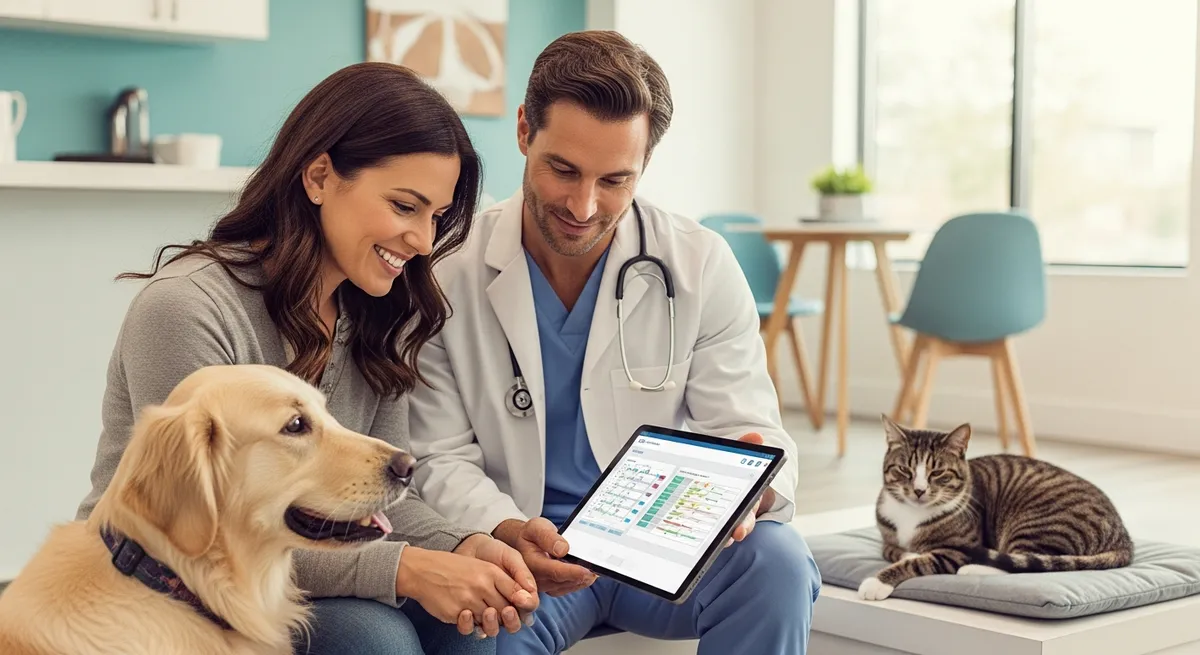
PawMates Pro is shelter management software: it creates a structured digital profile for every animal at intake — medical, behavioral, and identity (including the microchip). When you adopt, that profile doesn't get deleted; it becomes the foundation of your pet's record in your adopter dashboard. The history that used to die at the shelter door now follows the pet home.
VetPetz is the veterinary side of the same vision — a practice information management system (PIMS) for clinics. The integration is designed so that, with the adopter's consent, post-adoption medical and behavioral records can flow between the shelter chart and the veterinary chart. Crucially, the link between systems is the PawMates Pet ID, not the chip number — the chip is a lookup key on the physical animal, while the Pet ID is the stable identity that ties the records together. The result is the beginning of a genuinely continuous chart: shelter to home to clinic, one animal, one story.
For the deeper mechanics, read how PawMates and VetPetz share medical data via any microchip.
What changes for you as an adopter
- No more "I think so." Vaccines, allergies, and meds are in your pocket at the emergency clinic.
- Better, faster care. A vet who sees the full history makes safer decisions and orders fewer redundant tests.
- A smoother handoff if life changes. If a pet ever needs to be rehomed, the record travels with them instead of being lost — which is better for the next family and far better for the animal.
- Fewer dangerous mistakes. A flagged drug allergy that follows the pet is the kind of detail that quietly saves lives.
Frequently asked questions
What is a lifetime pet medical record?
A single, continuously updated health chart for a pet that begins at intake or birth and follows the animal across shelters, owners, and veterinary clinics — including vaccines, allergies, medications, diagnostics, behavior, and microchip identity.
Is there an app that keeps my pet's medical records?
Yes — if you adopt from a shelter using PawMates Pro, your pet's medical and behavioral history lives in your adopter dashboard, and through the VetPetz integration it can connect to your veterinarian's records with your consent.
Does the microchip store my pet's medical records?
No. The chip stores only an ID number. The records live in software; the chip and the registry are how a found pet is linked back to that record. See the biggest misconceptions about pet microchips.
Who controls my pet's record?
You do. Sharing post-adoption records with your shelter or vet is consent-based.
Related reading
- The future of connected pet care — where the lifetime record leads next.
- How PawMates and VetPetz share medical data via any microchip — the integration in detail.
Explore more on the PawMates adopter blog.