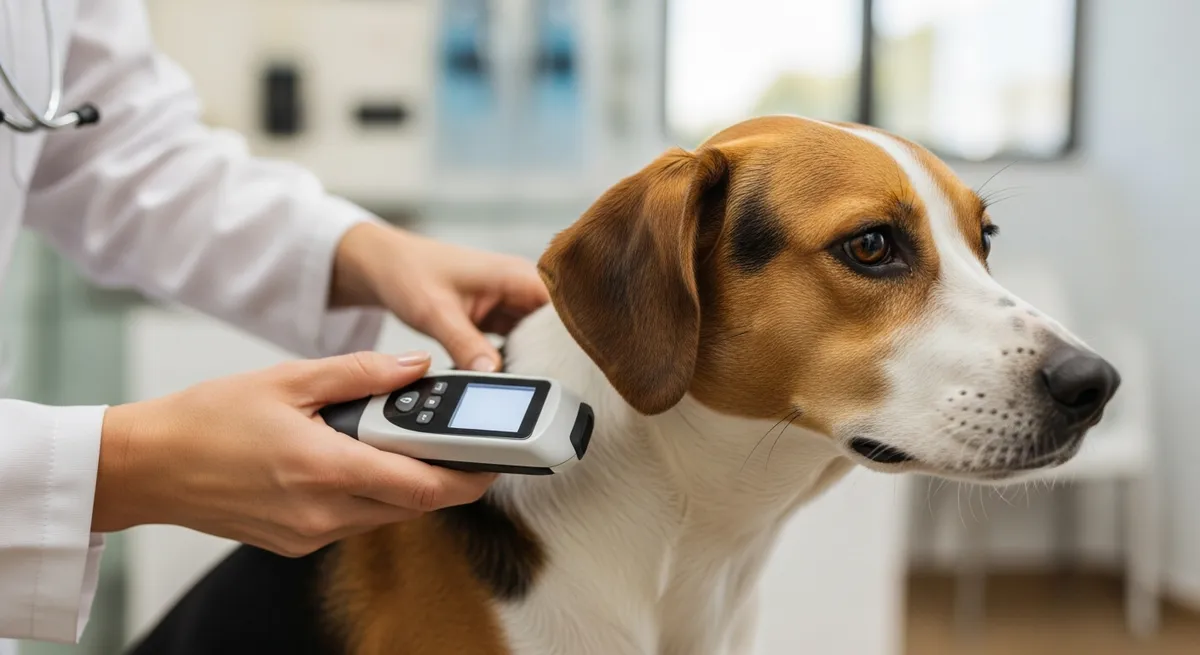
Microchips are the most important pet-safety technology of the last 30 years — and also the most misunderstood. The myths matter, because a misunderstanding about what a chip does (or doesn't do) is exactly what gets a pet lost for good. Let's clear up the biggest misconceptions, one at a time.
If you are brand new to chips, start with the foundation: why microchipping your pet is critical. Then come back for the myth-busting.
Misconception 1: "A microchip is a GPS tracker."
This is the big one. A microchip has no GPS and no battery. It cannot tell you where your pet is. It is a passive RFID tag that does nothing until a scanner is held within a few inches of it, at which point it transmits a single ID number. If you want real-time location, that is a separate device — a cellular GPS collar tracker like Fi, Tractive, or Whistle. The chip is for when your pet is already found and needs to be identified; the GPS collar is for finding them yourself. Smart owners use both.
Misconception 2: "The chip has my address on it."
No. The chip stores only a number. Your contact information lives in a separate microchip registry database, linked to that number. This is why two steps are non-negotiable after adoption: make sure the chip is registered, and keep your phone and email current. A chip with stale registry info is a locked door with no key.
Misconception 3: "My pet is chipped, so I'm all set."
The most common — and most heartbreaking — failure. A shelter chips the pet and registers it to the shelter or the previous owner. At adoption you get the number on paperwork but never transfer ownership into your name. Result: a Good Samaritan finds your pet, the registry is called, and it rings the shelter or a stranger — not you. Being chipped is not the same as being registered to you. Run your pet's number through the free AAHA Universal Pet Microchip Lookup, find the registry, and confirm the chip is in your name. (Walkthrough: lost pet recovery, step by step.)
Misconception 4: "The microchip stores my pet's medical records."
Not today. The chip is an identifier, not a hard drive. But this myth is interesting because it points at where the industry is going. The chip can be the link to a real medical record stored in software — which is exactly what PawMates Pro and VetPetz connect. The chip identifies the animal; the lifetime medical record lives in the system the chip points to.
Misconception 5: "Microchipping hurts or is dangerous."
The implant is roughly the sting of a routine vaccination, and most shelters chip during spay/neuter while the animal is already under anesthesia. Adverse reactions are extraordinarily rare. For any pet that might ever leave the house — which is every pet — the benefit overwhelmingly outweighs the negligible risk.
Misconception 6: "Indoor cats don't need a chip."
Indoor cats are precisely the ones who bolt through an open door into a world they don't know, wearing no collar, with nobody able to identify them. Cats are returned to owners at a fraction of the rate of dogs, largely because so few are chipped or tagged. An indoor cat needs a chip more, not less.
Misconception 7: "All chips and scanners are the same."
Most modern chips use the ISO 15-digit standard, and reputable shelters and clinics use universal scanners that read all common frequencies. Older chips and a few proprietary frequencies exist, which is why a full-body scan with a universal scanner is best practice. The takeaway for you: ISO 15-digit chips are the international standard and the safest choice, especially if you ever travel.
The one habit that makes the chip actually work
Every misconception above collapses into a single action item: register the chip to you and keep your contact info current. A chip is a promise that someone can reach you. Keep that promise reachable.
Frequently asked questions
Can you track a lost pet with a microchip?
Not in real time — the chip has no GPS. It identifies your pet once they are found and scanned. For live tracking, use a GPS collar in addition to the chip.
Does a microchip store my pet's medical history?
The chip itself stores only an ID number. That number can link to a medical record kept in software (such as PawMates Pro and VetPetz), but the record is not on the chip.
How do I check which registry has my pet's chip?
Use the free AAHA Universal Pet Microchip Lookup — enter the number and it tells you which registry holds the record.
Is microchipping safe?
Yes. It is comparable to a vaccine injection, and serious reactions are extremely rare.
Related reading
- Should mandatory pet microchipping be legalized? — the policy debate behind the technology.
- What if every pet had a lifetime medical record? — what the chip can unlock when it links to real records.
Find more guides on the PawMates adopter blog.