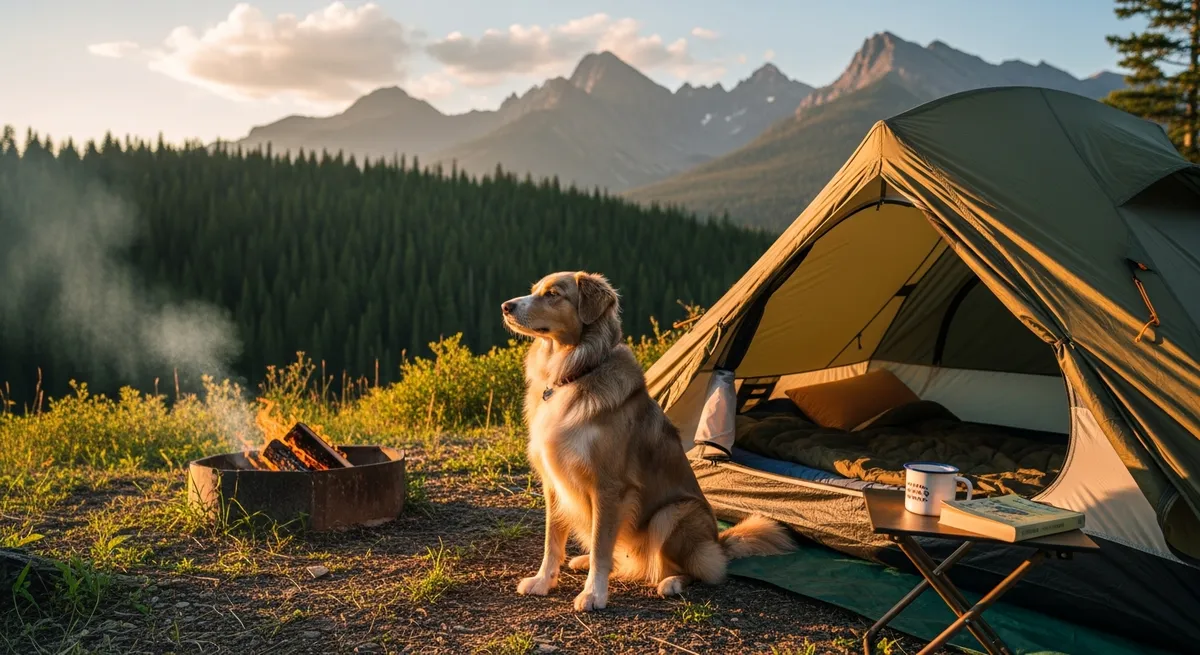
Camping with a dog sounds like the dream: a happy mutt trotting down a trail, splashing in a creek, then crashing hard by the campfire. And it can absolutely be that. But the backcountry is also where a string of small, avoidable problems can stack up into a long night at an emergency vet hours from the nearest town. Knowing what can go wrong is exactly what lets you relax and enjoy the trip.
This is not a "leave your dog home" warning. It is a "go in with your eyes open" guide to the real hazards of summer camping with dogs — and how to dodge each one.
Heat and water: the two that turn dangerous fastest
Camping often means full-sun trails, midday hikes, and dogs so excited they will run themselves into trouble.
- Heatstroke is the big one. Dogs cool mostly by panting, which fails fast in heat and humidity. Hike early or late, carry far more water than you think you need, take shade breaks, and watch for heavy drooling, wobbliness, or bright-red gums. For the broader heat playbook, see protecting your pet during heat waves.
- Hot ground burns paws on rock, sand, and dark trail. Do the back-of-the-hand test; if it is too hot for your hand for seven seconds, it is too hot for paws.
- Water intoxication and drowning. Dogs who fetch endlessly from a lake can swallow dangerous amounts of water, and fast rivers fool strong swimmers. Limit hard water play, take breaks, and use a canine life jacket around moving or deep water — not every dog can swim well, despite the myth.
Wildlife encounters
The woods belong to the locals.
- Predators — coyotes, bears, even aggressive raccoons — can be drawn to food and to a small dog. Keep your dog leashed and close, and never leave them tied up and unattended.
- Snakes sun themselves on trails and rocks. Keep your dog out of tall grass and off the trail edges, and learn what venomous species live in your area.
- Porcupines and skunks turn a fun hike into a miserable drive home. A leash prevents most of these.
- Insects. Bee and wasp stings can cause swelling or, rarely, a severe reaction. Know where the nearest emergency vet is before you set up camp.
The sneaky plant hazards
- Foxtails are the camper's nemesis. These barbed grass seeds burrow into paws, ears, noses, and eyes and migrate inward, causing infection. Check your dog thoroughly — between toes, in ears, around the muzzle — after every outing in dry, grassy areas, and remove any you find.
- Toxic plants and mushrooms. Curious dogs nibble. Discourage grazing and don't let your dog eat wild mushrooms.
- Burrs and seeds mat fur and irritate skin; a quick post-hike brush-out helps.
Ticks, fleas, and what they carry
Wooded, grassy campsites are tick central, and ticks transmit Lyme disease and other illnesses.
- Make sure flea and tick prevention is current before you leave.
- Do a hands-on tick check every night, focusing on ears, neck, armpits, groin, and between toes. Remove any tick promptly with a tick tool, grabbing close to the skin.
- Watch for later signs — limping, lethargy, fever, or loss of appetite in the weeks after a trip can signal a tick-borne illness, so mention recent camping to your vet.
Getting lost — the scenario that keeps owners up at night
A spooked dog can vanish into unfamiliar wilderness in seconds, and there are no street signs out there.
- Leash up, especially at dusk, near wildlife, and around other campers. Many parks and campgrounds legally require leashes — know the rules where you are, since this post is not legal advice.
- Use a collar tag and a registered microchip. If your dog slips away and a ranger or fellow camper finds them, the chip is what reunites you — provided the registry has your current info. This is the whole point of why every pet should be microchipped before summer travel, and the broader pattern of why more pets go missing during summer.
- Carry a recent photo so you can act fast if the worst happens.
Camp logistics that prevent problems
- Secure your food and trash. It protects wildlife and keeps a scavenging dog out of trouble.
- Bring a long line and a stake for controlled freedom, but never leave a tethered dog alone.
- Pack a real first-aid kit with a tick tool, tweezers, bandage wrap, and antiseptic — vet help can be hours away.
- Mind the campfire. Curious noses and wagging tails near flames and hot coals end badly; keep your dog at a safe distance.
- Plan for nights. Many dogs sleep best in a familiar crate or on their own bed inside the tent, safe from cold ground and night critters.
Why your dog's records belong in your pack
If your dog gets into a foxtail, a snake, or a bad reaction to a sting miles from home, the vet who treats them is a stranger who knows nothing about your dog. That is where a connected record changes everything. Shelters running PawMates Pro send adopters home with a real profile, stored as a lifetime medical record tied to a durable PawMates Pet ID — so an out-of-town emergency vet can see vaccines, medications, and allergies with your consent, fast. The microchip number is just the lookup key; the medical history lives with the Pet ID. It is one more way connected pet care follows your dog into the backcountry. (For the full pre-trip prep, see preparing your pet for vacation season.)
The bottom line
None of this is a reason to leave your dog behind. It is a reason to plan: current prevention, a leash, plenty of water, nightly tick-and-foxtail checks, a real first-aid kit, and IDs you have actually confirmed. Do that, and summer camping becomes exactly the trip you pictured — minus the 2 a.m. emergency.
Frequently asked questions
Is camping safe for dogs?
Yes, with preparation. The main risks are heat, water, wildlife, foxtails, ticks, and getting lost — all manageable with a leash, plenty of water, current parasite prevention, nightly checks, and a first-aid kit.
What are foxtails and why are they dangerous?
Foxtails are barbed grass seeds that burrow into a dog's paws, ears, nose, and eyes and migrate inward, causing painful infections. Check your dog thoroughly after any time in dry, grassy areas and remove any you find.
How do I protect my dog from ticks while camping?
Make sure flea and tick prevention is current before you go, do a hands-on tick check every night, and remove any ticks promptly with a tick tool. Watch for later signs like limping or lethargy and tell your vet about recent camping.
What if my dog runs off in the wilderness?
Prevention is everything: keep your dog leashed, use a collar tag, and confirm the microchip is registered with current contact info before the trip. Carry a recent photo so you can act immediately if they go missing.
Related reading
- Why every pet should be microchipped before summer travel — your backstop ID in the backcountry.
- Preparing your pet for vacation season — the pre-trip health and records prep.
- Traveling with your dog: the ultimate summer guide — getting there safely.
For more adoption and pet-care guides, browse the PawMates adopter blog.