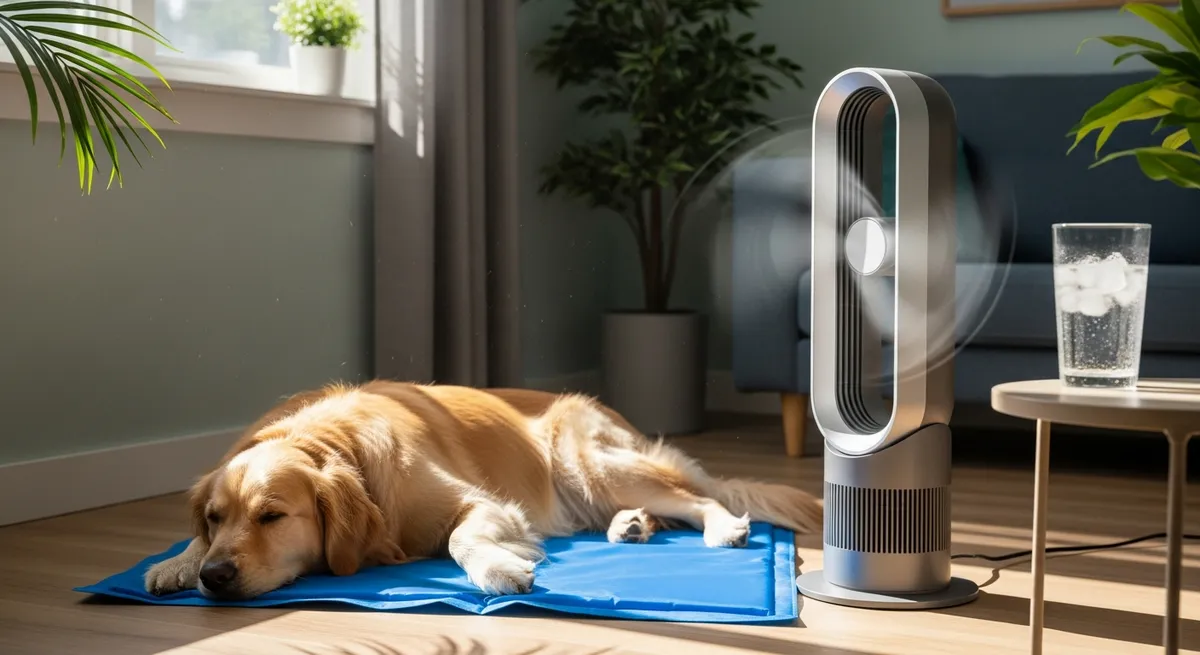
When a heat wave settles in for days at a time, the danger to pets is not just a single hot afternoon — it is the relentless, around-the-clock load on their bodies. Nights that never cool down, homes that hold heat after the air conditioning struggles, and pavement that stays warm past sunset all stack up. Pets cannot tell you they are overheating until they are already in trouble, so during extreme heat the job falls entirely to us.
Here is a practical, room-by-room and hour-by-hour plan for getting your dog or cat safely through a heat wave.
Hydration first, and make it irresistible
Dehydration accelerates everything bad about heat. During a heat wave, water is your number one tool.
- Offer multiple water bowls in different rooms, and refill them with cool water several times a day.
- Drop a few ice cubes in the bowl, or freeze a bowl of water with treats inside for a slow, cooling drink.
- For pets that drink poorly, add water or low-sodium broth to meals, or offer a pet water fountain — many cats and dogs drink more from moving water.
- On the go, always carry a travel bottle and collapsible bowl.
A quick check: gently lift the skin between the shoulder blades. If it does not snap back quickly, or if the gums feel tacky rather than slick, your pet may be getting dehydrated — offer water and call your vet if it persists.
Shade, airflow, and the indoor cool zone
The goal is a space that stays genuinely cool, not just shaded.
- Keep pets indoors during the hottest hours, roughly 10 a.m. to 6 p.m.
- Run air conditioning if you have it; if you do not, close blinds against direct sun, run fans, and open the home up at night when the air finally cools.
- Identify the coolest room — often a tiled bathroom, basement, or north-facing room — and make it comfortable so your pet can retreat there.
- Outdoor shade from a tree or tarp is far cooler than a doghouse, which traps heat. But on a true heat-wave day, no amount of outdoor shade replaces bringing pets inside.
Cooling gear that actually helps
- Cooling mats (pressure- or gel-activated) give pets a cool surface to lie on without any electricity.
- A damp towel to lie on, or lightly misting the belly, paws, and ears, helps shed heat from areas where blood runs close to the skin.
- A kiddie pool of a few inches of water lets water-loving dogs cool their bellies and paws.
- Frozen treats — a stuffed, frozen rubber toy, or "pupsicles" of broth and water — cool from the inside and provide enrichment.
Avoid wrapping a pet tightly in ice or submerging them in ice-cold water, which can constrict blood vessels and trap heat in. Cool, not freezing, is the rule.
Shift the schedule
Heat waves are a time to flip your routine. Walk and play in the early morning and late evening only, and keep sessions short. Test the pavement with the back of your hand first; if it is too hot for your skin, it is too hot for paws — the full method is in how hot is too hot for dog walks: the asphalt test every dog owner should know. Swap a long midday walk for indoor enrichment: puzzle feeders, sniff games, training, and gentle play burn energy without the heat load. Cats benefit from the same approach — see keeping indoor cats entertained during hot weather.
Know who is at highest risk
Some pets need extra protection during a heat wave:
- Flat-faced (brachycephalic) breeds — Bulldogs, Pugs, Boxers, Persians — whose short airways make panting inefficient.
- Seniors and puppies/kittens, who regulate temperature poorly.
- Overweight pets and those with heart, lung, or kidney disease.
- Thick double-coated breeds — though do not shave them, because the coat also insulates against heat and protects from sunburn; ask your groomer about a trim instead.
For these pets, set a stricter line: minimal outdoor time, constant access to the cool zone, and a quick call to your vet at the first odd sign.
Have a power-outage plan
Heat waves strain the grid, and outages are exactly when pets are most at risk. Before one hits:
- Keep frozen water bottles in the freezer; in an outage, set them near your pet's resting spot.
- Know where the coolest part of your home is without AC.
- Have a battery fan and a plan to relocate to a cooler location (a friend's home, a pet-friendly cooling center) if indoor temperatures climb dangerously.
- Keep your pet's records and your vet's number accessible offline, plus the address of the nearest 24-hour emergency clinic.
When prevention is not enough
Even careful owners can be caught off guard, so know the emergency signs: frantic panting, bright red or pale gums, drooling, vomiting, stumbling, or collapse. Move to a cool place, offer cool water, wet the body, and call your vet or emergency clinic immediately. The wider list of summer crises to watch for is in summer emergencies vets see every year.
Records matter in those moments too. A pet adopted from a shelter using PawMates Pro arrives with a real profile that grows into a lifetime medical record attached to a durable PawMates Pet ID — so an emergency vet can see medications and conditions even if you are away from home, part of the broader vision of connected pet care.
Frequently asked questions
How do I keep my pet cool without air conditioning?
Close blinds against the sun, run fans, open up at night, set up a cooling mat or damp towel in the coolest room, offer plenty of cool water, and keep pets indoors during peak heat. Frozen water bottles near their resting spot help too.
Should I shave my long-haired dog in the heat?
Usually no — a dog's coat also insulates against heat and shields skin from sunburn. Ask your groomer about a trim and focus on hydration, shade, and schedule changes instead.
What temperature is dangerous for pets?
There is no single number, because humidity, breed, age, and health all matter, but caution rises sharply above the mid-80s, and flat-faced, senior, or ill pets are at risk even lower. During a heat wave, treat outdoor time as limited and supervised.
Why is a power outage so risky during a heat wave?
Without air conditioning or fans, indoor temperatures can climb quickly to dangerous levels. Have frozen water bottles, a battery fan, and a plan to move to a cooler location ready before an outage happens.
Related reading
- Summer pet safety checklist — a quick scannable reference for the whole season.
- Summer emergencies vets see every year — what to watch for when prevention falls short.
- Why summer is one of the most dangerous seasons for pets — the big picture.
For more adoption and pet-care guides, browse the PawMates adopter blog.