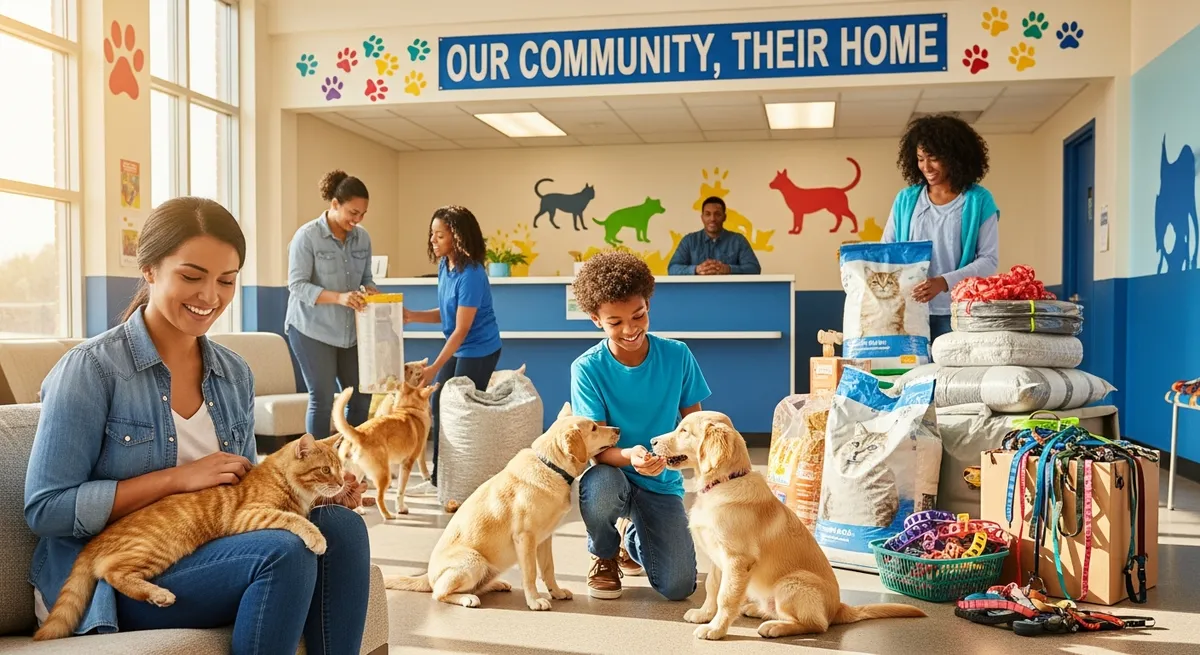
Walk into almost any animal shelter in July and you will feel it before anyone says a word: every kennel full, a foster list that is mostly empty, a staff that is running on fumes and coffee. Summer is the hardest season of the year for shelters, and it is also the season when your help matters most. The good news is that helping does not require you to adopt ten dogs or write a giant check. There are a dozen real, concrete ways to take pressure off your local shelter this summer — and most of them are free.
Here is the honest, practical menu, from the biggest commitment to the smallest.
1. Adopt — open a kennel, save two lives
Every adoption does double duty: it gives one animal a home and it opens a kennel for the next one walking through the door. During summer overcrowding, that second life is not an abstraction — it is the difference between a shelter having room and a shelter facing impossible choices. If you have been thinking about it, summer is genuinely a great time to do it (more daylight for walks and training, often more people home). We make that case in full in why summer is a great time to adopt a pet and summer adoptions save lives.
2. Foster — the single most powerful thing most people can do
If you cannot adopt forever, foster for a few weeks. Fostering:
- Frees up a kennel immediately.
- Gets vulnerable animals (neonatal kittens, recovering surgery patients, anxious dogs) out of a stressful shelter environment.
- Gives the shelter real behavioral information — how the pet does in a home, with kids, with other animals — that helps them find the right adopter.
Most shelters provide food, supplies, and medical care; you provide the couch and the love. During kitten season, bottle-baby and litter fosters are desperately needed because newborn kittens simply cannot survive in a shelter setting.
3. Volunteer your time
Shelters run on volunteers. You can:
- Walk dogs and provide enrichment.
- Socialize cats and kittens.
- Help at adoption events and off-site pop-ups.
- Do laundry, dishes, and cleaning (unglamorous, endlessly needed).
- Use professional skills — photography, social media, grant writing, accounting, carpentry.
A few hours a week, reliably, is worth more than a heroic one-time burst.
4. Donate — money and "stuff"
Cash is the most flexible gift because it covers whatever is most urgent that day, often a vet bill. But supply donations matter too. Check your shelter's wish list, then watch for end-of-season sales on:
- Towels, blankets, and sheets.
- Canned and dry food, kitten milk replacer.
- Cleaning supplies, paper towels, trash bags.
- Toys, crates, carriers, leashes.
5. Share adoptable pets online
This one is free and shockingly effective. Shelters live and die by reach. When you share an adoptable pet's photo and story, you put that animal in front of people the shelter could never reach alone. The most-shared pets get adopted faster. Set a recurring reminder to share your local shelter's posts once a week.
6. Organize a supply or fundraising drive
Rally your workplace, school, gym, or neighborhood. A "bring a bag of food" drive, a birthday fundraiser, or a kids' lemonade-stand-for-the-shelter can collectively move a mountain of supplies and goodwill.
7. Support TNR (Trap-Neuter-Return)
Community-cat overpopulation is the engine behind kitten season. Supporting or volunteering with a local TNR program — trapping, transporting, recovering cats after surgery — reduces next year's intake at the source. It is prevention, and prevention is how shelters finally get ahead of the flood.
8. Be a transport volunteer
Animals are frequently moved from overcrowded shelters to ones with space, or to rescues and adopters. If you like a road trip and a furry passenger, transport networks always need drivers.
Why the behind-the-scenes tech matters too
Here is something most people never see: a shelter's ability to actually use your help depends on whether their information is organized. A foster home is only as useful as the medical and behavioral notes that travel with the pet. A donated dollar only helps if staff are not drowning in paperwork instead of caring for animals.
Shelters running PawMates Pro keep each animal's profile — vaccines, medications, behavior notes, foster history — in one connected system, so a pet can move from intake to foster to adopter without its story getting lost in a stack of forms. When you adopt, you do not get a half-empty manila folder; you get a real profile, and a lifetime medical record that follows your pet for life through the PawMates and VetPetz bridge, shared with your vet on your consent. Good software does not replace your help — it makes your help go further.
The bottom line
You do not have to do everything. Pick one thing from this list and do it well this summer. Adopt if you can. Foster if you can't adopt. Donate if you can't foster. Share if you can't donate. Every single rung on that ladder takes real weight off an overwhelmed shelter — and right now, in the hardest season, they need all of it.
Frequently asked questions
What helps shelters the most in summer?
Adopting and fostering have the biggest impact because both immediately free up kennel space. If neither is possible, flexible cash donations and sharing adoptable pets online are the next most valuable, low-effort ways to help.
Do I need experience to foster?
No. Most shelters train you and provide supplies and medical care. They match you to a pet that fits your experience level, from easy adult cats to more involved bottle-baby litters.
Can I help if I can't have pets where I live?
Absolutely. Volunteer on-site, transport animals, donate supplies, fundraise, foster at a friend's place, or simply share adoptable pets on social media every week.
What supplies do shelters actually need?
It varies, so check the specific wish list, but towels, blankets, food, kitten milk replacer, and cleaning supplies are almost always in demand. Cash is the most flexible because it can cover urgent vet bills.
Related reading
- Why shelters often fill up during summer — the forces behind the summer crowding.
- The summer surge: when shelters need community support most — the capacity crunch explained.
- Summer adoptions save lives — the math behind opening a kennel.
For more adoption and pet-care guides, browse the PawMates adopter blog.