Cats are, by reputation, self-installing for the litter box. The reputation is mostly true: most kittens use a clean box on first introduction and most adopted adult cats settle in within hours. When it doesn't go that smoothly, the cause is almost always environmental — and the fix is almost never punishment. This is the practical guide to litter-box training, troubleshooting the cat who is missing the box, and knowing when the problem is medical instead of behavioral.
The basic setup, done correctly
The single most important thing you can do for litter-box success is set up the environment to make using the box obvious and pleasant. The shelter behavior community has converged on a consistent set of recommendations:
- Number of boxes: one per cat plus one extra. One cat means two boxes. Two cats means three. This is not a luxury; it is the threshold below which problems start.
- Box size: 1.5 times the length of the cat from nose to base of tail. Most retail-store litter boxes are too small. A clear plastic storage bin (with the lid removed and a low entry cut in one side) is the standard upgrade.
- Litter type: unscented, fine-grained clumping clay. This is what most cats prefer in preference tests. Pine pellets, crystal litter, and scented litters are tolerated by some cats and rejected by many.
- Litter depth: 2 to 3 inches. Deeper than that and many cats find the footing unstable; shallower and they cannot dig properly.
- Location: low-traffic, quiet, away from food and water bowls. Cats will not eliminate near where they eat. Avoid laundry rooms (loud appliances startle cats mid-squat), near the front door, or in spaces where the cat can be cornered by another pet.
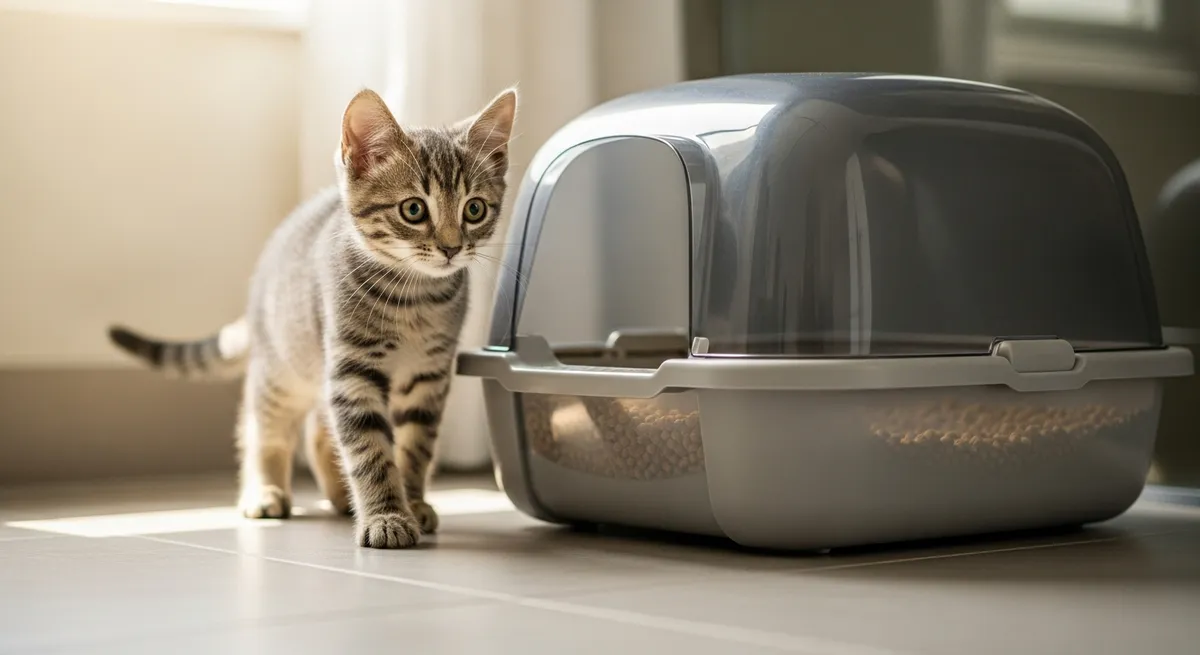
- No covered boxes if you can help it. Hooded boxes trap odor (which the cat notices long before you do), restrict turning room, and create ambush points in multi-cat households.
- Cleaning: scoop daily, full litter change weekly, wash the box monthly with mild dish soap (no bleach, no scented cleaners). The cat's nose is roughly 14 times more sensitive than yours. A box that smells fine to you may smell awful to them.
Get all of this right and 90% of the cats who were "missing the box" stop missing.
The kitten introduction
For a kitten new to your home, the protocol is essentially "show them the box and stay out of their way":
1. Place the kitten in the box on arrival, immediately after eating, immediately after waking, and after vigorous play.
2. If they dig, scratch, or eliminate, calmly praise. Do not pet (most kittens dislike being touched mid-elimination).
3. If they walk out without using it, no reaction. Try again in 30 minutes.
4. Confine the kitten to one or two rooms with the box clearly visible for the first few days, expanding territory as the box habit is established.
Most kittens are fully box-trained within 24 to 48 hours.
The adult adoption
Most shelter cats arrive box-trained — they have been using a box at the shelter for weeks or months. Show them the box on arrival, in a room they have free access to, and they almost always use it within hours.
If your adopted cat has gone the first 12 hours without using the box and is hiding under the bed, that is normal decompression behavior, not a litter-box problem. Make sure water, food, and the box are accessible from where they are hiding. They will come out and use the box when they feel safe. Decompression in a new home can take 1 to 4 weeks for shy cats — see why cats hide after adoption.
Troubleshooting the cat who is missing the box
Cats almost never urinate or defecate outside the box for arbitrary reasons. There is always a cause, and it is almost always one of these:
- Medical first. A cat who suddenly starts going outside the box should see a vet within days, not weeks. The most common medical causes — urinary tract infection, idiopathic cystitis, urinary crystals, kidney disease, diabetes, arthritis (the cat can no longer step into the box) — are treatable but get worse without treatment. A male cat straining without producing urine is a medical emergency. Get to an emergency vet immediately.
- The box is too dirty. Cats vary widely in cleanliness tolerance, but many will refuse a box with even a single old clump in it. Scoop twice a day if your cat is sensitive.
- There aren't enough boxes. N+1, every time. A multi-cat household with one box is the most common cause of one cat ambushing another in the box, after which the ambushed cat avoids the box entirely.
- The box, location, or litter changed. Cats are creatures of routine. A new litter brand, a moved box, a new piece of furniture next to the box, a new pet — any of these can cause refusal. Switch back if you can identify the change.
- A new pet, new baby, or household stress. Inappropriate elimination is the number-one stress signal in cats. Feliway diffusers, more vertical territory (cat trees, shelves), separate feeding stations, and quiet decompression time often resolve it.
- The cat is marking, not eliminating. Vertical urine spray on walls, doors, or vertical surfaces is marking, not litter-box failure. Marking is usually triggered by another cat (indoor or visible outside through a window), an unneutered male, or social stress. Spaying and neutering reduce marking dramatically; for unaltered cats, that is the first intervention.
What not to do
- Do not rub the cat's nose in it. This is a myth from a much older era of pet care. It teaches the cat that you are unsafe and increases stress, which makes elimination problems worse.
- Do not yell or chase. Same outcome.
- Do not "spray" or shock collars. There is no aversive intervention with a positive evidence base for litter-box issues in cats.
- Do not try one new litter for one day and conclude "the cat doesn't like it." Cats need 3 to 7 days to evaluate a litter change. If you are switching litters, do it gradually by mixing the old and new in increasing proportions.
The PawMates Pro angle
Cats arriving through PawMates Pro shelters carry their litter-box history on the pet profile — what litter they were using at the shelter, whether they were a confident or cautious eliminator, any prior accidents, and any medical workup that has been done. That history travels into your adopter dashboard so you know on day one whether to start with unscented clumping clay (most shelters' default) or whether to keep using whatever brand the cat was on at the shelter to minimize disruption. For cats who were fostered before adoption, the foster's notes on litter preference are part of the same record. Medical context — urinary issues, prior cystitis, current medications — flows through the VetPetz medical-record integration so your new vet has the full picture if a problem develops.
The bottom line
Litter-box success is mostly about environmental design. Get the number of boxes right, the size right, the litter right, and the cleaning right, and the vast majority of cats handle the rest themselves. When a cat starts missing a box that was working, treat it as a medical question first and an environmental question second. Punishment is never the answer.
Related reading
- Why is my cat peeing outside the litter box? — the troubleshooting guide for when a previously trained cat suddenly stops using the box.
- Why do cats knead? — and other contentment signals that show your cat has settled in.
- Why do cats sleep so much? — the polyphasic sleep pattern and what to expect.
- Why do cats hate water? — and when bathing is actually necessary.
- Why do cats love catnip so much? — useful enrichment for box training and beyond.
For more adopter guidance, see why cats hide after adoption and the rest of the PawMates adopter blog.