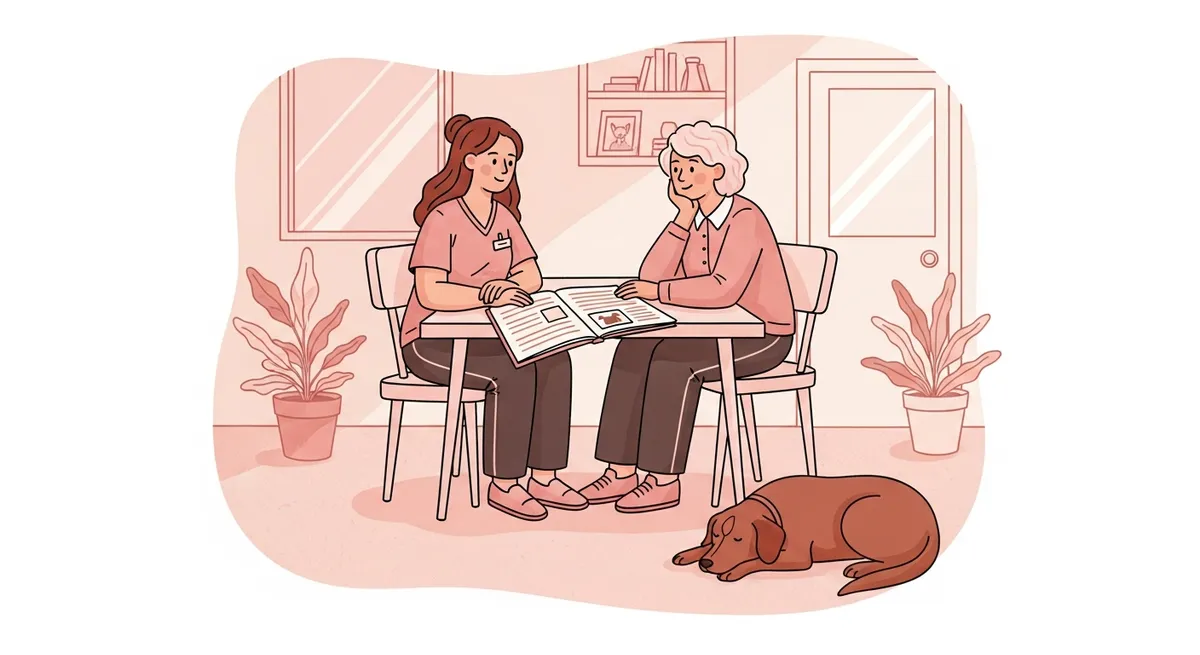
Soft-pedaling a bite-history disclosure is the single biggest source of preventable returns and lawsuits in shelter operations. It is also one of the most uncomfortable conversations a staffer ever has — partly because the dog in question is often a staff favorite, and partly because the disclosure can feel like sabotaging an adoption you've been working toward for weeks.
The script must be honest, complete, and unhurried. It happens *before* paperwork, not on page three of the contract.
The framework: Acknowledge → Reframe → Action
Almost every difficult shelter conversation follows the same emotional shape: someone is in distress, embarrassed, frustrated, or scared, and they're presenting that as a demand or a complaint. The most reliable response pattern is three steps:
1. Acknowledge the emotion before the content. ("I can hear how stressful this is.") This buys you 30 seconds of reduced reactivity.
2. Reframe the situation so you and they are on the same side. ("Let's see what we can do together.")
3. Action — give them a concrete next step, even a small one. ("Here's what I can do today.")
The script below is just this pattern applied to one specific scenario. Once your team internalizes the pattern, they can handle the conversations you never wrote a script for.
The script
> *"Before we go any further, there's something I need you to know about [Pet Name] so you can decide with full information. He has a documented bite history: [date, target, severity using a recognized scale, context]. We believe he's a great dog in the right home, and the right home looks like [no small children, dog-experienced, secure yard, willing to use a muzzle in vet settings, etc.]. I'd rather lose this adoption today than have him bite someone in your home next month. Take a few minutes — I can step out — and come back with any questions, or with a yes or no."*
Then leave the room, or at least the table. Adopters need to process this without your face across from them. When you come back, your job is to answer questions truthfully, not to re-sell the dog.
Why each piece works
- *"Before we go any further"* — sets the stakes. Signals "this is the kind of thing we tell you about *before* you fall in love, not after."
- *"So you can decide with full information"* — frames the disclosure as respecting the adopter's agency. Most people respond well to being treated as capable adults.
- *"[Date, target, severity, context]"* — facts, not euphemisms. "Bit a child in the face" is hard to say, but it's exactly what the adopter needs to hear. Use a standard severity scale (Dunbar's six-level scale is widely used) so adopters can compare apples to apples.
- *"The right home looks like…"* — gives the adopter a specific frame to evaluate themselves against. Many self-eliminate honestly here, which is the goal.
- *"I'd rather lose this adoption today than have him bite someone in your home next month"* — names the stakes plainly. This sentence is the entire reason the script works.
- *"I can step out"* — gives them privacy to discuss without performing for staff. Couples especially need this moment.
Common variations
- The disclosure with a fearful but never-bitten dog. Same script, but use precise language: *"He has shown bite-warning signals — growling, lunging, snapping with no contact — under [conditions]. He has not bitten in our care, but we want you to know what we have seen so you can decide."*
- The disclosure to a returning adopter. If the dog was returned with a bite, the script must include *"This happened in his last home, and here's what we believe contributed to it."* Don't hide returns.
- The disclosure when the bite history was discovered late. If you learn about a bite mid-process from a previous owner or vet record, pause the adoption immediately and re-do the conversation with the new information. *"I owe you an updated conversation. I just learned…"*
- The disclosure that ends in a "no." Thank them. Genuinely. *"Thank you for taking that seriously. That was the right call for your family."* Adopters who back out are doing you and the dog a favor.
What not to say
- "He's only nipped." (Minimizing language adopters will quote back to you in court.)
- "He's never done it with us." (May be true, irrelevant to the home environment.)
- "It was the previous owner's fault." (Maybe, doesn't change the dog's risk profile.)
- "Most dogs would have…" (You're not adopting out most dogs. You're adopting out this dog.)
- Any version of "but he's such a sweet boy" before the disclosure is complete.
Training drill
Have your behavior lead and your adoption coordinator role-play a disclosure conversation in front of the full team at a quarterly all-hands. Pick a real dog from your current population. Run the script word for word. Then have the team critique: was the severity description specific enough? Did the staffer pause for the adopter? Did the staffer resist re-selling after the disclosure? This kind of public modeling does more to set the standard than any policy document.
Related reading
- How Shelters Should Handle Bite History Disclosures at Surrender — the upstream conversation, when the bite is first disclosed at intake
- Identifying Red Flags in Adoption Applications
- Creating Transparency Without Scaring Adopters Away
More scripts in this series
- Script: How to Handle a Walk-In Owner Surrender
- Script: How to Handle an Adoption Return Call
- Script: How to Deliver an Adoption Denial
- Script: How to Disclose a Dog's Bite History to an Adopter
- Script: How to Tell an Applicant They're the Runner-Up
- Script: How to Handle a "Found Litter" Phone Call
- Script: How to Talk to Someone Who Found a Stray
- Script: How to Answer the Euthanasia Question in Public
- Script: How to Handle a Restricted Donation Request