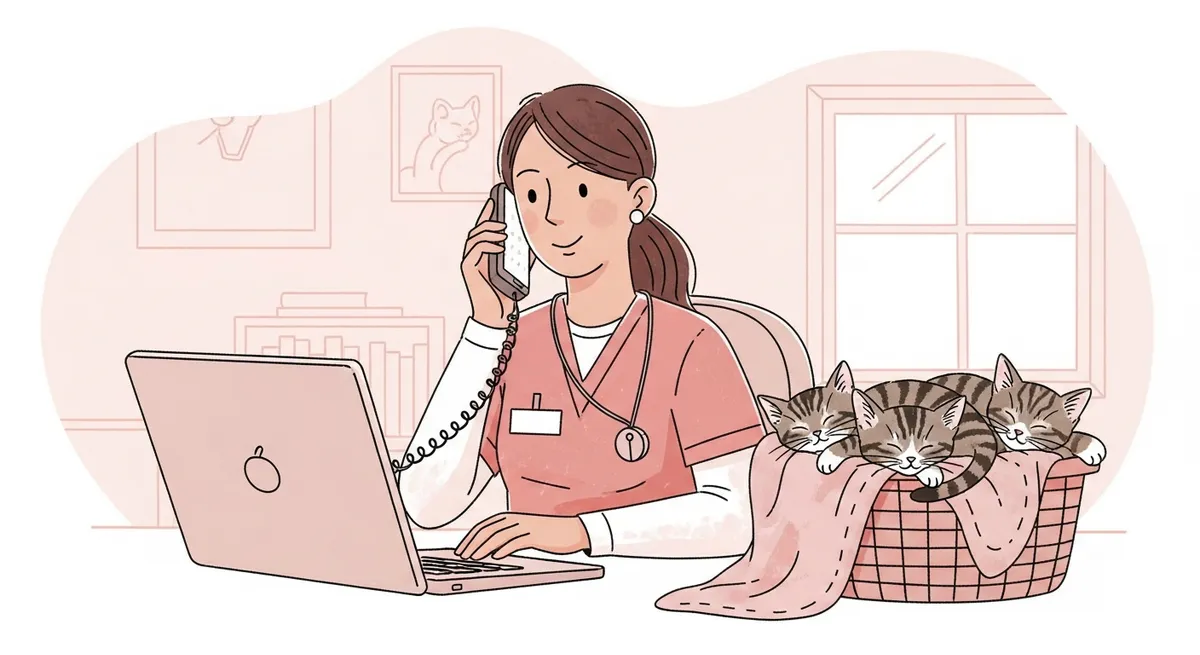
It's kitten season. The phone rings. Someone found a litter under their porch, in a barn, behind the dumpster at work — and they want you to come get them, or they want to bring them in right now. The wrong move is "we're full." The right move is to keep the caller engaged and route the kittens into the safest available path, which is rarely "into the shelter today."
This conversation is high-stakes for the kittens (intake at the wrong age can be a death sentence, fostering at the right age can be lifesaving) and high-stakes for your relationship with the public (most callers are trying to do the right thing and will tell ten people about how the call went).
The framework: Acknowledge → Reframe → Action
Almost every difficult shelter conversation follows the same emotional shape: someone is in distress, embarrassed, frustrated, or scared, and they're presenting that as a demand or a complaint. The most reliable response pattern is three steps:
1. Acknowledge the emotion before the content. ("I can hear how stressful this is.") This buys you 30 seconds of reduced reactivity.
2. Reframe the situation so you and they are on the same side. ("Let's see what we can do together.")
3. Action — give them a concrete next step, even a small one. ("Here's what I can do today.")
The script below is just this pattern applied to one specific scenario. Once your team internalizes the pattern, they can handle the conversations you never wrote a script for.
The script
> *"Thank you for not just leaving them where they were — that's already a huge help. Here's the honest situation: we don't have intake space today, but I really don't want these kittens to end up in a worse spot. I have two options for you. Option one, I can connect you with our foster team and we can get supplies, food, and a vet plan to you so you can keep them at your house for a couple of weeks while we get them ready for adoption. Option two, here's a list of partner rescues in the area that may have room today. Which feels doable for you?"*
For about a third of these callers, fostering "until we have room" turns into a permanent foster-to-adopt situation. For the rest, they leave the call feeling helped, not refused — which is the difference between a future foster volunteer and a future Yelp reviewer.
Why each piece works
- *"Thank you for not just leaving them where they were"* — acknowledges the caller's effort first. Many callers expect to be scolded for handling the kittens, which they should not have done if mom is around. Save that conversation for *after* you've engaged them.
- *"Here's the honest situation"* — signals you're going to give them real information, not a scripted brush-off.
- *"I really don't want these kittens to end up in a worse spot"* — aligns you and the caller around a shared goal. Now you're partners, not adversaries.
- *"I have two options for you"* — gives the caller agency. People who feel agency stay engaged; people who feel cornered hang up and dump.
- *"Supplies, food, and a vet plan"* — concrete, not "we'll figure something out." If you can have a foster intake packet ready to email within 30 minutes of the call, do.
- *"Which feels doable for you?"* — open-ended, low-pressure close. Lets the caller tell you what they can actually commit to.
Critical: the "is mom around?" question
Before any of the above, ask gently: *"Quick question first — when you found them, did you see a mom cat anywhere, or hear her? It's really important because mom cats often leave kittens for hours and come back, and the kittens are usually safer with her than with us if we can possibly arrange that."*
If mom may still be around, talk the caller through monitoring the area for several hours and how to set up a small shelter so mom can return. This is the highest-value version of the call.
Common variations
- The "I already brought them home" caller. Skip the mom question. Move directly to fostering or partner-rescue handoff. Don't make the caller feel bad about a decision that's already been made.
- The "they're sick / cold / not moving" caller. Treat as triage. *"Okay, those are signs we need to act on right away. Here's what I want you to do in the next ten minutes…"* Walk them through warming protocol and connect them with your medical or foster lead immediately.
- The repeat caller. Some neighborhoods have ongoing colonies. Move into a TNR (trap-neuter-return) conversation: *"It sounds like there's an unfixed female in your neighborhood. Can I connect you with our spay/neuter program so we can stop this from happening again?"*
- The barn / business / workplace finder. Loop in the property owner. Ongoing relationships with farms, warehouses, and apartment complexes are where most litters come from year after year.
What not to say
- "We're full." (Without anything after.)
- "You shouldn't have moved them." (Even if true. Lecture later, after the kittens are safe.)
- "Try the other shelter." (Unspecified, useless.)
- "Just bring them in." (When you have no intake space and no foster network ready. Sets up failure for the kittens and the staff.)
Training drill
Walk through your foster intake checklist as a team and time how long it takes to get a packet of supplies and a vet plan into a new emergency foster's hands. If it takes more than 24 hours, the script above won't work — fix the operations side before relying on the conversational side.
Related reading
- How to Build a Successful Foster Network for Your Animal Shelter or Rescue
- Surrender Prevention Programs: Alternatives Your Shelter Should Offer
More scripts in this series
- Script: How to Handle a Walk-In Owner Surrender
- Script: How to Handle an Adoption Return Call
- Script: How to Deliver an Adoption Denial
- Script: How to Disclose a Dog's Bite History to an Adopter
- Script: How to Tell an Applicant They're the Runner-Up
- Script: How to Handle a "Found Litter" Phone Call
- Script: How to Talk to Someone Who Found a Stray
- Script: How to Answer the Euthanasia Question in Public
- Script: How to Handle a Restricted Donation Request