The most powerful intake reduction tool a shelter has isn't a bigger building or a faster adoption pipeline. It's a phone call before the surrender ever happens.
Every owner who walks into your lobby with a leash in one hand and tears in the other represents a chain of unsupported moments — a missed vet appointment they couldn't afford, a behavior issue nobody coached them through, a job loss with no safety net, a landlord ultimatum with no rehoming help. Most surrenders are not about people who don't love their pets. They're about people who ran out of options.
Surrender prevention programs give them options. The data is consistent across the country: shelters with robust prevention services see meaningful drops in owner-surrender intake, shorter average length of stay, lower euthanasia rates, and stronger community trust.
This guide walks through the prevention programs every shelter — small rescue or large municipal — should consider offering, plus how to build them without overwhelming your team.
Why Surrender Prevention Belongs in Your Mission
Shelter leaders sometimes treat prevention as "nice to have" — a community-relations effort separate from core operations. That framing is outdated. Prevention is core operations.
- Every prevented surrender is a kennel that stays open for the next emergency intake. Capacity math is life-or-death during peak season.
- Prevented surrenders reduce length-of-stay pressure across your entire population. Less crowding means less stress, fewer behavioral problems, and faster adoptions for the animals who do enter.
- Prevention builds the community relationships that drive donations, volunteer recruitment, foster signups, and adoption applications. A shelter known for helping pet owners is a shelter the community shows up for.
- Prevention reduces staff burnout. The owners you turn away unhelped come back later, often in worse circumstances. The owners you support remember it forever.
If your strategic plan doesn't include surrender prevention, it has a hole in it.
The Surrender Conversation Starts With "Wait — Before You Sign"
The single most impactful intervention any shelter can implement costs nothing: train your front desk to pause every owner-surrender at the door and ask one question.
> "Before we move forward, can I ask what's going on? Sometimes there are options we can offer that might let you keep your pet."
That sentence alone prevents a meaningful percentage of surrenders. Owners often arrive convinced surrender is their only choice when it isn't. Open the door, and many will walk back through it with their pet.
The conversation should be warm, judgment-free, and quick — most situations sort into a small set of categories. Knowing the categories lets your team route help fast.
The Eight Surrender Prevention Programs Every Shelter Should Offer
Not every shelter can offer every program at full scale. Start with the ones that match your community's biggest drivers and build from there.
1. Pet Food Pantry
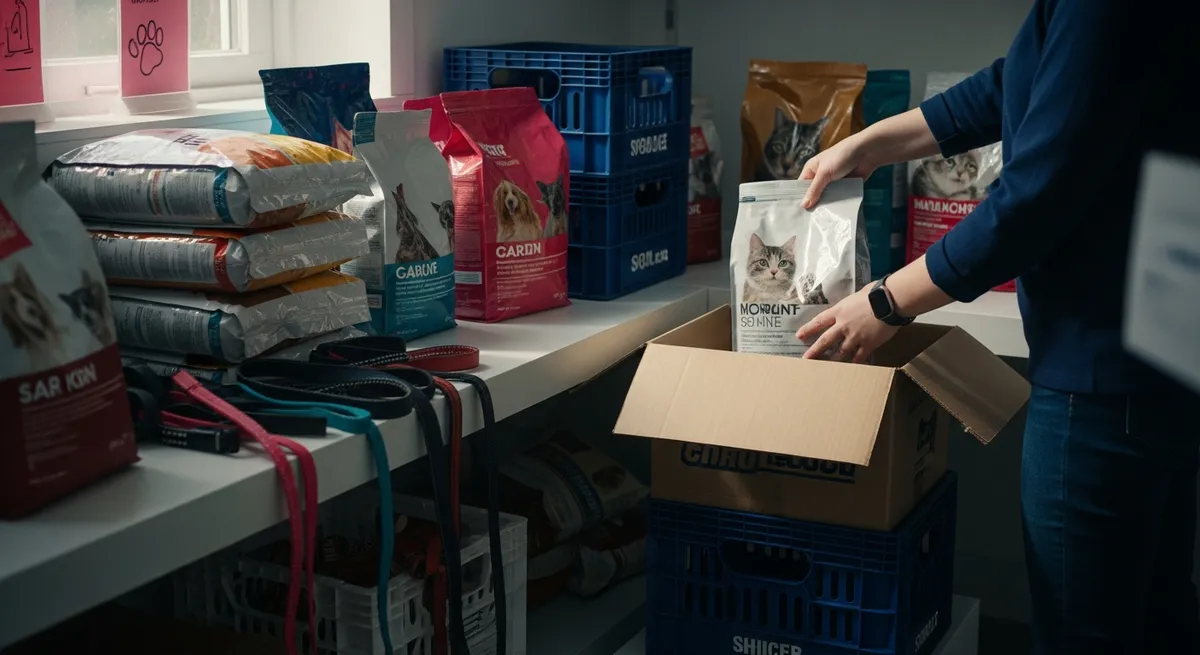
Food insecurity is one of the top three drivers of pet surrender nationally. A pet food pantry is one of the highest-leverage, lowest-cost programs you can run. Partner with a local human food bank, a major pet retailer for donations, or a national network like the Pet Food Bank. Distribute discreetly, no income verification, no paperwork beyond a sign-in sheet.
Even a small pantry — a closet of bagged kibble — keeps pets in homes through hard months.
2. Low-Cost or Free Veterinary Care Access
Veterinary cost is the second-largest driver of surrender, especially for unexpected emergencies. You don't have to run a clinic. You need a routing program: a vetted list of low-cost spay/neuter clinics, vaccine clinics, dental clinics, and emergency funds, plus a staff member who can match owners to the right resource in five minutes.
Partner with local vet schools, mobile clinics, and organizations like RedRover, the Pet Fund, and Frankie's Friends. (Related: The Future of Animal Shelter Technology: AI Is Changing Everything covers how AI tools can help your team route resources more efficiently.)
3. Behavior Helpline and Training Resources
Behavior issues are the #1 driver of dog surrenders and #2 driver of cat surrenders. Most are solvable with the right support — but owners don't know who to call.
Build a behavior helpline (email, phone, or both) staffed by trained volunteers or a contracted behaviorist. Maintain a vetted list of trainers who use force-free, evidence-based methods. Offer free or sliding-scale group classes for common issues: leash reactivity, separation anxiety, litter box problems, multi-pet introductions. (See Enrichment Is Not Optional for the foundational behavior education most owners never receive.)
A 20-minute phone consult can prevent a surrender that would cost your shelter hundreds in care.
4. Temporary Boarding for Owner Crises
Domestic violence, eviction, hospitalization, military deployment, house fire — life crises send pets to shelters who don't need to be there. A short-term crisis boarding program (typically 30–60 days) keeps families together through the worst weeks of their lives.
Run it through your foster network with clear written agreements about return dates and care costs. Partner with domestic violence shelters and hospitals so the referral pathway is established before the crisis hits.
5. Rehoming Assistance ("Home-to-Home Adoption")
Sometimes the right answer is rehoming — but the owner shouldn't have to do it alone or use Craigslist. Rehoming assistance lets owners keep custody while your shelter helps screen applicants, write the bio, take photos, and vet the new home. The pet never enters your facility.
Tools like Home to Home, Rehome by Adopt-a-Pet, and your own internal listings work well. The pet skips the kennel, the owner stays involved, and your shelter spends a fraction of what an intake costs.
6. Pet-Friendly Housing Resource List
Housing-related surrenders are devastating because they're often last-minute and feel non-negotiable to the owner. Build and maintain a current list of pet-friendly landlords, breed-friendly buildings, and tenant-rights resources for pet owners facing landlord disputes. Partner with local housing nonprofits and tenant unions.
A 10-minute conversation pointing an owner to three pet-friendly landlords often saves the surrender.
7. Spay/Neuter and Vaccine Access
Many surrenders trace back to unintended litters or fear of looming vet costs. Free or low-cost spay/neuter and vaccine programs prevent surrenders before they're even contemplated. Mobile clinic days, voucher programs, and partnerships with TNR groups all work. Prioritize zip codes with the highest historical intake.
8. Senior Pet Support
Senior pets are surrendered at disproportionate rates when owners themselves age, become ill, or move into assisted living. Programs that connect senior owners with volunteer dog walkers, pet-sitting during medical procedures, hospice care for dying pets, and end-of-life support keep senior pets in their homes for their final years. These are some of the most meaningful programs a shelter can run.
How to Build a Surrender Prevention Program Without Overwhelming Your Team
Most shelter leaders see this list and feel paralyzed. You don't need to launch eight programs in a quarter. Build sequentially.
- Month 1: Train the front desk. Implement the "wait — before you sign" conversation. Cost: zero. Impact: immediate.
- Months 2–3: Launch a food pantry. It's the easiest program to start, has the lowest staffing burden, and demonstrates community impact quickly. Use it to build donor and volunteer momentum.
- Months 4–6: Build the resource directory. A single document or webpage listing low-cost vets, behavior trainers, pet-friendly housing, and crisis support. Keep it current. Train staff to send it during every prevention conversation.
- Months 7–12: Add one specialized program based on your community's data. Pull surrender intake reasons from the last 12 months and build the program that addresses your largest category.
- Year 2+: Layer additional programs as funding, volunteer capacity, and partnerships allow.
(See Community Outreach: Teaching Pet Responsibility in Your Neighborhood for how to embed prevention into your broader community work.)
Funding Surrender Prevention
Surrender prevention is fundable. Donors love it because the math is compelling: $25 of pet food prevents a $400 intake. Build the case explicitly in your fundraising materials — "for every dollar invested in prevention, we save $X in intake and care costs and keep a family together."
Funding sources to pursue:
- Local foundation grants focused on community wellbeing
- Major pet retailer corporate giving programs
- Veterinary professional associations
- Donor-advised funds and major individual donors who connect with the human-pet bond message
- Municipal contracts (cities are increasingly funding prevention as part of animal services agreements)
Track What You Prevent
If you don't measure it, you can't fund it or improve it. Track every prevention interaction:
- Reason for the surrender attempt
- Resources offered
- Outcome (kept pet / rehomed directly / surrendered anyway / unknown)
- Follow-up at 30 and 90 days
- Cost of intervention vs. avoided intake cost
Aggregate the data quarterly. Use it in board reports, grant applications, and community communications. (See Strategies That Increase Adoption Applications for related operational metrics that pair well with prevention KPIs.)
The Cultural Shift: From Gatekeeper to Partner
The biggest barrier to surrender prevention isn't budget or staffing. It's mindset. Many shelters were built around an intake-and-place model where the owner is treated as the problem and the pet is rescued from them. Prevention requires the opposite stance: the owner is the partner, and your shelter exists to keep that partnership intact whenever possible.
Train this into your team. Praise prevention conversations the way you praise adoptions. Celebrate kept pets in your monthly all-hands. Track prevention as a top-line outcome alongside live release rate.
Shelters that make this cultural shift report higher staff morale, stronger community reputation, and — paradoxically — better adoption outcomes when surrender does happen, because owners trust them enough to disclose the truth at intake.
How PawMates Pro Helps
PawMates Pro supports surrender prevention as a first-class workflow, not an afterthought. Track prevention conversations alongside intake records, route owners to community resources from a configurable directory, schedule follow-ups at 30 and 90 days, and report on prevention outcomes in the same dashboards you use for adoptions and length of stay. Our Collaboration Portal lets partner shelters share resource directories, coordinate crisis boarding across organizations, and surface foster capacity for owner-crisis placements in real time. The data you need to fund prevention is the data your platform should already be collecting.
The Bottom Line
The owners walking through your lobby with surrender paperwork are mostly people who love their pets and ran out of options. Surrender prevention is how you give them the options they couldn't find on their own. Start with one conversation, one food pantry, one resource list — and build from there.
Every surrender you prevent is a kennel you don't have to fill, an adoption you don't have to manage, and a family you don't have to break apart. That's the program.
Frequently Asked Questions About Surrender Prevention Programs
What is a surrender prevention program?
A surrender prevention program is a set of services a shelter or rescue offers to help pet owners overcome the obstacles that would otherwise force them to give up their pet. Common services include pet food pantries, low-cost veterinary care access, behavior helplines, temporary crisis boarding, rehoming assistance, pet-friendly housing resources, and spay/neuter access.
Why should shelters offer surrender prevention services?
Surrender prevention reduces intake numbers, frees up kennel space for emergency cases, lowers length-of-stay across the population, reduces euthanasia pressure, builds community trust, and is significantly less expensive than processing and caring for a surrendered animal. Most prevented surrenders also keep families together, which is a meaningful welfare outcome on its own.
What is the easiest surrender prevention program to start?
A pet food pantry is typically the easiest entry point. It has low staffing requirements, can be stocked through donations and partnerships with food banks, and addresses one of the top three drivers of surrender nationally. Most shelters can launch a small pantry in 30–60 days.
What are the most common reasons people surrender pets?
The leading drivers of pet surrender are housing changes (moves, evictions, landlord restrictions), financial hardship (especially veterinary costs and food insecurity), behavior issues (most often manageable with training), allergies, and personal life crises (illness, divorce, loss of caregiver). Most of these have prevention pathways that shelters can offer.
How do shelters fund surrender prevention programs?
Funding sources include local foundation grants focused on community wellbeing, corporate giving programs from major pet retailers, veterinary professional associations, donor-advised funds, individual major donors, and increasingly municipal contracts. The cost-benefit case is strong — typically a few dollars of prevention saves hundreds in intake and care costs.
What should shelters say to owners considering surrender?
Train front-desk staff to pause every owner-surrender with a warm, judgment-free question: "Before we move forward, can I ask what's going on? Sometimes there are options we can offer that might let you keep your pet." This single conversation prevents a meaningful percentage of surrenders by surfacing options owners didn't know existed.
How do shelters measure the success of prevention programs?
Track every prevention interaction including the reason for the surrender attempt, resources offered, the immediate outcome (kept the pet, rehomed directly, or proceeded with surrender), and follow-up status at 30 and 90 days. Aggregate the data quarterly and compare prevention costs to avoided intake costs. This data supports board reporting, grant writing, and continuous program improvement.
Related Articles
- How Shelters Should Handle Bite History Disclosures at Surrender
- Building Post-Adoption Support Systems That Keep Pets in Homes
- Community Outreach: Teaching Pet Responsibility in Your Neighborhood
- The Importance of Following Up: How to Prevent Adoption Returns
- PawMates Pro Collaboration Portal: 10 Ways to Use It to Save Lives