Animal shelters exist because of a community problem — too many pets without homes, not enough responsible ownership, and insufficient public awareness of what animals need. Intake reduction, adoption success, and long-term animal welfare all depend on one thing shelters often underinvest in: community education.
Outreach programs that teach pet responsibility do not just prevent future surrenders. They build your shelter's reputation, deepen community trust, expand your donor and volunteer base, and position your organization as the local authority on animal welfare. Shelters that invest in community education see measurable decreases in intake volume, better adoption outcomes, and stronger public support for their mission.
This guide covers how to design, deliver, and sustain community outreach programs that make a real difference — without overwhelming your already-stretched staff.
Why Outreach Is a Shelter's Best Long-Term Investment
Most shelters spend the majority of their resources on reactive work: intake, care, adoption, and crisis response. Community outreach is proactive work — preventing the problems that drive intake in the first place.
The data supports this approach:
- Communities with active humane education programs see 15-25% reductions in stray intake over 3-5 years
- Spay/neuter awareness campaigns directly reduce unwanted litter surrenders
- Pet responsibility education reduces behavior-related surrenders by helping owners understand and manage normal pet behaviors
- Community trust built through outreach increases adoption rates, volunteer recruitment, and donation revenue
Every dollar spent on prevention saves multiple dollars in reactive care. The challenge is that outreach benefits are long-term, while shelter operations demand immediate attention. The solution is building outreach into your operational model — not treating it as an optional extra.
School Programs: Reaching the Next Generation
School-based humane education is the highest-impact outreach investment for long-term change. Children who learn about pet responsibility become adults who make better pet ownership decisions.
Elementary School (Ages 5-10)
- Content: Basic animal safety (how to approach a dog, reading body language), pet needs (food, water, shelter, exercise, veterinary care), empathy and kindness toward animals
- Format: 30-45 minute classroom presentations with props (stuffed animals for body language demos), picture books, coloring sheets, and interactive Q&A
- Extension: Invite classes to visit the shelter for age-appropriate tours. Show them the animal care process — feeding, cleaning, socialization — and explain why animals come to shelters.
- Partnership hook: Many schools need to fulfill SEL (Social-Emotional Learning) requirements. Frame your program as an SEL-aligned curriculum supplement.
Middle School (Ages 11-14)
- Content: Responsible pet ownership costs and commitments, spay/neuter importance, microchipping, the shelter system and how it works, animal behavior basics, careers in animal welfare
- Format: 45-60 minute interactive presentations, small group discussions, case studies ("What would you do if..."), video content showing day-in-the-life shelter work
- Extension: Offer youth volunteer opportunities as a follow-up for interested students. Create service-learning projects that connect classroom content to real shelter needs.
High School (Ages 15-18)
- Content: Animal welfare policy and ethics, shelter statistics and systemic challenges, the science of animal behavior and stress, community health connections (zoonotic disease, bite prevention, mental health benefits of pets)
- Format: Guest lectures, panel discussions with shelter staff and veterinarians, student-led research projects, internship and volunteer program recruitment
- Extension: Offer career exploration sessions for students interested in veterinary medicine, animal behavior, nonprofit management, or public health.
Community Workshops and Events
Beyond schools, community-facing workshops address the adult population — including current pet owners whose education gaps may lead to surrenders.
Essential Workshop Topics
- Pet First Aid and Emergency Preparedness: Teach basic first aid (wound care, CPR awareness, choking response) and disaster preparedness (evacuation plans, emergency kits, identification). These workshops draw large crowds and position your shelter as a community resource.
- Behavior and Training Basics: Cover the most common behavior challenges that lead to surrenders — house training, leash reactivity, separation anxiety, introducing new pets to existing pets. Partner with local trainers to co-deliver content.
- The True Cost of Pet Ownership: A financially transparent workshop covering food, veterinary care, grooming, training, insurance, emergency funds, and supplies. Target this at prospective first-time owners to prevent impulse adoptions.
- Spay/Neuter Education: Explain the medical benefits, behavioral benefits, and community impact of spay/neuter. Connect attendees with low-cost spay/neuter resources in your area.
- Senior Pet Care: As pets age, their needs change. Workshops on senior pet health, end-of-life planning, and quality-of-life assessment help owners keep aging pets comfortable — and out of shelters.
Low-Barrier Community Events
Not everyone will attend a formal workshop. Meet your community where they are:
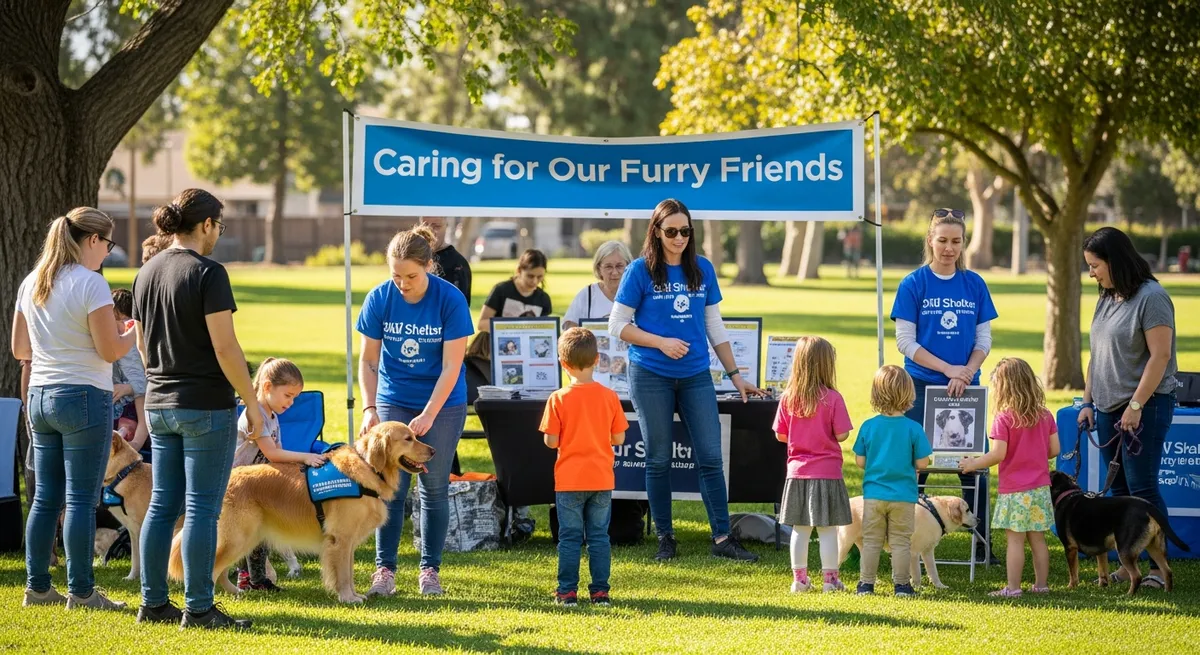
- Pop-up information booths: Farmer's markets, community festivals, street fairs, and neighborhood events. Bring brochures, friendly shelter animals (temperament-screened), and staff or volunteers who can answer questions.
- Pet supply drives: Host supply drives at local businesses where community members can donate food, toys, and supplies. Use these events as touchpoints for education and relationship building.
- Free microchip clinics: Offer free or low-cost microchipping events. While pets are being chipped, provide education on identification, licensing, and lost pet protocols.
- Community pet food pantries: Food insecurity is a significant driver of pet surrender. Operating a pet food pantry keeps animals in homes and builds trust with vulnerable community members.
Targeted Outreach: Reaching High-Risk Populations
Not all communities face the same animal welfare challenges. Tailor your outreach to address specific local needs:
- Low-income neighborhoods: Focus on access — low-cost veterinary care, spay/neuter, pet food assistance, and housing resources. Remove financial barriers to responsible pet ownership.
- Immigrant and refugee communities: Cultural attitudes toward pets vary widely. Provide culturally sensitive education in relevant languages about local animal welfare laws, pet ownership norms, and available resources.
- Rural areas: Stray and feral cat management, livestock-pet interactions, and limited veterinary access are common rural challenges. Offer TNR (Trap-Neuter-Return) education and mobile veterinary clinics.
- Public housing residents: Many housing authorities restrict pets. Work with housing authorities to develop pet policies that allow responsible ownership. Provide residents with resources to meet pet care requirements.
Leveraging Digital Outreach
Physical events have geographic and capacity limitations. Digital outreach extends your reach exponentially.
- Social media education series: Create weekly educational posts on pet care topics. Short-form video (under 60 seconds) performs best. Social media strategy should balance adoption marketing with educational content.
- Webinars and live Q&A sessions: Host monthly online events where community members can ask questions about pet behavior, health, and care. Record sessions and post them as a resource library.
- Email newsletters: Regular newsletters to your subscriber list with seasonal tips, local resources, and educational content maintain ongoing community engagement.
- Blog content: Your shelter blog (like this one) serves as both an SEO tool and a permanent educational resource. Write content that addresses common community questions, and share it across your digital channels.
PawMates Pro helps shelters manage their digital presence by providing tools for content scheduling, audience segmentation, and engagement tracking. Shelters using the platform can coordinate outreach campaigns across multiple channels from a single dashboard, ensuring consistent messaging and measurable impact.
Building a Volunteer Outreach Team
Shelter staff cannot do outreach alone. Build a dedicated volunteer outreach team:
- Recruit educators: Retired teachers, college students studying education or animal science, and experienced pet owners make excellent outreach volunteers.
- Develop standardized presentations: Create slide decks, talking points, and activity kits that any trained volunteer can deliver consistently. This ensures quality even when staff are not present.
- Provide training: Outreach volunteers need presentation skills, basic animal behavior knowledge, and the ability to handle questions about sensitive topics (euthanasia, animal cruelty, hoarding).
- Schedule regular outreach shifts: Treat outreach like any other volunteer role — with scheduled shifts, expectations, and accountability. Volunteer management systems can handle scheduling and tracking.
Partnerships That Amplify Your Reach
No shelter can reach an entire community alone. Build partnerships with organizations that share your goals:
- Veterinary clinics: Co-host wellness events, share educational materials, cross-refer clients
- Pet supply stores: Use their retail spaces for adoption events and educational displays
- Libraries: Many libraries host community education programs and are eager for content partners
- Faith communities: Churches, mosques, synagogues, and temples often have active community service programs
- Civic organizations: Rotary clubs, Kiwanis, Lions clubs, and similar organizations support community education initiatives and can provide funding, volunteers, and venues
- Local government: Animal control, parks and recreation, and public health departments are natural partners for community animal welfare education
Measuring Outreach Impact
Track outreach activities and correlate them with shelter outcomes:
- Program reach: Number of presentations, workshops, and events delivered. Number of people reached.
- Intake trends: Monitor intake volume (particularly owner surrenders) in neighborhoods where outreach is active. Look for decreases over 6-12 month periods.
- Spay/neuter rates: Track uptake of spay/neuter services following education campaigns.
- Adoption quality: Do adopters who participated in outreach programs have lower return rates? Higher satisfaction?
- Community awareness: Survey community members about their knowledge of your shelter, services, and pet care topics before and after outreach campaigns.
- Volunteer and donor pipeline: How many outreach participants become volunteers, donors, or adopters?
Document everything. Data-driven outreach programs are easier to fund, easier to justify to boards and stakeholders, and easier to improve over time.
Sustainability: Making Outreach Part of Your DNA
Outreach fails when it depends on one enthusiastic staff member or a single grant cycle. Build sustainability by:
- Dedicating budget: Even a small annual budget line for outreach legitimizes it as an organizational priority
- Assigning ownership: Designate a staff member (even part-time) as outreach coordinator. Without ownership, outreach becomes everyone's second priority and no one's first.
- Creating repeatable programs: Standardized presentations, reusable materials, and trained volunteer teams allow outreach to continue even during staff transitions
- Documenting outcomes: Shelter analytics tools like PawMates Pro help shelters track outreach activities alongside operational metrics, demonstrating the connection between education and intake reduction
- Seeking diverse funding: Grants, corporate sponsorships, community fundraising, and municipal funding each reduce dependence on any single source
The shelters with the lowest per-capita intake rates are almost always the ones with the strongest community outreach programs. Education is not a nice-to-have. It is infrastructure.
---
Frequently Asked Questions
Why should animal shelters invest in community outreach?
Community outreach addresses the root causes of animal homelessness — irresponsible ownership, lack of spay/neuter, impulse acquisitions, and behavioral surrenders — rather than just treating the symptoms. Shelters with active outreach programs consistently see lower intake volumes, better adoption outcomes, stronger volunteer and donor pipelines, and greater community trust and support.
What are the most effective community outreach strategies for shelters?
School-based humane education programs have the highest long-term impact because they shape future pet owners. Community workshops on behavior, pet care costs, and spay/neuter reach current owners. Low-barrier events like microchip clinics and pet food pantries build trust with underserved populations. Digital content extends reach beyond geographic limits.
How can small shelters with limited staff do outreach?
Build a volunteer outreach team using standardized presentations and activity kits. Partner with schools, libraries, and community organizations that provide venues and audiences. Use digital channels (social media, email, blog content) for scalable, low-cost education. Start with one program and expand based on capacity and impact.
How do shelters measure the impact of outreach programs?
Track program reach (people served), intake trends in served areas, spay/neuter uptake, adoption quality metrics (return rates for educated vs. non-educated adopters), and pipeline conversion (outreach participants who become volunteers, donors, or adopters). Correlate outreach activity with shelter outcomes over 6-12 month periods.
What topics should community pet responsibility workshops cover?
Essential topics include the true cost of pet ownership, spay/neuter benefits, basic behavior and training, pet first aid, emergency preparedness, and senior pet care. Tailor content to your community's specific needs — low-income areas may need resource access information, while suburban communities may need behavior management education.
How can shelters reach communities that don't traditionally engage with animal welfare organizations?
Meet communities where they are — farmer's markets, community festivals, faith organizations, public housing events. Provide materials in relevant languages. Partner with trusted community organizations as intermediaries. Focus on providing value (free microchipping, pet food, veterinary care) alongside education. Build trust through consistent presence, not one-time events.
Related Articles