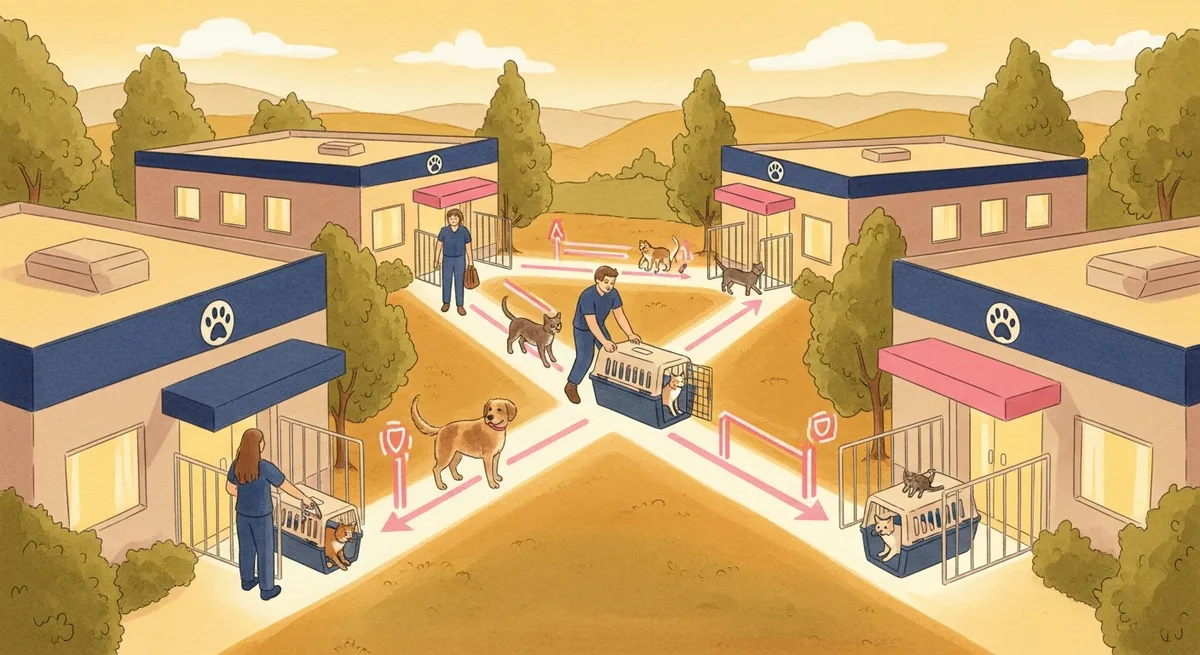
Most animal shelters and rescues operate independently. They manage their own intake, their own foster networks, their own adoption pipelines — and when capacity gets stretched, the options narrow fast. An overcrowded shelter can't easily coordinate a transfer with another organization two counties away. A small rescue facing a complex medical case can't tap into the veterinary experience of a dozen other groups. A shelter that just lost an approved adopter to a poor match can't redirect that person to a better-fit pet at another facility.
But what if they could?
The Collaboration Portal in PawMates Pro was built to solve exactly this problem. It's not a messaging app. It's a structured regional network designed to help shelters increase placements, share resources, and reduce unnecessary euthanasia through coordinated action. Here are 10 operational ways shelters can use inter-shelter collaboration — and why each one matters.
1. Transfer Coordination (Reduce Length of Stay)
Shelters can post animals available for transfer — whether due to overcrowding, behavior mismatches, or medical capacity limits — and connect with partner organizations that have open space or relevant specialization.
Why it matters: According to the ASPCA, approximately 920,000 shelter animals are euthanized each year in the United States, often due to space constraints rather than lack of adoptable qualities. Transfer programs directly address this by moving animals from high-intake facilities to organizations with available capacity. A dog sitting for weeks at one shelter may find a home within days at another. Collaboration tools replace the slow phone-and-email process with instant visibility across the network.
2. Foster Network Sharing
One shelter is over capacity with dogs. Another has foster homes available. Through a collaboration portal, they can share foster resources across organizations without requiring separate agreements for each placement.
Why it matters: The ASPCA estimates that approximately 6.3 million companion animals enter U.S. shelters each year. Foster programs are one of the most effective ways to increase capacity without building new facilities. When shelters share foster networks regionally, they unlock homes that would otherwise sit empty. More animals in foster means fewer in kennels, which leads to less kennel stress, better behavior evaluations, and faster adoptions.
3. Medical Case Collaboration
Shelters can consult with partner organizations on complex cases — injuries, infectious disease outbreaks, treatment protocols — and share veterinary notes, lab results, or outcome data.
Why it matters: Many shelters, particularly smaller rescues, have limited veterinary expertise on staff. A rescue encountering a parvo outbreak for the first time can benefit enormously from connecting with a shelter that has managed dozens. This kind of peer-to-peer knowledge sharing can prevent animals from being euthanized due to lack of treatment knowledge rather than lack of treatability.
4. Behavioral Case Support
Organizations can post difficult behavior cases — reactivity, fear aggression, bite history — and get input from shelters and trainers who have successfully rehabilitated similar animals.
Why it matters: Behavioral euthanasia is one of the most difficult decisions shelter staff face. According to the ASPCA, behavior issues are among the top reasons animals are surrendered to shelters and among the most common reasons for euthanasia decisions. In many cases, the animal isn't beyond help — the current organization just lacks the experience or resources to address the behavior. Connecting with groups that specialize in behavior modification and enrichment can change outcomes dramatically.
5. Adopter Cross-Referral Between Shelters
An approved adopter at Shelter A doesn't find the right match — maybe their living situation doesn't fit any currently available animals. Instead of losing that adopter entirely, they can be referred to a partner shelter with a better-fit pet.
Why it matters: Every lost adopter represents a missed placement opportunity. Cross-referral networks keep approved adopters in the system and increase total placements across participating organizations. This is especially effective when shelters serve different geographic areas or specialize in different animal types. (See more about what makes adoption applications succeed.)
6. Emergency & Disaster Response Coordination
Wildfires, floods, hoarding cases — when emergencies displace animals, shelters can broadcast urgent needs for space, supplies, or transport across the entire network simultaneously.
Why it matters: During California's recurring wildfire seasons, shelters across the Bay Area face the challenge of rapidly placing displaced animals while coordinating through individual phone calls and emails — a process that is inherently slow during emergencies. When shelters have pre-established coordination channels, they can distribute displaced animals across multiple facilities based on real-time capacity rather than scrambling to find placement one call at a time. A collaboration portal applies this same principle to everyday shelter operations, not just declared emergencies.
7. Resource & Supply Sharing
Shelters can request or offer excess supplies — food, crates, medications, blankets, cleaning supplies — to partner organizations in their region.
Why it matters: Budget constraints are a constant challenge in animal welfare. According to the Humane Society of the United States, many shelters operate on tight budgets with limited resources. When one organization receives a large food donation it can't fully use, a simple post in a collaboration network can direct those supplies to three other organizations that need them. This reduces waste and stretches limited budgets further.
8. Transport & Logistics Coordination
Coordinate animal transports with multi-stop routes, driver availability, and timing — all visible to every participating organization in the network.
Why it matters: Transport logistics are one of the biggest operational bottlenecks in inter-shelter transfers. A dog approved for transfer may sit in a kennel for days or weeks simply waiting for someone available to drive it to the receiving shelter. Making transport needs visible to the entire network allows volunteer drivers and partner organizations to fill gaps more efficiently. Organizations like Wings of Rescue and regional transport networks have demonstrated that coordinated logistics dramatically increase successful transfer completion rates.
9. Shared Volunteer Pool (Regional)
Volunteers can contribute to multiple shelters — events, transport drives, foster support, administrative tasks — through a single network instead of signing up separately with each organization.
Why it matters: According to the Humane Society, volunteers are essential to shelter operations, with many organizations relying on volunteer hours to supplement limited paid staff. Regional volunteer sharing maximizes this human capital instead of siloing it. A volunteer who walks dogs at one shelter on Saturdays might be available to help with an adoption event at another shelter on Sundays. Shared pools mean more coverage with the same volunteer base. (Learn more about building successful volunteer programs.)
10. Knowledge Base & Playbook Exchange
Shelters share SOPs, templates, workflows, and policies — intake procedures, adoption screening criteria, foster agreements, behavior evaluation protocols, volunteer handbooks.
Why it matters: Many shelters develop effective processes independently, then keep them locked in internal documents. A shelter that built a strong foster onboarding packet shouldn't have to keep it siloed. Knowledge sharing lets organizations benefit from proven best practices developed across the network, raising the operational standard for everyone.
The Real Opportunity
Every shelter that participates in a collaboration network makes the entire system stronger. More connected organizations means more available capacity, more shared expertise, more distributed resources, and ultimately more homes for animals.
This isn't about technology for technology's sake. It's about addressing the fundamental challenge that has limited animal welfare outcomes for decades: shelters operating in isolation when they could be working together.
The animals don't care which organization saves them. They just need someone to.
Frequently Asked Questions
What is shelter collaboration and why does it matter for animal welfare?
Shelter collaboration is the practice of multiple animal shelters, rescues, and humane societies working together through coordinated networks to share resources, transfer animals, and exchange expertise. It matters because approximately 920,000 shelter animals are still euthanized annually in the U.S. according to the ASPCA, and many of these outcomes can be prevented when organizations pool their capacity, foster networks, and adoption pipelines rather than operating independently.
How do inter-shelter animal transfers work?
Inter-shelter transfers involve moving animals from one organization to another — typically from a facility with limited space or resources to one with available capacity or relevant specialization. The sending shelter posts the animal's profile, medical history, and behavioral notes. A receiving shelter with space or expertise accepts the transfer, and transport is coordinated between the organizations. Collaboration platforms streamline this by making available animals visible to the entire partner network simultaneously.
What are the benefits of regional foster network sharing between shelters?
Regional foster sharing allows shelters to place animals in foster homes managed by partner organizations, effectively expanding each shelter's capacity without building new facilities. Benefits include reduced kennel overcrowding, lower stress-related behavior issues in animals, faster adoption timelines (since fostered animals typically show better behavior), and the ability to serve more animals during high-intake periods like kitten season or post-holiday surrender spikes.
How can shelters coordinate emergency animal placement during natural disasters?
During disasters like wildfires or floods, shelters can use collaboration networks to broadcast urgent placement needs to all partner organizations simultaneously. This replaces the traditional approach of making individual phone calls and emails, which is too slow during emergencies. Effective coordination includes sharing available capacity in real time, organizing multi-stop transport routes, and distributing displaced animals across the network based on each facility's current availability and specialization.
What types of resources can shelters share through collaboration networks?
Shelters can share physical supplies (food, crates, medications, blankets), operational resources (SOPs, intake forms, foster agreements, volunteer handbooks), expertise (veterinary consultation, behavior modification guidance, fundraising strategies), and human resources (volunteer pools, transport drivers). This resource sharing reduces costs, prevents waste, and helps underfunded organizations access materials and knowledge they couldn't develop or afford independently.
How does cross-shelter adopter referral increase adoption rates?
When an approved adopter at one shelter doesn't find the right match, cross-referral directs them to partner organizations with better-fit animals instead of letting them leave the system entirely. This keeps qualified adopters engaged and increases total placements across the network. It's particularly effective when participating shelters serve different geographic areas, house different animal types, or have varying intake patterns.
Featured book — see full article for details.
Related Articles
- How to Build a Successful Foster Network for Your Animal Shelter or Rescue
- How to Reduce Kennel Stress in Dogs: Proven Strategies for Calmer, Healthier Shelter Pets
- Strategies That Increase Adoption Applications
- Creating Successful Youth Volunteer Programs at Animal Shelters
- Understanding Shelter Dog Behavior: What It Really Means
- Enrichment Is Not Optional: It's the Key to a Happy Pet