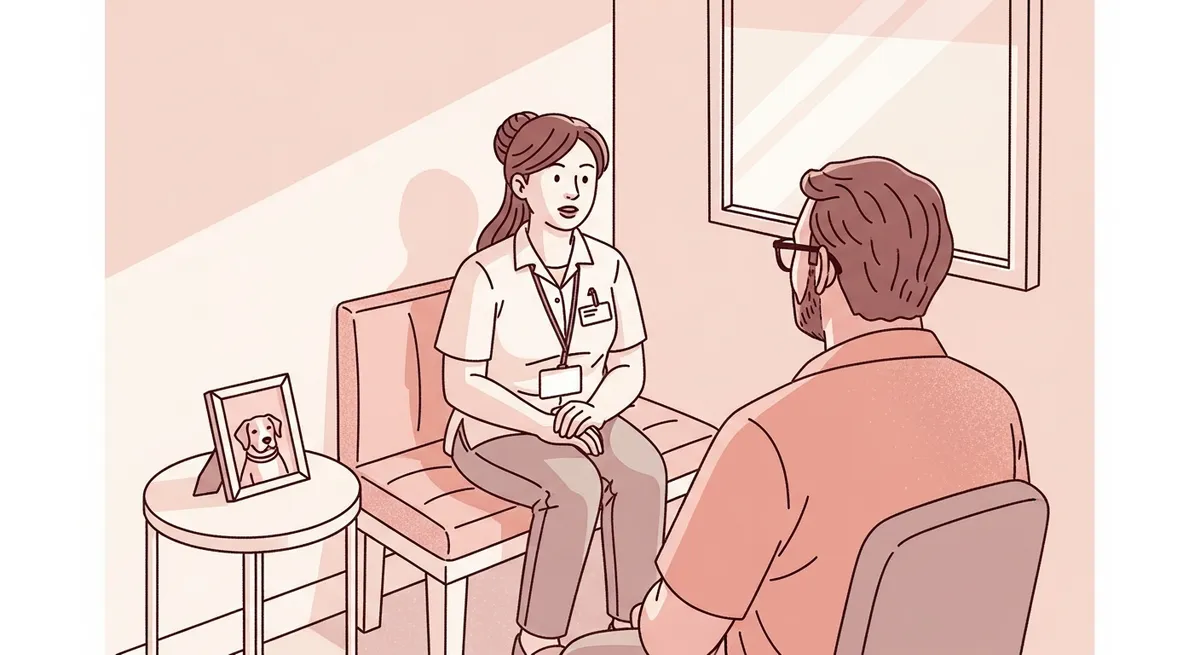
Someone calls or emails to ask whether a specific pet — usually one they were following online, sometimes one they applied for — was euthanized. Sometimes it's a former adopter asking about a prior pet. Sometimes it's a member of the public, or a journalist, or a board member's neighbor. Sometimes it's a donor.
This is the hardest version of public-trust conversation, and the rules are clear: honesty is non-negotiable, and *how* you say it is everything.
The framework: Acknowledge → Reframe → Action
Almost every difficult shelter conversation follows the same emotional shape: someone is in distress, embarrassed, frustrated, or scared, and they're presenting that as a demand or a complaint. The most reliable response pattern is three steps:
1. Acknowledge the emotion before the content. ("I can hear how stressful this is.") This buys you 30 seconds of reduced reactivity.
2. Reframe the situation so you and they are on the same side. ("Let's see what we can do together.")
3. Action — give them a concrete next step, even a small one. ("Here's what I can do today.")
The script below is just this pattern applied to one specific scenario. Once your team internalizes the pattern, they can handle the conversations you never wrote a script for.
The script
> *"I appreciate you caring enough to call and ask. I want to give you a straight answer. [Pet Name] was [outcome — e.g., humanely euthanized on [date] due to [medical/behavioral reason], in line with our written guidelines]. I know that's hard to hear, and I'm sorry. If you'd like, I can tell you more about what we tried and why we made the call we did, or I can answer questions about how we approach these decisions in general. Whichever is more helpful to you."*
Then *stop talking*. Wait for the caller to direct the next part of the conversation. Some people want details; some people just need to sit with the news for a moment; some people need to express anger that has nothing to do with you.
Why each piece works
- *"I appreciate you caring enough to call and ask"* — acknowledges the courage it takes to ask the question. Most people who ask have been bracing themselves.
- *"I want to give you a straight answer"* — signals what's coming and prepares the caller. Reduces the shock of the news itself.
- *"[Pet Name] was [outcome]"* — name the pet, name the outcome, in that order. Don't lead with policy language ("Pursuant to our humane outcome protocol…").
- *"In line with our written guidelines"* — places the decision inside a framework, not an individual judgment call. You can defend a written guideline; you cannot defend "we just decided."
- *"I'm sorry"* — these are two of the most important words in the script. A shelter that can say "I'm sorry" without admitting fault has matured past most.
- *"Whichever is more helpful to you"* — gives the caller control over the rest of the conversation.
Critical: the language matters
Do not soften the language with euphemisms. "Put down," "let go," "put to sleep," "sent over the rainbow bridge," "released" — these all read as evasive in this specific conversation, even when they're meant kindly. Use *humanely euthanized*. Adopters and donors notice the difference, and a shelter that uses precise language signals a shelter that takes the decisions seriously.
The exception: in private, intimate conversations with a grieving family who used softer language first, you can mirror their language back to them. *"Yes, we let her go peacefully on Tuesday."* That's appropriate. But not as the institutional first response.
Common variations
- The journalist or advocate. Same script, with one addition: *"I want to be helpful to you for the public conversation as well. Would it be useful for me to walk you through our decision framework so you can write about it accurately?"* Transparency is the only durable answer to scrutiny.
- The previous adopter asking about the dog they returned. Hardest version. Same script, with extra patience for guilt and grief. *"I want you to know that returning him was the right call given what was happening — that decision and what came later are separate, and I don't want you to carry this one."*
- The board member or major donor. Same script. Do not give insiders a more candid answer than you give the public. The discipline of treating every euthanasia question identically is a culture protection.
- The caller who escalates to anger. Don't argue. *"I hear you. This is the worst part of what we do. I'm not going to defend it past what I've already said — I'd rather just listen to what you're feeling about it, if that's okay."*
What not to say
- "We had no choice." (You always had choices. Some were worse than the one you made.)
- "She was just an old dog." (Minimizing. Devastating to the person asking.)
- "We can't really discuss individual cases." (Reads as cover-up. Use the script.)
- "It's a difficult job we have to do." (Self-pitying when the caller is the one grieving.)
- Any laughter, including nervous laughter. Train staff to notice it.
Training drill
This script should be practiced quarterly with the *executive director or shelter director present*, not delegated. The director should personally model the conversation at least once a year so that staff see it done well by leadership. Have the team identify the toughest real call from the prior quarter — anonymized — and walk through how it would be handled with this script.
Related reading
- Creating Transparency Without Scaring Adopters Away — the broader public-trust playbook this script fits inside
More scripts in this series
- Script: How to Handle a Walk-In Owner Surrender
- Script: How to Handle an Adoption Return Call
- Script: How to Deliver an Adoption Denial
- Script: How to Disclose a Dog's Bite History to an Adopter
- Script: How to Tell an Applicant They're the Runner-Up
- Script: How to Handle a "Found Litter" Phone Call
- Script: How to Talk to Someone Who Found a Stray
- Script: How to Answer the Euthanasia Question in Public
- Script: How to Handle a Restricted Donation Request