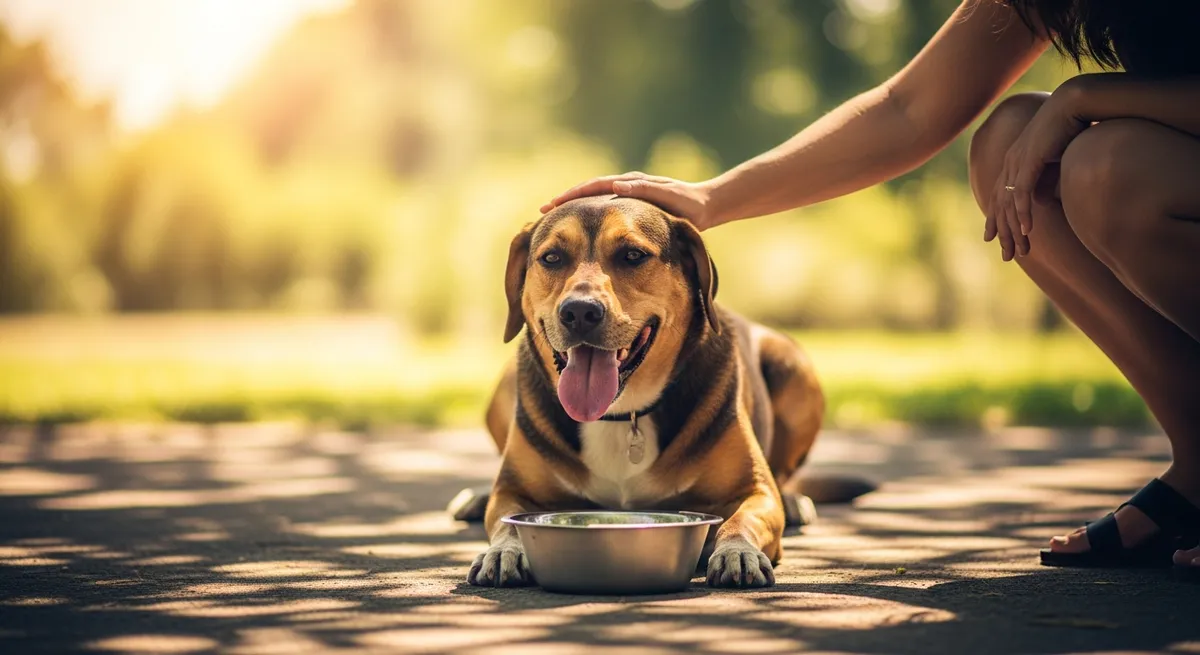
Heat stroke is one of the fastest-moving emergencies in pet medicine. A dog who was happily fetching a ball can go from "panting a lot" to a life-threatening crisis in a matter of minutes — and cats, who hide distress so well, can be dangerously overheated before their owners notice anything is wrong. Knowing the difference between early warning signs and full emergency signs, and knowing exactly what to do in the first few minutes, can genuinely save your pet's life this summer.
Why heat stroke is so dangerous
A pet's normal body temperature runs around 101 to 102.5 degrees. Heat stroke is generally defined as a body temperature at or above roughly 104 degrees from heat exposure, and above about 106 degrees the risk of organ damage becomes severe. Because dogs and cats cannot sweat to cool off — they rely on panting and a little paw-pad sweating — their internal temperature can climb out of control quickly. Once it does, it can damage the brain, kidneys, liver, heart, and the blood's ability to clot. This is why minutes matter.
Early warning signs — act now, before it becomes an emergency
Heat stroke does not start at collapse. It starts with signals that are easy to brush off. Catching these early and cooling your pet down can prevent the crisis entirely:
- Heavy, rapid panting that does not slow down.
- Excessive drooling or thick, sticky saliva.
- Bright red gums or tongue.
- Restlessness or agitation — pacing, unable to settle.
- Seeking shade, lying flat, or refusing to keep moving.
- Warm to the touch, especially the ears and belly.
In cats, the signs are subtler and often missed: panting at all (cats rarely pant, so any open-mouth breathing is a red flag), drooling, restlessness, grooming excessively to cool down, or sweaty paw prints on the floor.
Emergency signs — this is a 911 situation for your pet
If you see any of the following, the situation is critical. Begin cooling immediately and head for the nearest emergency vet:
1. Collapse, weakness, or inability to stand.
2. Vomiting or diarrhea, sometimes with blood.
3. Disorientation, stumbling, or a dazed, glazed expression.
4. Gums that turn pale, blue, or brick-red.
5. Tremors, muscle twitching, or seizures.
6. Rapid or irregular heartbeat.
7. Loss of consciousness.
Which pets are at the highest risk
Any animal can suffer heat stroke, but some are far more vulnerable and need extra protection:
- Flat-faced (brachycephalic) breeds — Bulldogs, Pugs, Boxers, French Bulldogs, Boston Terriers, and Persian and Himalayan cats. Their compromised airways make panting much less effective, and they can overheat even in moderate conditions.
- Senior pets and very young puppies and kittens.
- Overweight pets and those with thick double coats.
- Pets with heart disease, respiratory conditions, or other chronic illness.
- Dark-coated pets and any animal exercising hard in the heat.
First aid: what to do in the first 10 minutes
If you suspect heat stroke, your goal is to lower the body temperature steadily while getting to a vet — the two happen at the same time:
1. Move your pet to shade or air conditioning right away.
2. Offer small amounts of cool water to drink if they are alert and able to swallow. Never force water.
3. Cool them with cool — not ice-cold — water. Pour or sponge it over the body, focusing on the belly, armpits, groin, and paws. Ice-cold water and ice can cause blood vessels to constrict and actually slow cooling, and can lead to dangerous over-cooling. A fan blowing across the wet fur helps a great deal.
4. Do not cover them with a wet towel and leave it; trapped heat makes things worse. Keep the water and air moving.
5. Call the emergency vet and go — now. Even a pet who seems to recover needs to be examined, because internal organ damage can show up hours later. Stop active cooling once the temperature reaches about 103 degrees to avoid over-cooling, and let the vet take it from there.
The best treatment is prevention
Heat stroke is almost entirely preventable. Walk during cool hours and use the asphalt paw test. Always provide shade and fresh water. Never, ever leave a pet in a parked car — read what happens in 10 minutes. And during the hottest stretches, follow a full plan like our protecting your pet during heat waves guide, plus the quick summer pet safety checklist.
Where connected pet care fits in
In a heat emergency, the treating vet works far more safely with your pet's full history — heart or airway conditions, medications, allergies, and prior episodes — in front of them. When you adopt from a shelter running PawMates Pro, your pet arrives with a real profile rather than a paper folder, and that information lives in a lifetime medical record that travels with the animal and is shared, with your consent, to whatever clinic is treating them. The microchip is only the lookup key a stranger or shelter rings to find your pet; the record itself is tied to a durable PawMates Pet ID, so the history stays attached even if a phone number or chip registry changes.
Frequently asked questions
What are the first signs of heat stroke in a dog?
Heavy, non-stop panting, excessive drooling, bright red gums, restlessness, and seeking shade or refusing to move. Catching these early and cooling your dog down can prevent a true emergency.
Can cats get heat stroke?
Yes. Cats hide distress well, so watch for open-mouth panting (which is abnormal in cats), drooling, lethargy, and excessive grooming. Any panting in a cat warrants immediate cooling and a call to your vet.
Should I use ice or ice-cold water to cool an overheated pet?
No. Use cool — not ice-cold — water. Ice and ice-cold water can constrict blood vessels and slow cooling, and risk over-cooling. Cool water plus moving air over wet fur works best, and stop active cooling around 103 degrees.
When should I rush to the emergency vet?
Immediately if you see collapse, vomiting or diarrhea, disorientation, pale or bluish gums, tremors, or seizures. Even pets who seem to bounce back need an exam, because organ damage can appear hours later.
Are some pets more at risk than others?
Yes. Flat-faced breeds, seniors, puppies, overweight pets, thick-coated breeds, and pets with heart or breathing conditions overheat much faster and need extra protection in summer.
Related reading
- How hot is too hot for dog walks? The asphalt test — prevent overheating before it starts.
- Never leave your pet in a hot car — the fastest route to heat stroke.
- Protecting your pet during heat waves — a complete hot-weather game plan.
For more adoption and pet-care guides, browse the PawMates adopter blog.