Your dog does not need a five-mile hike in 95-degree heat to be happy — in fact, that is one of the fastest ways to land in the emergency vet. What a dog actually craves in summer is a mix of novelty, sniffing, problem-solving, and a little body movement, all dialed to the temperature. Get that mix right and you will have a calmer, more satisfied dog and far fewer chewed shoes. Here are 20 genuinely fun, heat-aware summer activities, organized so you can pick the right one for the thermometer.
Before you start, one rule governs all of it: watch the heat and the pavement. If you cannot comfortably hold the back of your hand on the sidewalk for seven seconds, it is too hot for paws — see the asphalt test every dog owner should know. Save hard exercise for early morning and after sunset, keep water everywhere, and learn the warning signs in protecting your pet during heat waves.
Water-based fun (the best hot-day options)
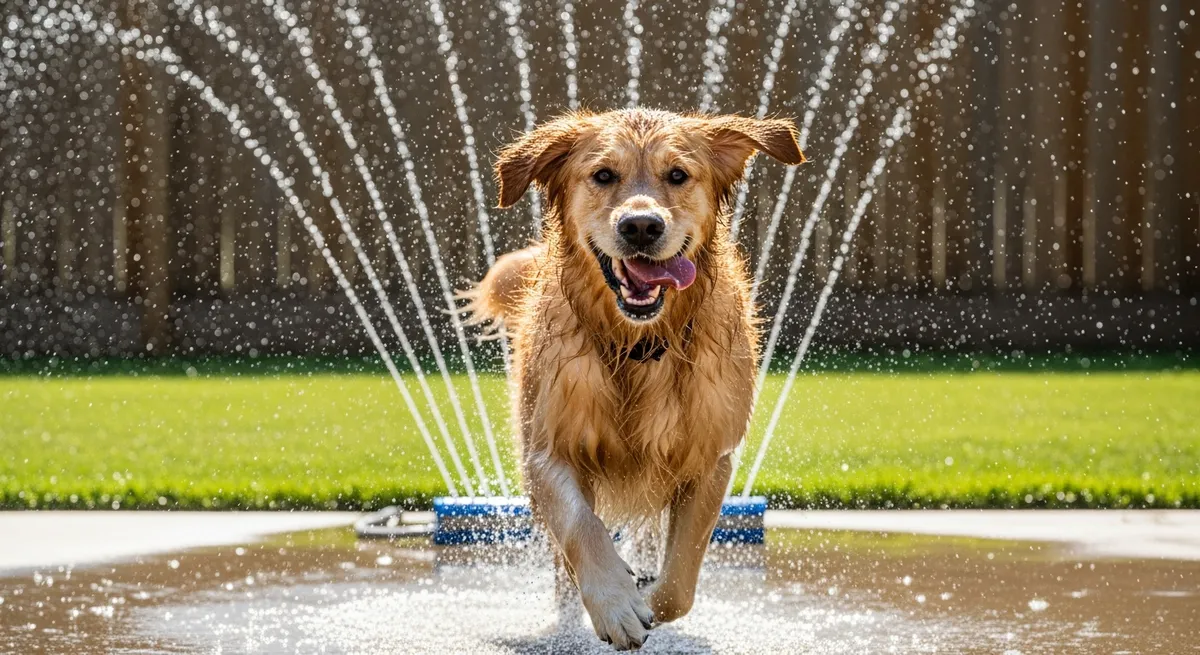
1. Sprinkler chase. Turn on a lawn sprinkler and let your dog snap at the spray. Cheap, hilarious, and cooling — most dogs invent their own game within minutes.
2. Kiddie pool dip. A hard plastic kiddie pool with a few inches of water is a backyard classic. Toss in floating toys to encourage bobbing and pawing.
3. Frozen lick mat. Smear plain yogurt, a little wet food, or mashed banana on a lick mat and freeze it. Long-lasting, soothing, and it slows fast eaters down.
4. DIY pupsicles. Freeze low-sodium broth (or water) with a few blueberries or a piece of kibble in an ice cube tray or silicone mold. Instant cool treat.
5. Ice-block treasure hunt. Freeze a few treats inside a bowl of water to make a block of "treasure ice." Your dog works to melt and free the goodies — great mental and physical engagement.
Sniffing and nose games (low-heat, high-satisfaction)
6. Backyard sniffari. Forget brisk walking; let your dog set the pace and sniff every blade of grass. Ten minutes of free sniffing tires a dog more than a forced march.
7. Scatter feeding. Toss your dog's meal across the lawn or a snuffle mat instead of using a bowl. Foraging is deeply calming.
8. The shell game. Hide a treat under one of three cups and let your dog nose out the right one.
9. Find it. Stash treats around a shaded room or yard and cue "find it." Start easy, then make hiding spots trickier.
10. Box demolition. Hide treats in a cardboard box stuffed with paper. The shredding is the reward — supervise so nothing gets eaten.
Brain and training games (perfect for indoor, peak-heat hours)
11. Puzzle feeders. Rotate a few food puzzles to keep your dog working for breakfast and dinner.
12. Stuffed and frozen chew toy. Pack a rubber chew toy with mashed food, freeze it, and hand it over for a long, focused chew session.
13. Trick training. Teach "spin," "shake," "roll over," or "go to your mat." Five-minute sessions build confidence and burn mental energy.
14. Name your toys. Teach the names of two or three toys, then ask your dog to fetch each by name — a surprisingly tiring brain workout.
15. Tidy-up game. Teach your dog to drop toys into a bin. It looks like a chore; to your dog it is a puzzle.
Gentle movement (early morning or evening only)
16. Cool-hour walk. Save the real walk for the coolest part of the day, carry water, and keep it shorter than your winter route.
17. Backyard agility. Use a broomstick on books as a low jump, a hula hoop to step through, and cones to weave. Keep jumps low for joints.
18. Tug. A structured game of tug with clear start and stop cues is great exercise and impulse control — and you can play it in the shade.
19. Flirt pole. A pole with a lure on a rope lets your dog sprint and pounce in short bursts. Keep sessions brief and on soft ground.
20. A frozen-treat patio hangout. Sometimes the activity is simply lying in the shade together with a frozen chew while you read. Calm companionship counts as enrichment too.
Reading your dog so the fun stays fun
Enrichment is only enriching if your dog is enjoying it. Watch for these stop signs:
- Heavy, frantic panting, a wide tongue, or stumbling. Stop immediately, move to shade and offer water — these can be early heat distress.
- Disengagement. Walking away, lying down, or refusing a game means "I'm done," not "make me."
- Over-arousal. If a game tips into manic, can't-stop-spinning energy, end it and switch to a calm sniffing activity.
Tailor the menu to the individual. A flat-faced breed, a senior, an overweight dog, or a puppy with developing joints all need shorter, gentler, cooler sessions. When in doubt, choose a brain game over a body game in summer — you get the satisfaction without the heat risk.
Where your new dog's profile makes this easier
Knowing what is safe for your specific dog is half the battle, and it is far easier when you actually know your dog's history. When you adopt from a shelter running PawMates Pro, your pet comes with a real profile — age, breed mix, weight, known medical conditions, and behavior notes — instead of a guess. That information feeds a lifetime medical record that travels with your pet and is shared, with your consent, through the PawMates and VetPetz bridge. So when you ask your vet "is a flirt pole okay for her joints?" you are both working from the same facts. The microchip is just the doorbell a stranger or clinic rings to look your pet up; the record itself is tied to a durable PawMates Pet ID, so it stays attached even if your phone number or chip registry changes.
If your dog loves the water games above, do not miss our companion piece on whether your particular dog is actually built to swim — see can all dogs swim? — and for organized yard play, backyard games your dog will love.
Frequently asked questions
What is the best summer activity for a high-energy dog?
A combination: a cool-hour walk for the body plus a puzzle feeder or scatter feeding for the brain. Mental work tires a high-drive dog more reliably than a hot, risky run.
How do I exercise my dog when it is too hot to walk?
Move the workout indoors or into the shade: trick training, food puzzles, nose games like "find it," and a frozen stuffed chew. Save outdoor exercise for early morning and after sunset.
Are kiddie pools safe for dogs?
Yes, with supervision and only a few inches of water. Never leave a dog unattended around any water, rinse off chlorine or salt afterward, and make sure your dog can easily get in and out.
How long should summer play sessions be?
Shorter than usual — think several brief sessions rather than one long one, with water and shade breaks. Watch your dog's panting and energy and stop before they are exhausted.
Related reading
- Backyard games your dog will love — structured yard play with heat cautions.
- Can all dogs swim? Common myths explained — before you trust the kiddie pool or the lake.
- Protecting your pet during heat waves — how to keep play safe when the temperature spikes.
For more adoption and pet-care guides, browse the PawMates adopter blog.