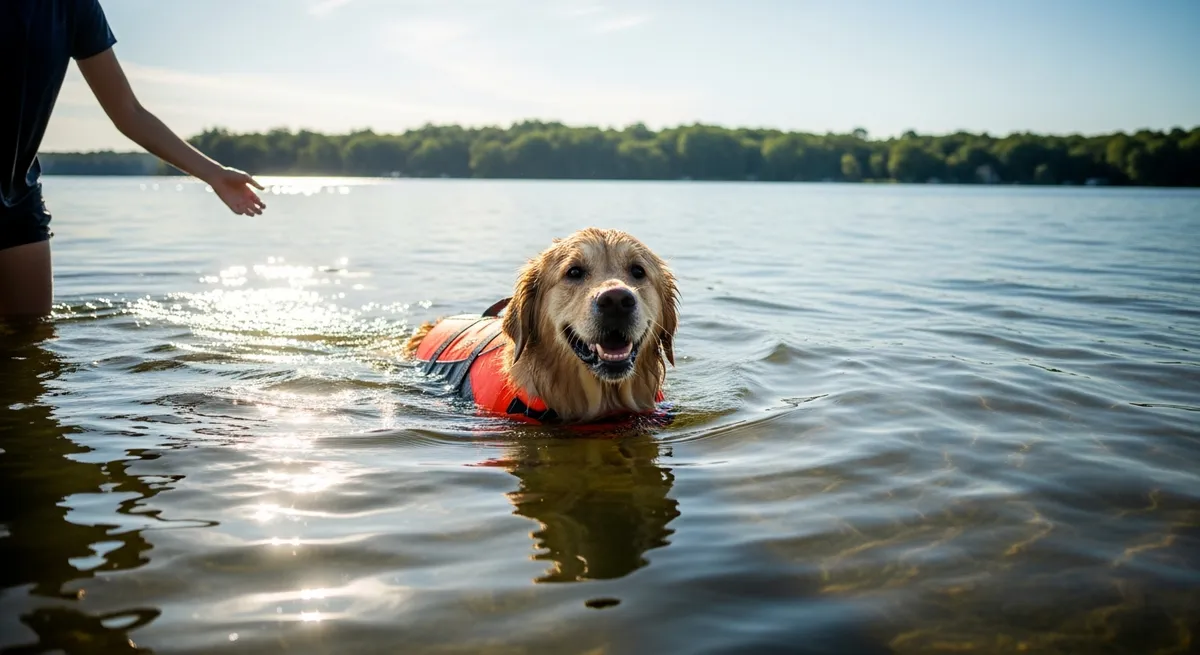
It is one of the most persistent myths in the dog world: that every dog is born knowing how to swim — that "doggy paddle" is automatic, instinctive, and safe. It is not true, and believing it gets dogs hurt and killed every summer. Some dogs are natural swimmers, some can manage with help, and some are physically incapable of staying afloat no matter how hard they paddle. Before you toss a ball into the deep end or assume your dog will be fine at the lake, you need to know which kind of dog you actually have.
Where the myth comes from
Most dogs, dropped into water, will instinctively start paddling their legs. People see that and conclude "see, they can swim." But paddling is not the same as swimming. Effective swimming requires keeping the head above water, staying horizontal, and not exhausting yourself — and plenty of dogs paddle frantically while their back end sinks, their head tips back, and they swallow water. That is drowning in slow motion, not swimming.
Breeds that genuinely struggle (or can't) swim
Body shape is destiny in the water. These dogs are at high risk and should never be in water without a life jacket and close supervision:
- Brachycephalic (flat-faced) breeds — Bulldogs, French Bulldogs, Pugs, Boxers, Boston Terriers. Short muzzles mean they must tip their heads up to breathe, which drops the body at a sinking angle. Their dense, heavy builds make it worse. English and French Bulldogs in particular are notorious for sinking like stones.
- Heavy-chested, short-legged breeds — Dachshunds, Corgis, Basset Hounds. Long bodies, big chests, and stubby legs make staying level and propelling forward genuinely hard.
- Top-heavy or very muscular breeds — some Bull Terriers and similar builds carry weight in a way that fights buoyancy.
- Tiny toy breeds — they tire fast, chill quickly, and panic easily, even if they can technically paddle.
Breeds often built for water
On the other end, some dogs are practically aquatic — though even strong swimmers can get into trouble and still deserve supervision:
- Labrador and Golden Retrievers (webbed feet, water-resistant coats, history as water-retrieving dogs).
- Portuguese Water Dogs, Newfoundlands (powerful swimmers historically used for water rescue).
- Standard Poodles, Irish Water Spaniels, and many retrieving and spaniel breeds.
The truth: individuals vary, mixes vary more
Breed tendencies are a guide, not a guarantee. A Labrador can dislike water; a mixed-breed of unknown background can be a strong or a hopeless swimmer. Age, fitness, health, prior experience, and confidence all matter as much as breed. Assume nothing — test gently and watch the individual dog in front of you. This is one more reason it helps to know your dog's real background: when you adopt from a shelter running PawMates Pro, your dog arrives with a profile noting breed mix and any known physical or medical limits, recorded in a lifetime medical record that follows your dog and is shared with your vet, with your consent, through the PawMates and VetPetz bridge.
How to introduce a dog to water safely
Never throw a dog in to "see if they can swim." That terrifies even capable dogs and can create a lifelong fear. Instead:
1. Start in shallow, calm water — a kiddie pool, a gentle shoreline, or a shallow step — where your dog can stand and feel the bottom.
2. Let your dog choose to enter. Use treats and praise; never drag or force.
3. Support the body. When they first venture deeper, gently support under the belly so the back end stays up and they learn to paddle level.
4. Keep sessions short and positive. End before exhaustion or fear sets in.
5. Use a properly fitted canine life jacket — bright color, handle on top, secure straps — for any dog in deep or open water, and always for the at-risk breeds above.
Pool and open-water safety rules
- Teach the exit. A dog in a pool must know where the steps or ramp are. Walk them to the exit repeatedly so it is automatic in a panic.
- Never leave a dog unattended near water — pool, lake, hot tub, or the ocean. Drowning is silent and fast.
- Beware currents, waves, and cold water, which exhaust even good swimmers; and fence or cover home pools.
- Rinse off chlorine, salt, and lake water afterward, and dry the ears to prevent infections.
- Skip the lake water for drinking — blue-green algae and other contaminants can be toxic; bring fresh water.
- Watch for "dry" and "secondary" drowning. If your dog inhaled water and later shows coughing, lethargy, or labored breathing, call your vet immediately.
Don't forget the heat
Water play is a summer favorite precisely because it cools dogs down, but the same heat rules apply on the way to and from the water. Hot sand and pool decks burn paws, and a dog can overheat sprinting around a pool just as easily as on a trail. Review protecting your pet during heat waves and pair your swim day with the land-based options in backyard games your dog will love for the hottest hours.
The bottom line
Can all dogs swim? No. Some are born for it, some need help and a life jacket, and some should stay in the kiddie pool where they can touch the bottom. Respect your individual dog's body and confidence, never force it, supervise every minute, and gear up the at-risk breeds. Done right, water is one of summer's greatest joys for a dog — done carelessly, it is one of its greatest dangers.
Frequently asked questions
Can all dogs swim naturally?
No. While most dogs will instinctively paddle, paddling is not the same as effective swimming. Flat-faced, heavy-chested, short-legged, and some heavily muscled breeds can struggle or sink and need life jackets and close supervision.
Which dog breeds cannot swim well?
Brachycephalic breeds (Bulldogs, French Bulldogs, Pugs, Boxers), short-legged heavy breeds (Dachshunds, Corgis, Basset Hounds), and many toy breeds are at high risk. Always use a life jacket and supervise these dogs in any water.
Should my dog wear a life jacket?
At-risk breeds, weak or inexperienced swimmers, and any dog in deep or open water should wear a well-fitted canine life jacket with a handle. It is cheap insurance even for strong swimmers in lakes, rivers, or the ocean.
How do I teach my dog to swim?
Start in shallow, calm water, let your dog choose to enter with treats and praise, support the belly so the back end stays up, keep sessions short and positive, and never throw a dog in. If your dog is fearful or a high-risk breed, talk to your vet or a trainer first.
Related reading
- Backyard games your dog will love — land-based fun for the hottest hours.
- 20 fun summer activities for dogs — water games and cooler-weather alternatives.
- Protecting your pet during heat waves — keep the trip to and from the water safe.
For more adoption and pet-care guides, browse the PawMates adopter blog.