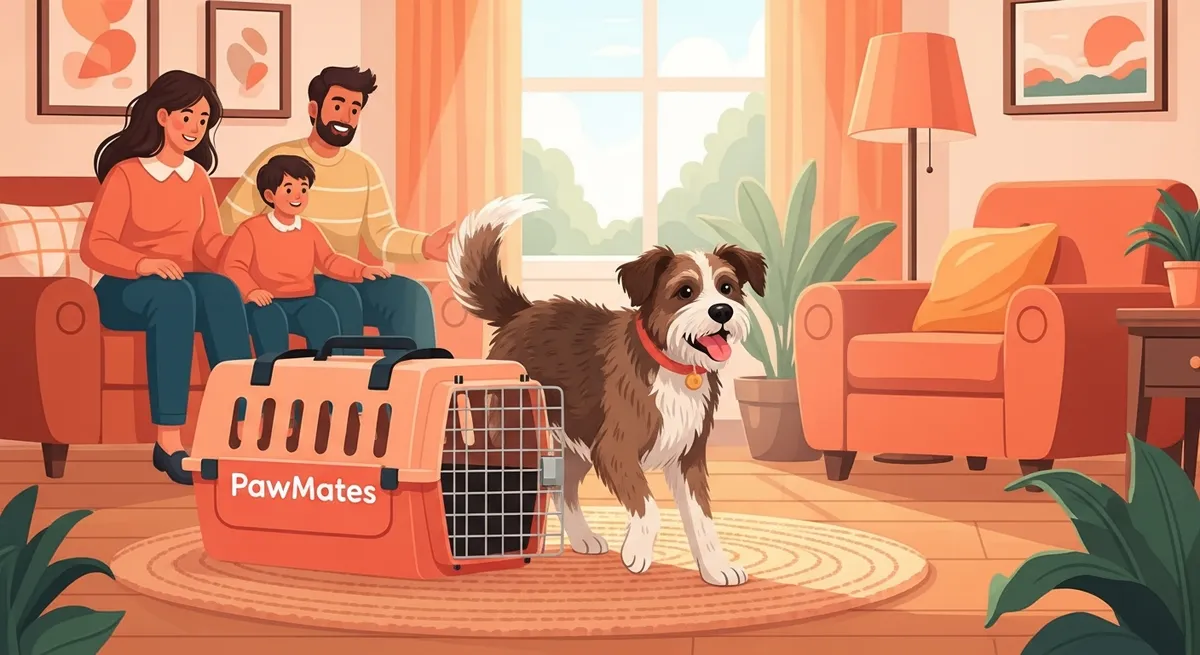
Returns are the quietest disaster in animal sheltering. They don't show up in the headline numbers, they get folded into intake counts, and they hurt the animals more than any other category — a returned dog or cat is now a known-quantity-with-a-failure-mark, harder to re-adopt, and more behaviorally fragile than they were the first time. Reducing animal shelter return rates is one of the highest-leverage and most under-discussed operational improvements available. Here's the practical playbook.
What "return rate" actually means
There's no industry-standard return-rate definition, which is half the problem. The working definition that matters operationally:
> Return rate = (animals returned within 12 months of adoption) ÷ (animals adopted in that period)
A healthy shelter operating well is in the 5–10% range. A shelter with quiet workflow problems is in the 15–25% range. Outliers above 25% almost always have a *matching* problem, not an animal problem.
Start by measuring yours, by species and by adoption month. Most shelters underestimate their own return rate because returns get re-categorized as new intakes in the system.
The five reasons animals get returned, in order of frequency
1. Behavior surprise. The dog is reactive on leash, the cat hides for two weeks, the puppy isn't crate trained. The single most common cause of returns is a mismatch between the listing and the reality.
2. Lifestyle mismatch. A high-energy working breed in a one-bedroom apartment. A bonded pair separated. A senior cat placed with a toddler. These were predictable on day one and got missed.
3. Other-pet conflict. New animal doesn't get along with resident animal. Slow introductions weren't done.
4. Medical issue not disclosed (or not known). Allergies, chronic conditions, ongoing medications, special diets. Cost shock follows.
5. Life event. Death in the family, divorce, eviction, military deployment. Often genuinely unforeseeable.
Three of those five — behavior surprise, lifestyle mismatch, and other-pet conflict — are matching and disclosure problems. They're the ones you can actually move.
The matching layer: what good shelters do differently
A shelter that returns 8% is not screening more aggressively. They're matching better. The differences:
- They write honest bios. The Power of a Great Pet Description covers this. A bio that says "needs a quiet adult home" and an applicant family with three kids and two other dogs should not be matching.
- They capture lifestyle data on the application. Not "do you have time for a pet?" — that gets a yes from everyone — but specific household composition, work schedule, prior pet experience, housing type, and energy capacity.
- They flag obvious mismatches automatically. A high-prey-drive dog should not be matchable to a household with cats. A bonded pair should be flagged together.
- They require slow-introduction protocols for any home with a resident pet, and provide a one-page "first 30 days" guide at adoption.
- They follow up at 7, 30, and 90 days post-adoption — not as a sales motion, but to catch problems before they become returns.
How PawMates Pro Uses AI to Match Pets With Adopters covers how the matching layer is built.
The disclosure layer
Behavior surprise returns are almost always traceable to bio dishonesty or bio incompleteness. The shelter wrote "great with kids" because no kids visited, or "no known issues" because nobody asked. The fix is two-part:
1. Standardized intake behavior fields — including bite history, resource guarding, leash reactivity, fear behaviors, prey drive, separation, and known cat/dog/kid history. Free text is not enough. (How Shelters Should Handle Bite History Disclosures at Surrender covers the bite history piece specifically.)
2. Bio writing rules that surface every behavior flag honestly. A dog with a bite history should say so on the listing. Counterintuitively, this *increases* the quality of applications, not decreases adoptions.
Honest disclosure also reduces fall-throughs at the meet-and-greet — see Why Animal Adoptions Fall Through.
The post-adoption support layer
Returns rarely happen on day 1. They happen at week 2 or week 6, when the honeymoon ends and the new realities show up. Shelters that proactively check in catch the problems while they're still solvable.
A simple cadence:
- Day 7: "How's it going?" email or text. Two-sentence response is enough.
- Day 30: Same. Add an offer of behavior support.
- Day 90: Same. Confirm vaccines, microchip transfer, license.
Shelters that do this catch the slow-burn returns weeks before the adopter calls. Often a 15-minute behavior consult or a free training session resolves the issue.
The data shelters miss
You can't improve return rate if you don't analyze why returns happen. PawMates Pro captures structured return reasons on every return, links them back to the original adoption, and surfaces patterns in the dashboard — "we've had three returns in the last quarter where high-prey-drive dogs were placed in cat households." That kind of pattern-finding used to require a year-end audit; now it surfaces in real time.
The intake side of returns also matters: a return shouldn't open a new record. It should pull forward the original record, the adoption history, and the prior bio, so staff can update the listing accurately. (Intake Solutions for Overwhelmed Shelter Staff covers branched intake, including returns.)
The 90-day return reduction plan
- Days 1–30: Measure your real return rate. Audit your last 12 months of returns and categorize each by reason.
- Days 31–60: Tighten your intake behavior fields and your bio honesty rules. Stand up the 7/30/90-day check-in cadence.
- Days 61–90: Build matching rules for your top return patterns (cat households + prey drive, kids + bite history, apartments + working breeds, etc.) and surface them in the application flow.
Most shelters that follow this plan see a 30–50% reduction in return rate within two quarters, and the downstream LOS savings are large. (How to Reduce Length of Stay (LOS) in Animal Shelters connects the dots.)