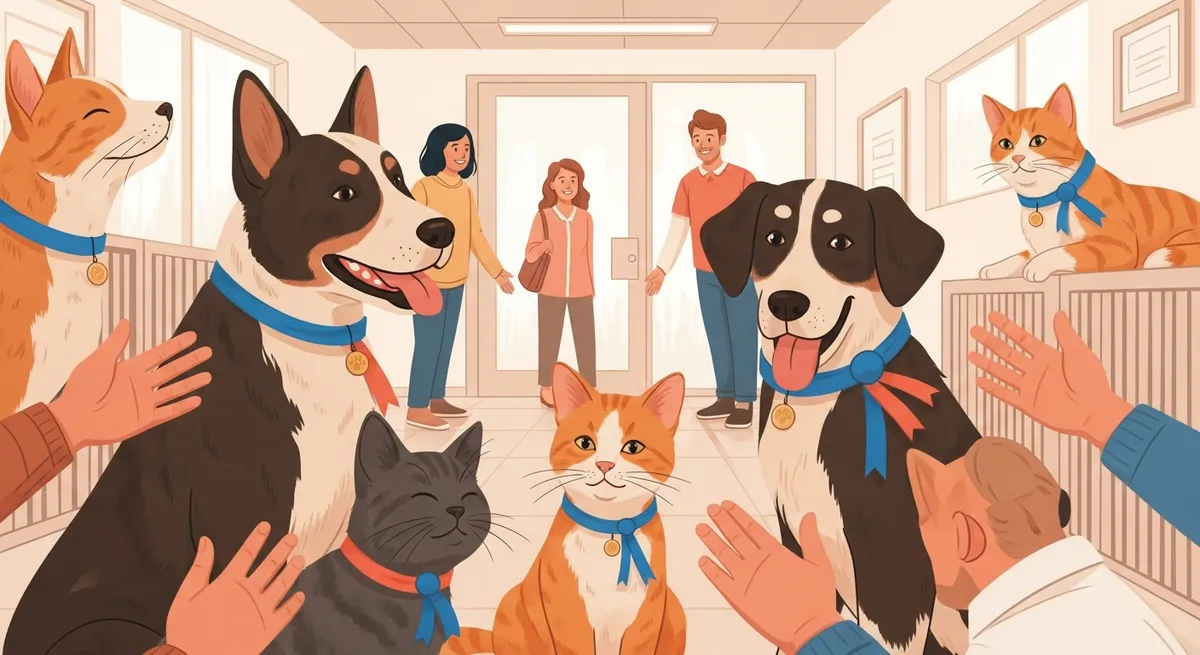
Adoption rate is the number every shelter board, donor, and reporter asks about — and the one that's most often poorly defined. Some shelters report total adoptions, some report adoptions per available animal, some report live release rate, some report save rate. Pick whichever definition you want, but pick *one* and track it weekly. Then improve it. The shelters that meaningfully improve animal adoption rates over a year don't usually do it with one big change. They do it with five or six small ones, layered. Here's the playbook.
The numerator and the denominator
If you only remember one thing from this post, remember that adoption rate is a fraction. You can move it by raising the numerator (more adoptions) *or* by lowering the denominator (fewer animals available, by managing intake or moving animals through faster). The most sustainable improvement attacks both.
Lowering the denominator without raising the numerator is just managed admission, which has its place but doesn't grow the program. Raising the numerator without lowering LOS just means more total animals, which can mask kennel overcrowding. Move both, and the math compounds.
Lever 1: Application throughput
The single highest-leverage adoption improvement is shrinking the time from application to decision. A 24-hour SLA roughly doubles your conversion rate vs. a 5-day SLA, holding everything else constant. (Why Animal Adoptions Fall Through (and How to Stop It) covers the mechanism in detail.) If you do nothing else, do this.
Lever 2: Photo + bio quality
Animals with three or more clean photos and a written bio receive 2–4x more applications than animals with one kennel snapshot. The Power of a Great Pet Description covers the bio side. The photo side is faster than people think — natural light, eye-level, three angles, and a 30-second video. How to Take the Best Pet Photos walks through the basics.
Lever 3: Listing reach
A great bio nobody sees doesn't help. On PawMates Pro, adoptable pets auto-publish on the PawMates adopter app and your shelter website; add social channels and optional cross-listing to Petfinder or Adopt-a-Pet only if your market still depends on those aggregators — as a separate publishing decision, not your core adoption workflow. How Social Media Can Increase Animal Adoptions covers the channel mix. The shelters with the highest organic reach tend to share the same pets multiple times, with different angles, rather than one post per pet ever.
Lever 4: Application accessibility
A 12-page PDF application that has to be printed, signed, scanned, and emailed back is silently killing your conversion rate. A modern online application with a 5-minute completion time, mobile-friendly, with autosave, easily doubles submissions. Strategies That Increase Adoption Applications covers application design in detail.
Lever 5: QR code kennel cards
For walk-in traffic, the kennel card is the bio. A QR code that opens the full pet page on a visitor's phone — with photos, video, full bio, and an apply button — converts walk-ins at much higher rates than a small text card. 10 Ways QR Code Kennel Cards Increase Shelter Adoptions walks through the specific use cases.
Lever 6: Long-stay marketing pushes
Most adoption improvement work helps the animals who would have been adopted anyway. The biggest *rate* improvement comes from moving the animals who otherwise wouldn't have been. That means active marketing of long-stay animals, refreshed photos, and targeted social campaigns for the dogs and cats who have been listed for 60+ days. How Data Can Predict Long-Stay Animals covers how to identify them early.
Lever 7: Quality-of-match work
Higher-quality matches reduce returns, which raises your *net* adoption rate. (How to Reduce Animal Shelter Return Rates covers this directly.) PawMates Pro's adopter matching looks at lifestyle, household composition, prior pet experience, and energy level alongside the animal's known behavior — so the matches that walk out the door are the ones most likely to stick. (How PawMates Pro Uses AI to Match Pets With Adopters explains the model.)
Lever 8: Foster-to-adopt conversion
A foster who's already living with the animal is the warmest possible adopter. Programs that explicitly encourage and de-friction foster-to-adopt conversions ("foster fails") see meaningfully higher overall adoption rates. How to Manage Foster Programs Efficiently covers this.
Putting it together: a 90-day adoption rate plan
- Days 1–30: Lock in a 24-hour application SLA. Audit photos and bios across your current available animals — anything below the bar gets fixed in the first 30 days.
- Days 31–60: Stand up the QR code kennel card workflow and the long-stay marketing rotation. Begin tracking application-to-adoption conversion weekly.
- Days 61–90: Add foster-to-adopt conversion tracking. Audit returns from the prior 12 months and identify the top three patterns to fix in matching.
Shelters that work this plan typically see 20–40% higher monthly adoptions within a quarter, with no change in animal mix or staffing — they're just losing fewer adopters along the way. The compounding savings in length of stay show up in the next quarter (How to Reduce Length of Stay (LOS) in Animal Shelters).