Most shelter dysfunction is not a people problem. It's a systems problem dressed up as a people problem. Intake is overwhelmed because the upstream prevention pipeline is broken. Length of stay is rising because the matching workflow is bottlenecked. Staff are burning out because the operational flow makes every shift a firefight. Treat any of those symptoms in isolation and the dysfunction returns within months.
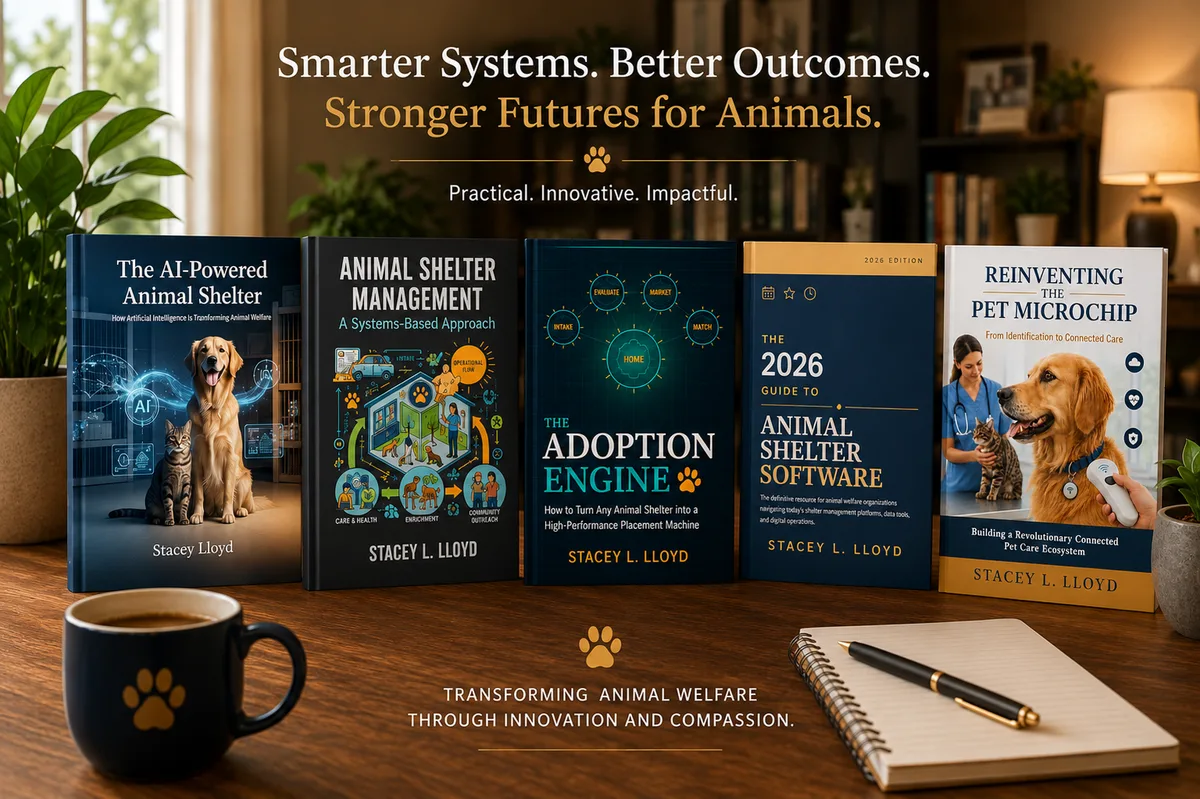
Animal Shelter Management: A Systems-Based Approach is the book that takes the systems view seriously. This post summarizes what it covers, who it's for, and the structural decisions it will help you make.
What the book is about
The book is a comprehensive operational framework for running a modern animal shelter, organized around the operational pillars that every shelter shares regardless of size or governance model. Each pillar is treated as a system in its own right, with inputs, outputs, failure modes, and instrumentation.
The core sections cover:
- Intake as a system. Surrender prevention, owner-support resources, appointment intake, stray intake, and the legal and ethical considerations behind each. (See the front-counter side of this in 24 Scripts Every Shelter Should Have for Difficult Public Conversations.)
- Care and health as a system. Medical workflow, vaccination protocols, isolation and quarantine, behavioral observation, and the documentation discipline that lets each animal carry a complete chart.
- Enrichment as a system. Daily enrichment programs, behavioral rehab, foster decompression, and the soundscape work covered in Music in Animal Shelters and Noise in Animal Shelters.
- Operational flow. Shift handoffs, task ownership, escalation paths, and the meeting cadences that keep the building running without constant supervisor intervention.
- Community outreach. Foster recruitment, volunteer programs, partner-shelter relationships, and the public-facing communications that build the audience an adoption operation depends on.
- Measurement and governance. Live-release rate, length of stay, return rate, intake mix, financial sustainability, and how to report each to a board.
Who it's for
- Executive directors building or rebuilding an organizational operating system.
- Operations managers standardizing workflows across shifts and locations.
- Boards writing a strategic plan or evaluating organizational performance.
- Coalition and umbrella organizations standardizing operations across a network of shelters.
Three takeaways shelter leaders will actually use
1. A shelter is not one organization — it's six systems sharing a building. The book gives each system its own chapter and its own diagnostic tree. That framing alone changes how leadership prioritizes.
2. Documentation discipline is the cheapest competitive advantage in animal welfare. Every chapter ends with the minimum-viable documentation standard for the system it covers. Done well, the documentation pays for itself in placement rate and return rate within a year. (Turning Shelter Data Into Actionable Decisions carries the same theme.)
3. The systems that look least urgent are usually the highest-leverage. Operational flow and outreach almost never look like emergencies in the moment, and the book is direct about how that's exactly why they degrade first.
How this maps to PawMates Pro
PawMates Pro is structured to match the book's pillars. Intake, medical, behavior, adoption, foster, volunteer, and reporting each get a first-class module. The platform is the substrate; the book is the operating manual. For rescues running the foster-first variant, PawMates Rescue implements the same systems framing without the kennel-management overhead.
FAQ
How does this differ from The Adoption Engine?
The Adoption Engine focuses tightly on placement — moving animals from intake to outcome. Animal Shelter Management is broader, covering every operational pillar including care, enrichment, and governance. Most shelters benefit from reading both, in either order.
Is the framework only for large or municipal shelters?
No. Every chapter scales the recommendation up and down. A small foster-based rescue runs the same systems; the staffing, software, and reporting just compress.
What's the most underrated chapter?
The chapter on operational flow — specifically the section on shift handoffs and escalation paths. Most shelters lose more time to handoff friction than to any other category, and almost no other resource addresses it head-on.
Related reading
Featured book — see full article for details.
To compare tier features and pricing for the platform the framework runs on, see shelter pricing. More on the PawMates shelter blog.