Artificial intelligence has moved from buzzword to baseline in shelter operations. What used to be science-fiction — automated matching, predictive length-of-stay modeling, intelligent intake triage, generative description writing, computer-vision breed inference — is now table-stakes for any shelter or rescue that wants to operate at a modern level. The question is no longer "should we use AI?" but "which problems should AI own first, and which should it stay out of?"
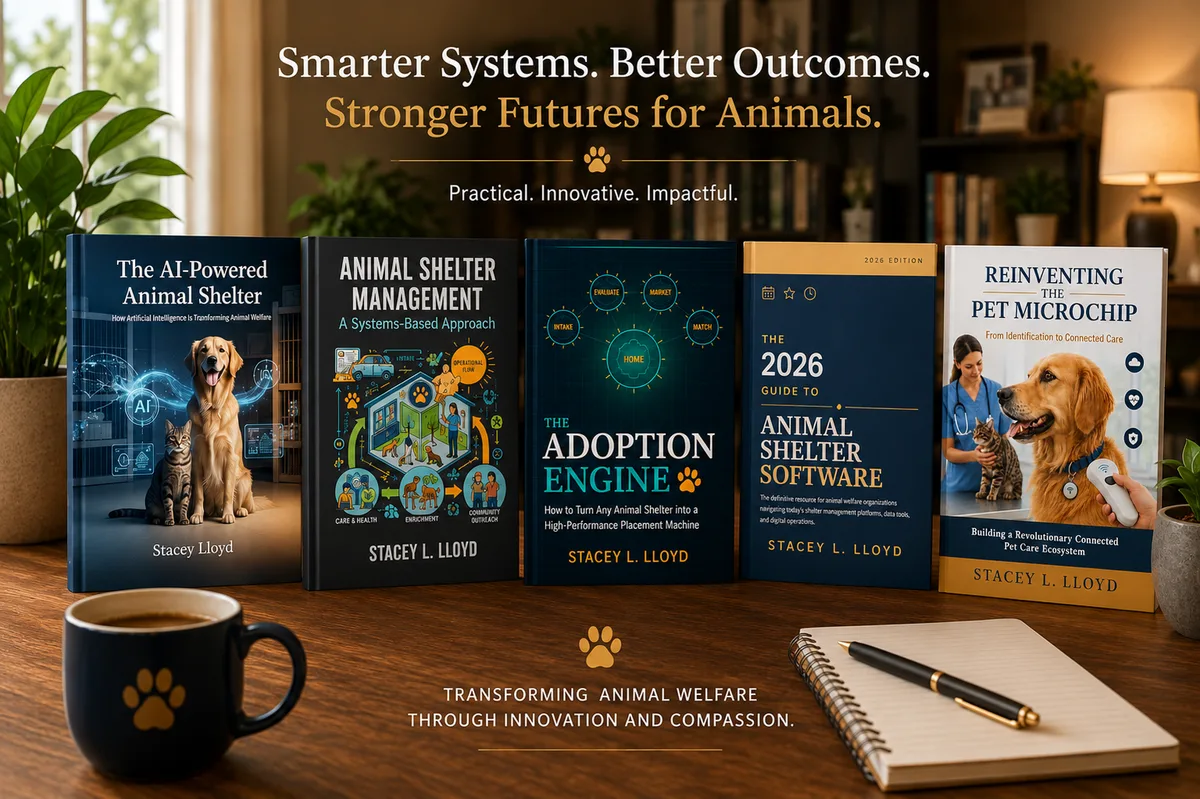
That is the question The AI-Powered Animal Shelter is written to answer. This post walks through what the book covers, who it's for, and the operational decisions it will help you make this quarter.
What the book is about
The book is a practical, plain-language tour of every place AI now meaningfully touches shelter operations. It is not a hype piece. It is not a fear piece. It is a methodical chapter-by-chapter look at where AI delivers measurable gains, where it does not, and how to implement each capability without burning your team out or breaking your data hygiene.
The core sections cover:
- Smart adoption matching. Beyond "good with kids? yes/no" surveys — how modern matching systems weigh lifestyle, housing, experience level, energy, and behavioral history to surface compatible pairings before the meet-and-greet.
- Predictive analytics for length of stay. How to spot the dogs and cats most at risk of long stays early enough to intervene. See the deeper operational pattern in How Data Can Predict Long-Stay Animals.
- Automated workflows and back-office automation. Where AI takes friction out of intake, applications, foster coordination, and donation receipting. How Automation Reduces Shelter Burnout carries the same theme.
- Intelligent chatbots and adopter triage. What a well-implemented chatbot can do (24/7 surrender intake, FAQ deflection, application pre-screening) and what it absolutely cannot do.
- Computer vision for breed inference, behavioral coding, and photo quality. What is now reliable, what is still noisy, and how to use it without misleading adopters.
- Generative writing for descriptions, marketing copy, and grant applications — and the editorial discipline required to keep it from sounding generic.
- Ethics, bias, and accountability. A short but serious chapter on the failure modes — biased training data, hallucinated medical guidance, automation laundering hard decisions — and how to govern around them.
Who it's for
- Shelter executive directors evaluating a software switch or a new technology stack.
- Operations managers who need to decide which workflows to automate first.
- Boards who need a credible, non-vendor-aligned overview to inform strategy and IT spend.
- Foundation officers and municipal contract managers assessing whether the shelters they fund are on a modern operational footing.
Three takeaways shelter leaders will actually use
1. AI's largest near-term ROI is in the back office, not the kennel. The biggest measurable gains in the first 90 days come from automating application screening, intake triage, and routine adopter communication. The dogs in the kennel benefit indirectly, because the team is no longer drowning in paperwork.
2. Matching is the second-largest gain — and it pays back in return rate. Adopters who are matched on lifestyle and behavioral compatibility return pets less often. That single metric pays for the platform. (Why Animals Get Returned After Adoption walks through the return drivers.)
3. AI is not a substitute for behavioral judgment. The book is explicit about what AI should not do, and the chapter on accountability alone is worth the cost.
How this maps to PawMates Pro
PawMates Pro implements most of the capabilities the book describes — AI-driven adoption matching, predictive long-stay surfacing, automated intake and foster coordination, computer-vision photo handling, and generative description support — inside a single platform built for shelters. The book is product-agnostic; it is a strategy and capability guide. PawMates Pro is the operational substrate.
FAQ
Is this book technical?
No. It is written for shelter leaders and operators, not engineers. Anyone running a shelter or sitting on a shelter board can read it cover-to-cover in an evening.
Does it endorse any specific software?
The book is product-agnostic by design. It names capabilities and decision criteria, not vendors. PawMates Pro is referenced as the author's implementation of the same principles, but the book is meant to help you evaluate any shelter platform.
What's the most surprising chapter?
For most readers it's the ethics-and-accountability chapter — specifically the section on how AI can quietly launder hard behavioral decisions and what governance to put in place to prevent it.
Related reading
- The 2026 Guide to Animal Shelter Software
- Turning Shelter Data Into Actionable Decisions
- How Automation Reduces Shelter Burnout
Featured book — see full article for details.
To compare tier features and pricing for the platform that implements most of the book's recommendations, see shelter pricing. More on the PawMates shelter blog.