Picking shelter software is one of the highest-stakes operational decisions a shelter or rescue makes. Get it right and the next five years of operations get easier, your staff retains, your data improves, your adopters convert, and your board reports write themselves. Get it wrong and you spend the next eighteen months managing a migration, fighting your tool, and explaining to your team why the workflow they were promised never materialized.
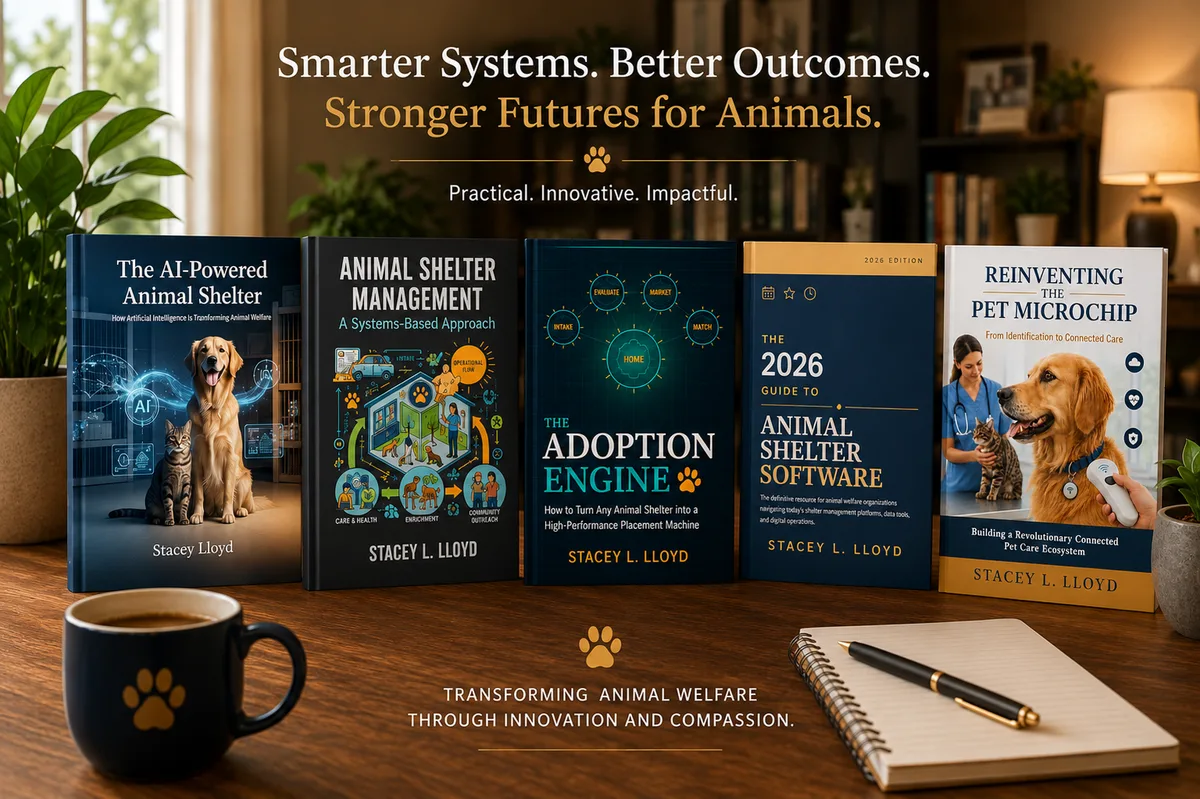
The 2026 Guide to Animal Shelter Software is the decision framework the field has been missing. This post summarizes what the book covers, who it's for, and the questions it will let you ask out loud in a vendor demo.
What the book is about
The book is a vendor-agnostic, decision-framework-style tour of the modern shelter software landscape. It does not rank products. It teaches you how to rank them yourself, against your shelter's specific operational realities.
The core sections cover:
- The capability matrix. Intake, medical, behavior, adoption, foster, volunteer, inventory, communications, reporting, integrations, and analytics — what "minimum viable" looks like in each, what "best in class" looks like, and which vendors typically deliver which tier.
- AI capabilities. Which AI features are real, which are marketing, and how to test the difference in a 30-minute demo.
- Pricing models. Per-seat versus unlimited-user, modular versus all-in, hidden-fee patterns, and how to read a five-year total cost of ownership.
- Migration planning. How to scope, schedule, and survive a software switch. Data hygiene, parallel-run periods, training pacing, and the rollback plan you hope you never need.
- Integrations. Microchip registries, veterinary records, payment processors, donor CRMs, partner shelters, lost-and-found, and government reporting — what to require and what to negotiate.
- Security, privacy, and PII. What an adopter or a board has the right to expect about how their data is stored, encrypted, accessed, and audited.
- The 30/60/90 evaluation playbook. A reproducible vendor-evaluation process any shelter can run.
Who it's for
- Executive directors and boards running a software-evaluation or switch.
- Operations managers writing the requirements document.
- IT and finance staff evaluating total cost of ownership and security posture.
- Coalition and umbrella organizations standardizing software across a network of shelters.
Three takeaways shelter leaders will actually use
1. The capability matrix is the only document you really need. Build it once, score every vendor against it, and the choice becomes obvious. The book gives you the template.
2. Migration risk is the single biggest cost in any switch. The book's chapter on parallel-run periods and rollback planning will save more money than the platform fee itself. (See the operational version of this argument in Fixing Bottlenecks That Keep Pets Stuck in Shelters.)
3. Per-seat pricing structurally punishes the shelters that need the most help. If your staff and volunteer roster swings seasonally, an unlimited-users platform will dominate any per-seat option on five-year cost. The book shows the math.
How this maps to PawMates Pro
PawMates Pro is built on the principles the book argues for: unlimited users on every tier, modern AI capabilities that survive the 30-minute demo test, transparent pricing, and a clean migration story. The book is product-agnostic; it will let you evaluate PawMates Pro and any competitor on the same matrix. (Why Switch to PawMates is the head-to-head if you've already started shopping.)
FAQ
Will this book pick a product for me?
No, by design. It teaches you how to pick the right one for your shelter. It does name the categories of feature and the categories of vendor, but the scoring is up to you.
Is it written for technical readers?
No. It is written for shelter directors, operations managers, and boards. The technical depth is calibrated for procurement, not engineering.
What's the most useful chapter?
For most readers it's the migration-planning chapter. The cost of a botched switch is usually larger than the licensing decision itself, and almost no other resource walks through it honestly.
Related reading
Featured book — see full article for details.
To compare tier features and pricing for the platform built on the book's principles, see shelter pricing. More on the PawMates shelter blog.