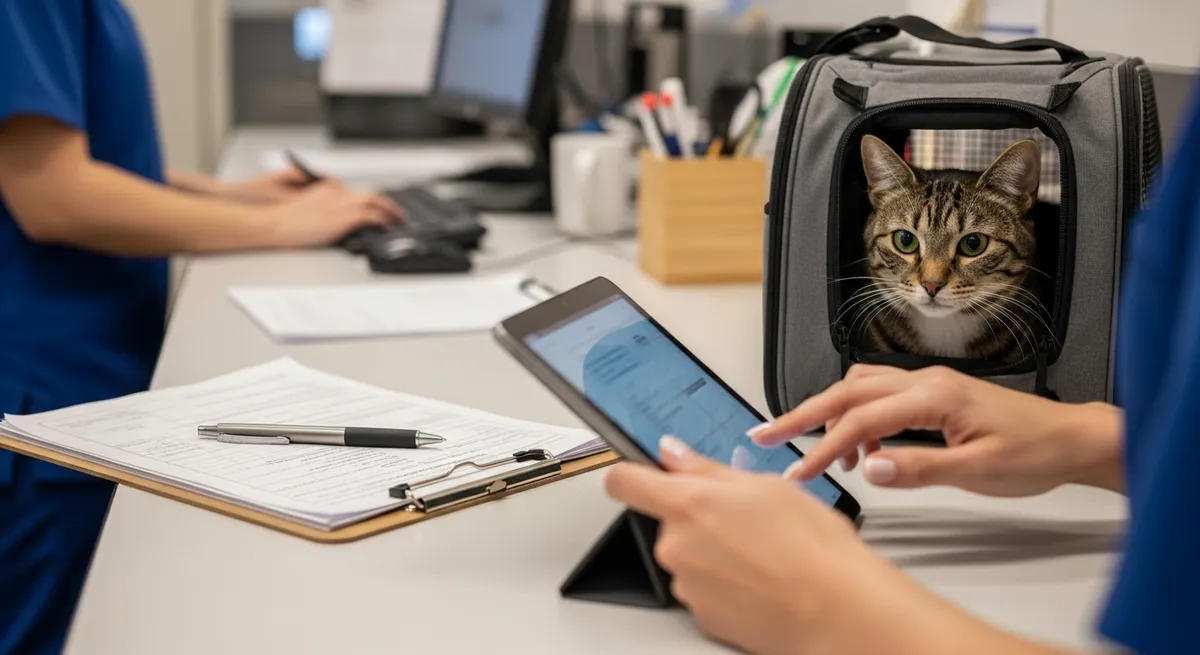
Most shelters don't have an adoptions problem — they have a flow problem. Pets are not stuck because no one wants them. They're stuck because they're waiting for a vet appointment, a behavior eval, an application reviewer, a foster placement, or a photo. Every one of those waits is a bottleneck, and bottlenecks compound.
This post walks through the seven bottlenecks that keep pets in shelters longer than they need to be — what causes them, how to measure them, and what to do about each one.
Bottleneck 1: Intake-to-evaluation lag
The clock starts the moment an animal walks in the door, but adoptability often hinges on a single document — the behavior or medical evaluation — that doesn't get done for days. In a busy shelter, intake on Friday afternoon can mean the eval doesn't happen until Tuesday, costing four days right out of the gate.
Fix: Schedule intake and evaluation as a single workflow, not two. PawMates Pro lets you assign an evaluation owner at intake and surfaces every animal whose evaluation is overdue on the daily dashboard. Aim for 90% of evaluations complete within 48 hours.
Bottleneck 2: Photo and bio creation
A pet without a good photo and a written bio is invisible. We see shelters where the average pet doesn't get a public-quality photo for 5–7 days post-intake, and some never get one at all. That's a week of zero visibility per animal.
Fix: Make photos and bios part of the intake ritual, not an afterthought. Train every staff member and volunteer to take a passable photo with the shelter's phone. Use AI-assisted bio drafting to turn a kennel-card sentence into a publishable description in under a minute. Track "days to first photo" as a KPI — every day you save shows up directly in adoption velocity. (For a deeper look at why this matters, see How Data Can Predict Long-Stay Animals.)
Bottleneck 3: Application review
Applications come in at all hours. If the same one or two staff members review every application, you create a single point of failure. A weekend with no review = a weekend of lost momentum, and an applicant who hears nothing for three days often moves on to the next pet (or the next shelter).
Fix: Distribute application review across the team with a clear permissions model. PawMates Pro's role-based access lets you give multiple staff and trusted volunteers application-review rights without exposing the rest of your data. Push notifications to reviewers the moment a new application lands keep response time under 24 hours, even on weekends.
Bottleneck 4: Pet holds that go stale
A pet on a "hold" — for a vet check, a meet-and-greet, a transport — often falls out of view. When the hold expires, no one knows. The pet sits in a kennel that should have already turned over.
Fix: Treat every hold as a deadline, not a parking spot. Every hold needs an owner, an expiry, and an automatic alert when it elapses. (PawMates Pro fires a real-time push and email to the responsible staff the moment a hold passes — no spreadsheet to babysit.) The team that handles elapsed holds within 24 hours runs measurably faster than the team that catches them on Monday morning.
Bottleneck 5: Vet and surgery scheduling
Spay/neuter, dental, and other pre-adoption procedures are the most common single source of multi-day delays. A pet ready to be adopted on Friday but waiting for a Wednesday surgery slot loses five days, every time.
Fix: Track "days waiting for vet" separately from total LOS. If your average is more than three days, you have a capacity or scheduling problem — either contract additional clinic time, partner with a low-cost spay/neuter network, or batch surgeries by triage priority instead of intake order. (More on triage in How to Prioritize Animals for Faster Placement.)
Bottleneck 6: Foster pipeline gaps
Foster placements are one of the highest-impact decompression and marketing tools you have, but they only work if you have foster families on standby and a fast match process. If matching a pet to a foster takes a week of phone tag, the pet has already lost the benefit.
Fix: Maintain a current, opt-in foster availability list with each foster's preferences (size, species, behavior tolerance, kid/pet status, time commitment). Match within 24 hours. Auto-track equipment loans (crates, gates, beds) so nothing is lost when fosters rotate. (See How to Match Fosters With the Right Animals for the full playbook.)
Bottleneck 7: Adoption-day paperwork
You'd be amazed how often a finalized adoption stalls at the last 30 minutes — printer jam, missing signature, forgotten microchip transfer, payment that has to be re-keyed. Each of these tiny friction points is a place where adopters have second thoughts or simply leave.
Fix: Move paperwork to digital signatures, take payments via a card reader the moment the adopter says yes, and automate microchip-registration submission. PawMates Pro keeps the entire adoption packet — application, contract, vet record, microchip, fee receipt — in one record so the handoff is one click, not thirty.
How to find your worst bottleneck this month
The right bottleneck to fix first is the one that's costing you the most kennel-days. Pull a report of the last 60 adoptions and segment LOS into stages: intake → evaluation → photos → first application → application reviewed → hold/vet → adopted. The longest stage is your bottleneck. PawMates Pro builds this report automatically; if you're not on a system that does, a simple spreadsheet across 30 records will tell you what you need to know in an hour.
The bottom line
Adoption is a flow, not an event. Shelters that obsess over flow — measuring stage-by-stage time, fixing the worst one, and moving on to the next — consistently outperform shelters that focus on marketing alone. (For the analytics layer that surfaces these bottlenecks automatically, read Turning Shelter Data Into Actionable Decisions. For the human side — keeping your team energized while you fix the flow — see How Automation Reduces Shelter Burnout.)