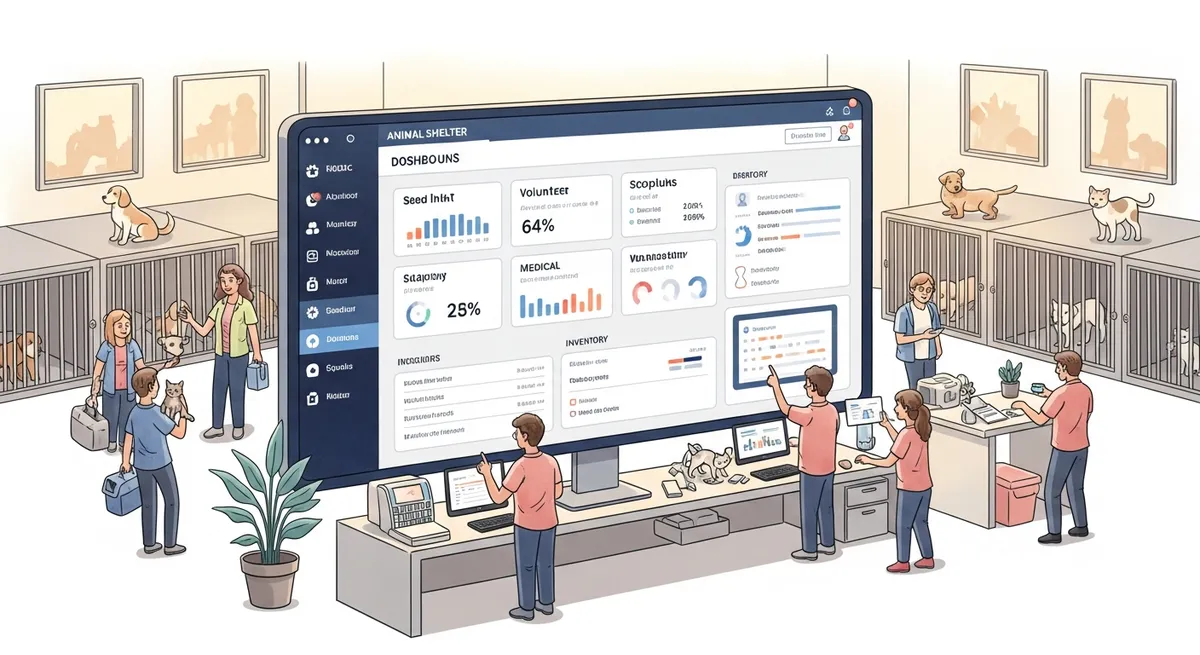
Animal shelters operate in controlled chaos — intake never stops, applications pile up, and critical decisions happen fast. The last thing your staff should be doing is hunting for answers inside a system that's supposed to provide them.
PawMates Pro is designed so those questions never come up in the first place. Here are 20 questions that disappear when your shelter runs on the right platform.
1. "Do we already have a record for this animal?"
Duplicate entries destroy data integrity and create fragmented medical histories. PawMates Pro centralizes all animal records in a single system with structured intake workflows, making it easy to search existing records before creating new ones — so you're far less likely to create a second record for the same animal. This is part of how modern intake and records management should work.
2. "Where did this animal come from?"
Every intake is logged with source type (stray, owner surrender, transfer, confiscation), location, and timestamp — instantly visible on the animal's profile. No digging through paper files, no guessing. The full intake history is searchable and reportable.
3. "Is this pet vaccinated or not?"
Medical status is front-and-center on every animal's profile, not buried in notes or separate files. Vaccination records include dates, types, lot numbers, and upcoming due dates. Staff and veterinarians see the same information in real time.
4. "When is this animal due for medication?"
Medication schedules are tracked within each animal's profile with dosage, frequency, and duration — giving staff a clear view of what's due and when. No more flipping through paper logs or relying on memory for treatment timing.
5. "Has anyone responded to this application yet?"
Application statuses update in real time across the entire team. Everyone sees exactly where each applicant stands — submitted, under review, approved, or denied — eliminating the overlap and confusion that slows down the adoption process.
6. "Who's responsible for this task?"
Volunteer and staff assignments are explicit. Shifts, duties, and responsibilities are tracked with clear ownership — from kennel duties to adoption events. This is how shelters reduce administrative workload without hiring more staff.
7. "Did we already schedule a meet-and-greet?"
The adoption pipeline tracks each applicant's progress — from initial application through review, approval, and placement. Your team can see at a glance which applicants are pending meet-and-greets and where each adoption stands, so nothing gets lost in the shuffle.
8. "Which applicants are the best fit for this pet?"
Matching isn't guesswork. PawMates Pro uses compatibility-based filtering to surface adopters whose profile passes every hard requirement (yard, kids, other pets, energy level, experience, breed/age preferences, distance) for the specific pet. This is one of the core reasons modern shelter software outperforms traditional systems.
9. "How long has this animal been here?"
Length of stay is calculated automatically for every animal — and flagged when it crosses thresholds that indicate the animal may need additional marketing, behavioral support, or transfer consideration. Understanding what happens to pets that don't get adopted quickly makes this metric critical.
10. "Why hasn't this animal been adopted?"
Behavioral notes, application activity, and match data give you the answer immediately. Is it a behavior concern noted in evaluations? A mismatch between the animal's needs and the current adopter pool? Low application volume? The data is right there, so you can act. Shelters can also use this insight to create special campaigns for overlooked animals.
11. "Do we have enough information to approve this adopter?"
Applications are structured with required fields, validated inputs, and completeness checks — so submissions arrive ready for review, not half-filled. No more chasing missing phone numbers or incomplete references. This is what effective adoption application management looks like.
12. "Where is the medical history?"
Centralized. Complete. Accessible in seconds from any device. Medical records, surgical notes, vaccination history, medications, and test results are all in one place — no paper trails, no scattered files across multiple systems.
13. "Is this pet already adopted?"
Status changes are instant and system-wide. When a pet is adopted, reserved, transferred, or returned, every team member sees the updated status immediately. No more accidentally showing an adopted animal to a new applicant.
14. "Did we follow up with this adopter?"
Adoption records track placement dates and adopter contact information, making it straightforward to schedule and manage post-adoption check-ins. Knowing who adopted what and when means your team can proactively follow up rather than waiting for problems to surface. Building strong post-adoption support systems is one of the most effective ways to prevent returns.
15. "What's happening across the shelter right now?"
Your dashboard shows real-time operations — today's intake count, pending applications, animals in medical hold, upcoming appointments, overdue tasks, and adoption pipeline status — all in one view. No more walking floor to floor to piece together what's happening.
16. "Are we meeting our adoption goals?"
Built-in analytics track adoption rates, length of stay trends, return rates, application conversion, and seasonal patterns — without exporting to spreadsheets or building manual reports. This is the kind of data that helps shelters improve efficiency systematically.
17. "Do we have a license on file for this pet?"
Pet licensing records and renewal dates are managed and tracked automatically within each animal's profile. Expiration alerts ensure compliance without manual calendar tracking.
18. "Can visitors apply for this pet right now?"
Every kennel card includes a QR code that links directly to the pet's profile and adoption application. Visitors can start an application on their phone while standing in front of the kennel — no waiting for staff availability. Learn more about how QR code kennel cards increase shelter adoptions.
19. "Are we compliant and properly documenting everything?"
Audit trails log every action — medical updates, status changes, application decisions, user activity — automatically. This protects your organization during audits, legal reviews, or compliance checks without requiring staff to manually document every step.
20. "Why is this taking so long?"
Because most shelter management systems are built to store data — not to move animals through the adoption pipeline efficiently. PawMates Pro is built for throughput: getting animals from intake to outcome as quickly and responsibly as possible.
The Bigger Point
Every one of these 20 questions represents operational friction.
Friction slows down adoptions. It delays decision-making. It burns staff time on tasks that should be automatic. And ultimately, it costs animals their chance at a faster, better outcome.
When you remove that friction, something measurable happens: animals move through the system faster. Staff spend their time on the work that actually matters — building relationships with adopters, providing enrichment, making placement decisions — instead of searching for information.
What PawMates Pro Actually Changes
This isn't about adding more features to an already complex system. It's about eliminating the uncertainty that creates bottlenecks:
- Staff stop guessing and start acting on real-time data
- Information becomes actionable instead of buried
- Processes become predictable instead of reactive
- Outcomes improve because the system works with your team, not against it
Most shelter software asks you to adapt to how it works. PawMates Pro adapts to how shelters actually operate — because it was built by people who understand that legacy systems are holding shelters back.
Final Thought
If your team is still asking these questions every day, your current system is costing you more than time — it's costing animals their chance at a faster outcome.
And that's the metric that actually matters.
Frequently Asked Questions
What problems does shelter management software solve?
Shelter management software solves operational inefficiencies that slow down animal care and adoptions. These include duplicate data entry, fragmented medical records, untracked applications, unclear task ownership, manual scheduling, and lack of real-time visibility into shelter operations. The best platforms eliminate these friction points so staff can focus on animal welfare rather than administrative tasks.
How does AI improve the pet adoption process at animal shelters?
AI improves adoption matching by analyzing adopter applications against animal profiles — factoring in lifestyle, living situation, experience level, household composition, and the specific pet's behavioral and medical needs. This surfaces the most compatible matches automatically, reducing the time staff spend manually reviewing applications and improving placement quality, which in turn reduces return rates.
What features should shelters look for in modern shelter management software?
Key features include automated intake with duplicate detection, centralized medical records, real-time application tracking, AI-powered adopter matching, automated task assignment, built-in analytics and reporting, QR code kennel cards for visitor engagement, post-adoption follow-up automation, audit trail logging, and a real-time operations dashboard. The platform should reduce manual work rather than add complexity.
How can animal shelters reduce length of stay for shelter pets?
Shelters can reduce length of stay by improving pet visibility through better profile photos and descriptions, using QR codes on kennel cards for instant applications, implementing compatibility-based matching to connect pets with compatible adopters faster, monitoring length-of-stay metrics with automated flags, creating targeted marketing campaigns for long-stay animals, and ensuring the adoption application process is streamlined with no unnecessary delays.
Why do shelters struggle with outdated management systems?
Legacy shelter systems were typically designed for basic data storage rather than operational workflow management. They lack real-time updates, require manual data entry across multiple screens, don't integrate medical records with adoption pipelines, and provide limited analytics. Staff end up spending more time working around the system's limitations than actually using it to improve outcomes. Modern platforms like PawMates Pro are designed around shelter workflows rather than database structures.
How does post-adoption follow-up reduce pet returns?
Structured post-adoption follow-up — whether through scheduled check-in calls, emails, or surveys at key intervals after placement — catches adjustment issues early before they escalate into surrender decisions. When adopters know they have ongoing support from the shelter, they're more likely to work through challenges like initial behavioral adjustment, house training setbacks, or pet-to-pet introductions rather than returning the animal. Platforms that centralize adoption records make it easy to track who needs follow-up and when.
Related Articles
- How Do Animal Shelters Manage Intake and Records?
- What Is the Best Way to Manage Adoption Applications?
- How Can Shelters Improve Efficiency Without Hiring More Staff?
- Why Legacy Shelter Software Is Becoming Obsolete
- 10 Ways QR Code Kennel Cards Increase Shelter Adoptions
- Building Post-Adoption Support Systems That Keep Pets in Homes