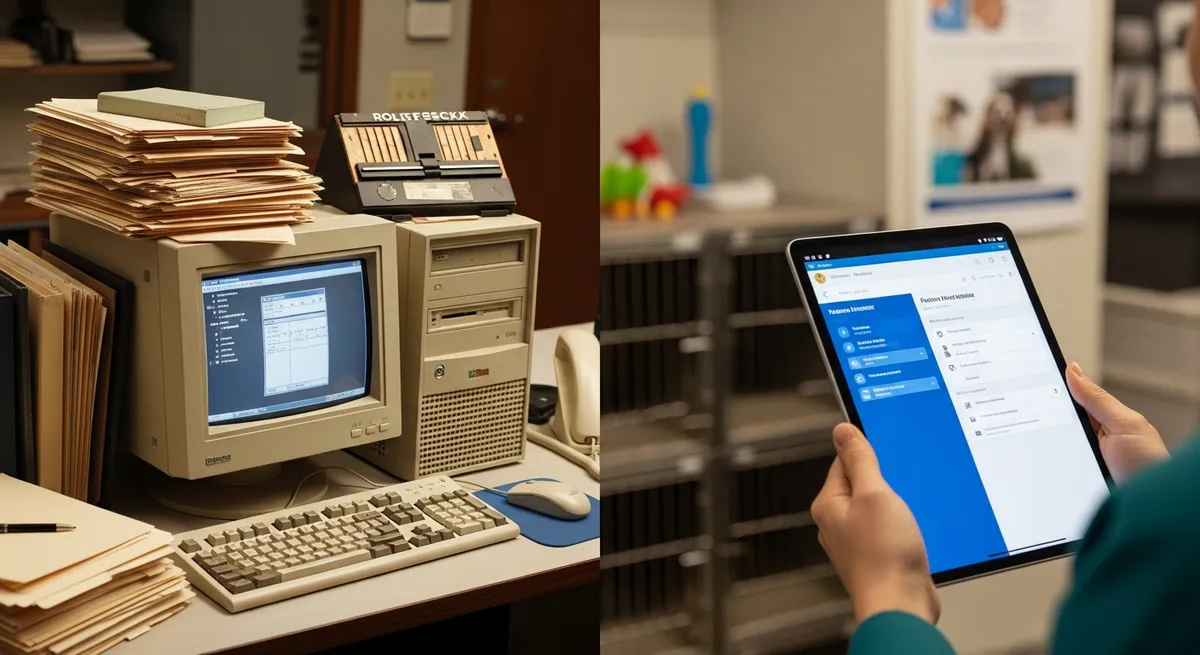
Most animal shelters are running on shelter management software that was designed before smartphones existed. The interfaces look like they were built in 2008 because they were. The workflows assume paper is still the primary medium. And the support teams behind these products have little incentive to modernize because they've locked shelters into contracts, data silos, and switching costs that make leaving feel impossible.
This isn't a technology problem. It's a priorities problem. And it's costing shelters time, staff morale, and animal outcomes every single day. Modern animal shelter software like PawMates Pro exists specifically because this status quo is unacceptable.
How Shelters End Up Stuck
No shelter director wakes up and decides to use bad software. The pattern is more gradual:
1. A system was chosen years ago — often by someone who has since left the organization. It was the best option at the time, or it was the only option the budget allowed.
2. Data accumulates over years — animal records, adoption histories, medical logs, and financial data all live in the system. Migrating feels risky and expensive.
3. Staff learns workarounds — instead of the software adapting to the shelter's needs, the staff adapts to the software's limitations. They build spreadsheets to fill gaps, use email for tasks the system should handle, and accept inefficiency as normal.
4. Contracts and pricing lock them in — multi-year agreements, per-user fees that increase with staff growth, and proprietary data formats make switching feel more disruptive than staying.
5. Vendor complacency sets in — when a vendor knows their customers can't easily leave, there's less urgency to innovate. Updates slow down. Support response times stretch. Feature requests go into backlogs that never ship.
What "Outdated" Actually Means in Practice
An outdated shelter management system isn't just ugly — it actively harms operations:
- No mobile access: Staff can't update records from the kennel floor. They write notes on paper and transcribe later.
- No real-time data: Listings, dashboards, and reports show yesterday's data because the system runs batch updates instead of live syncs.
- No integration: The website, the intake system, and the medical records don't share data. Staff manually sync information between systems.
- No AI or matching: Every adopter sees every animal. There's no intelligence surfacing the best matches or flagging compatibility concerns. This is one of the biggest reasons the adoption process gets delayed.
- Poor reporting: Generating a report requires exporting to CSV, opening Excel, and building pivot tables. Monthly board reports take hours instead of seconds.
- Rigid workflows: The system dictates how your shelter operates instead of the other way around. You can't customize intake forms, add new fields, or modify adoption workflows without a vendor support ticket.
The Real Cost of Staying
Shelters often calculate the cost of their current system as just the subscription fee. That's the visible cost. The invisible costs are much larger:
- Staff turnover: When your team fights the software every day, morale drops. Burnout accelerates. Training new staff on a confusing system takes longer. This is exactly why shelters need to reduce administrative workload before it spirals.
- Slower adoptions: When listings are stale, applications are hard to process, and matching is manual, animals stay longer. Longer stays mean higher costs per animal and more stress on the population.
- Missed funding: Grantors want data. If generating reports takes hours, you either spend the time or skip the application. Both outcomes hurt your shelter.
- Lost adopters: A clunky public-facing experience — slow websites, broken search, no mobile optimization — sends adopters to other organizations.
What Modern Animal Shelter Software Looks Like
Modern platforms like PawMates Pro are built on fundamentally different principles:
- Cloud-native: Accessible from any device, anywhere. No local installations, no IT department required.
- Mobile-first: Full functionality from a phone or tablet. Staff update records from the kennel floor in real time.
- Connected: Every module — intake, medical, adoption, foster, volunteer, inventory, analytics — shares data automatically. Enter information once and it flows everywhere.
- AI-powered: Compatibility matching evaluates adopter profiles against animal needs and surfaces the best fits with risk factors flagged for staff review. This is what the future of shelter technology looks like in practice.
- Flat pricing: No per-user fees, no per-adoption charges, no module add-ons. One subscription includes everything.
The question isn't whether your shelter can afford to switch. It's whether your shelter can afford not to. See what PawMates Pro includes →
Why is it so hard for shelters to switch software?
The biggest barriers are data migration concerns, staff retraining anxiety, and contractual obligations with current vendors. Many legacy shelter management systems use proprietary data formats that make exporting records difficult. The fear of losing years of historical data during a transition keeps shelters on systems they've long outgrown. Modern platforms like PawMates Pro that offer migration support and intuitive interfaces significantly reduce these barriers.
How do outdated systems affect animal outcomes?
Directly. When listings are stale, adopters lose trust and look elsewhere. When applications are slow to process, the best adopters move on. When medical records aren't easily accessible, animals wait longer for adoption clearance. When staff burn out fighting clunky software, turnover increases and institutional knowledge walks out the door. Every inefficiency caused by outdated shelter software ultimately extends the time animals spend in kennels.
What should shelters look for when evaluating new animal shelter software?
Prioritize platforms that are cloud-based and mobile-accessible, include all core modules (intake, medical, adoption, foster, volunteer, inventory, analytics) without per-module fees, offer compatibility-matching tools, provide real-time data and reporting, charge transparent flat-rate pricing without per-user or per-transaction fees, and have a responsive support team that treats shelters as partners rather than ticket numbers. PawMates Pro checks every one of these boxes.
Is switching shelter software worth the disruption?
Almost always, yes. The disruption of switching is temporary — usually a few weeks of transition. The cost of staying on an outdated system is permanent and compounding. Every month on bad software means more wasted staff hours, more missed adoptions, and more animals staying longer than necessary. The shelters that make the switch consistently report that their only regret is not doing it sooner.
Related Articles