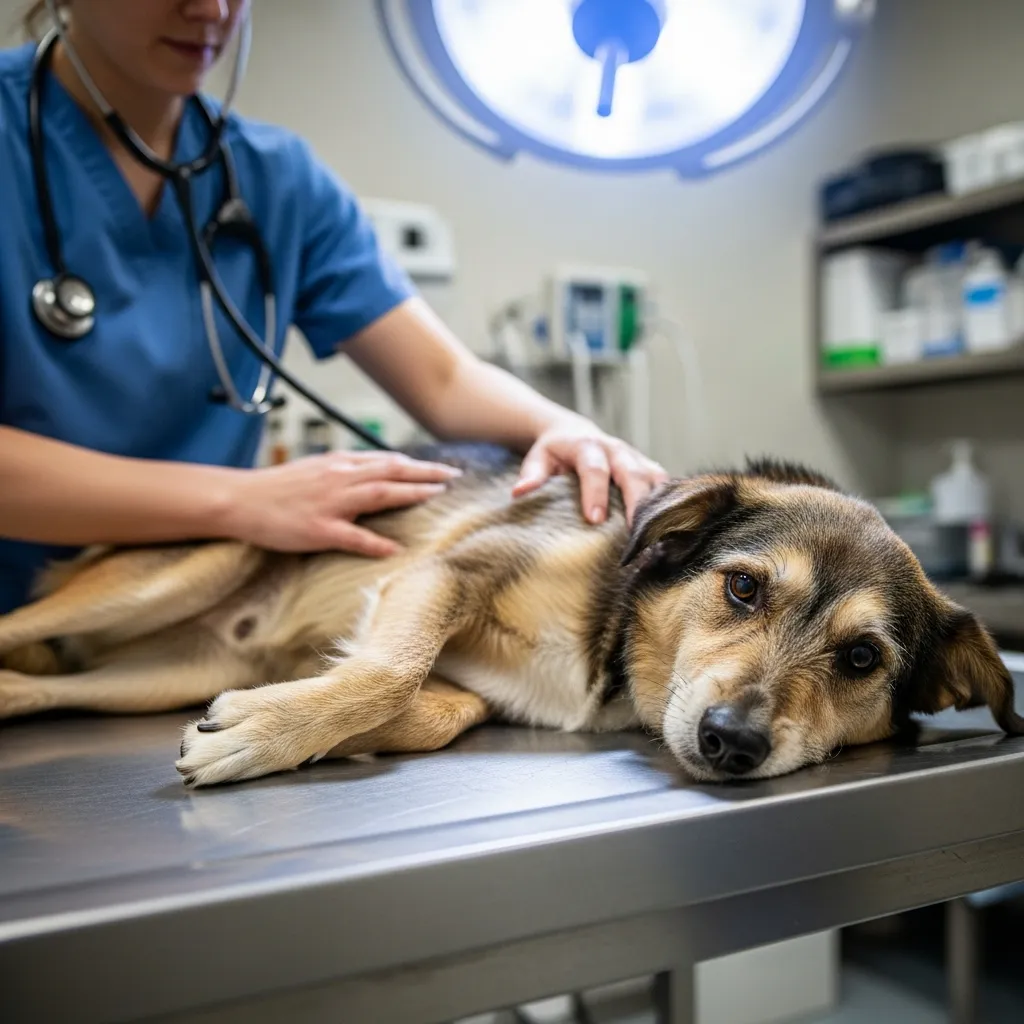
In everyday conversation, "animal cruelty" and "animal abuse" mean the same thing — both describe conduct that causes an animal unnecessary pain, suffering, or death. The difference is mostly contextual: "cruelty" is the more common legal term, used in state statutes, criminal charging documents, and welfare investigations, while "abuse" is the more common public term, used in news headlines, advocacy, and ordinary speech. Some specialists draw a finer distinction — abuse as the broader category that includes neglect, cruelty as the narrower category for active intentional harm — but the two words are functionally interchangeable in 2026 U.S. usage.
That doesn't mean the terms are useless. Knowing which word a statute uses, which agency uses which term, and how the categories overlap matters when you're reporting a case, adopting a survivor, or trying to understand what actually happened to the pet on the other side of the kennel glass.
Why "cruelty" is the legal term. Almost every state animal-protection statute is titled "Animal Cruelty," "Cruelty to Animals," or some close variant. The federal Preventing Animal Cruelty and Torture (PACT) Act of 2019 uses the same word. The reason is historical: the first animal-protection laws in the U.S. were written in the mid-1800s by societies like the ASPCA (founded 1866) that were modeled on the British Royal Society for the Prevention of Cruelty to Animals (RSPCA, founded 1824). The word "cruelty" was already the legal term in British common law, and it carried directly into American statute. The FBI tracks intentional animal cruelty as a Group A offense under the same name.
Why "abuse" is the public term. "Animal abuse" entered common American usage much later, mostly in the 1980s and 1990s, as advocacy organizations consciously borrowed the framing from "child abuse" and "domestic abuse." It was a deliberate move — calling something "abuse" rather than "cruelty" makes the connection to broader patterns of interpersonal violence more obvious. Decades of research from the FBI Behavioral Analysis Unit and from animal-welfare-domestic-violence partnerships have since validated that framing: animal abuse and family abuse co-occur in roughly 70% of households where pets are present.
The four-category framework either word covers. Whichever term you use, welfare investigators sort cases into the same four buckets — covered in detail in what are the 4 types of animal abuse?:
- Neglect (passive cruelty) — failure to provide food, water, shelter, or veterinary care. Most common type by a wide margin.
- Intentional cruelty / physical abuse — beating, burning, poisoning, mutilation, sexual abuse.
- Organized cruelty — animal fighting, bestiality.
- Hoarding — keeping more animals than the owner can care for, with denial of the suffering. See what makes someone an animal hoarder? for the diagnostic criteria.
The legal threshold and the conduct are the same regardless of whether the case file says "cruelty" or "abuse."
The narrow distinction some specialists draw. A few veterinary forensics texts and welfare organizations use the terms hierarchically: "abuse" as the umbrella for any conduct that harms animals (including neglect, hoarding, and organized cruelty), and "cruelty" as the subset specifically meaning active, intentional infliction of harm. Under this framing, all cruelty is abuse but not all abuse is cruelty. This usage shows up most often in academic papers and in specialized veterinary forensic literature — but it has not displaced the everyday synonymous usage. Most state statutes still classify neglect under "cruelty."
What does this mean for reporting? Practically, nothing. If you're reporting a case to police, animal control, or a humane society, use whichever word feels natural. The dispatcher will use whatever the local statute uses when they document the call. The legally important details are the conduct (what is happening to the animal), the address, and the evidence (photos, video, dates) — not the noun you choose to describe it.
What does this mean for adopters? A pet's behavioral profile might say "rescued from a cruelty case" or "rescued from an abuse case" or "owner-surrendered after a neglect investigation." All three describe the same underlying category of background. What matters when you're deciding whether the pet is a fit for your household is the specific behaviors — handling sensitivity, food guarding, fear of specific stimuli — and the support plan the shelter recommends. Many cruelty/abuse survivors do beautifully in the right home; some need experienced handlers; the published behavioral notes are how you tell which group a specific pet falls into. See the truth about rescue trauma and understanding shelter dog behavior for what recovery typically looks like.
A note on "humane treatment" and other related terms. The flip side of cruelty/abuse is "humane treatment," "animal welfare," and the 10 baseline animal rights covered in the welfare framework. These are not in tension with cruelty law — they're the affirmative standard that cruelty laws exist to enforce. Reputable shelters and rescues operate from that affirmative standard, not just from the legal floor.
How PawMates Pro helps you adopt a cruelty/abuse survivor with full information
Every PawMates Pro pet profile includes the partner shelter's published behavioral history — handling sensitivities, fear triggers, food guarding, prior trauma — so a "rescued from a cruelty case" pet isn't a black box. The deterministic compatibility score weights the rescue's recommended household type (no young kids, calm adults-only home, experienced handler, etc.) against your specific situation, so the survivors at the top of your feed are the ones the shelter believes will thrive in your home.
PawMates Fund and the Recurring Giving Club directly support shelters and humane societies that take cruelty seizures and run the medical and behavioral rehab those animals need.
Frequently asked questions
Are animal cruelty and animal abuse legally different?
No. State and federal statutes use "cruelty" as the legal term, but the conduct covered is the same conduct most people mean when they say "abuse." There is no separate "animal abuse" charge.
Which word should I use when reporting a case?
Either. Dispatchers, police, animal control, and humane societies will all understand both terms. The important details are the address, what's happening to the animal, and any evidence you can safely document.
Is neglect considered cruelty or abuse?
Both. Every U.S. state classifies failure to provide food, water, shelter, or veterinary care as a form of cruelty, and severe neglect cases are routinely charged as felonies. In the abuse-as-umbrella framing, neglect is a form of abuse.
What about "animal welfare violations" — are those the same?
In professional usage, "welfare violation" usually refers to non-criminal failures to meet welfare standards (e.g., USDA AWA inspections of commercial breeders or research facilities). "Cruelty" and "abuse" usually refer to criminal conduct. The categories overlap heavily — many welfare violations could also be charged criminally.
Is hoarding considered cruelty or abuse?
Both. Animal hoarding is now formally classified as one of the four recognized types of animal cruelty, and the DSM-5 also recognizes hoarding disorder as a mental health condition. The DSM diagnosis doesn't change the cruelty charge — the conduct is still prosecutable. See what makes someone an animal hoarder?.
Do these terms apply to wild animals?
Cruelty laws apply to most vertebrates, but wild animals are also covered by separate statutes (Endangered Species Act, Migratory Bird Treaty Act, state wildlife laws) that focus on species and habitat. A rancher or hunter acting under valid state license is generally not committing cruelty even when the animal dies — context and statute determine the line.
For the foundational definition either term refers to, see what is the meaning of animal abuse?.
Keep reading: cruelty, abuse, and animal rights
The cruelty-vs-abuse distinction sits inside the wider framework of how welfare law and the rights conversation work.