If you've started looking into adopting a pet, you've probably noticed that some organizations call themselves "shelters" and others call themselves "rescues" — and the two words seem to be used almost interchangeably. They are not the same thing. The differences shape who you can adopt from, how the application process works, what kind of pets are available, what fees you'll pay, and what kind of support you can expect after you bring your new pet home.
This guide explains exactly what separates a shelter from a rescue, where they overlap, and how to choose the right path for the kind of adoption you want.
The Short Answer
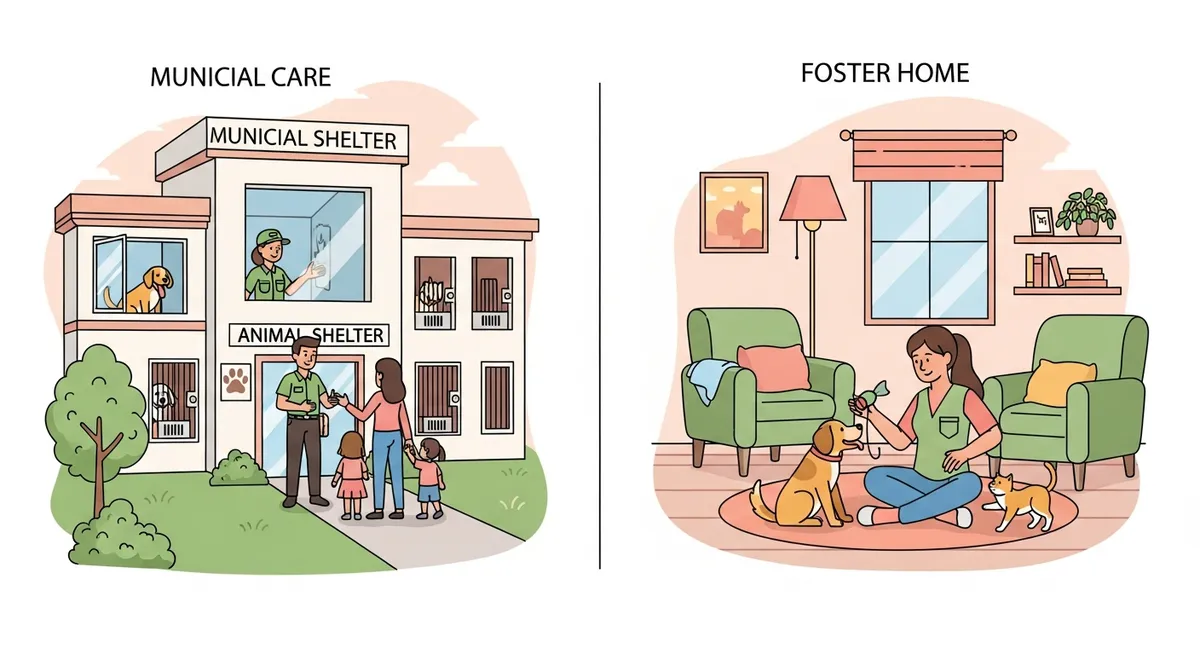
A shelter is typically a physical facility — often run by a city, county, or large nonprofit — that takes in any animal in its jurisdiction, including strays, owner surrenders, and pets from law enforcement or animal control. Shelters have kennels, paid staff, and (in many cases) a legal mandate to accept animals.
A rescue is usually a nonprofit organization, often volunteer-run, that places pets in foster homes rather than a central facility. Rescues are selective about which animals they take in, often focus on a specific breed or type of pet, and tend to have more in-depth application processes.
Both exist for the same reason: to get pets into good homes. But the experience of adopting from each can look quite different.
What Is an Animal Shelter?
An animal shelter is a physical facility that houses animals temporarily until they're adopted, transferred, or otherwise placed. Most shelters fall into one of three categories:
- Municipal (city or county) shelters. Government-run facilities that handle animal control duties for their jurisdiction. They take in strays, lost pets, surrenders, and animals from cruelty or neglect cases. In many jurisdictions they have a legal mandate to accept animals brought in by animal control, though some now use "managed intake" appointment systems for owner surrenders to keep capacity sustainable.
- Open-admission private shelters. Nonprofit shelters (often large, well-known humane societies) that accept any animal regardless of medical or behavioral status, similar to municipal shelters but operated independently.
- Limited-admission ("no-kill") private shelters. Nonprofit shelters that only take in animals they believe they can place, allowing them to maintain a much higher live-release rate.
Common features of shelters:
- A central physical building with kennels, runs, and dedicated staff
- Paid employees alongside volunteers
- Animal control responsibilities (in the case of municipal shelters)
- A wide variety of animals: dogs, cats, sometimes rabbits, small mammals, reptiles, birds, livestock
- Walk-in adoption hours during the week
- Lower adoption fees than rescues in many cases (sometimes free during adoption events)
- Mandatory hold periods for stray animals (typically 3–7 days) before they can be adopted out
(For a deeper look at how staff prepare animals for adoption, see Understanding Shelter Dog Behavior: What It Really Means.)
What Is an Animal Rescue?
A rescue is a nonprofit organization that takes in animals — usually from shelters, owner surrenders, or other rescues — and places them in foster homes until adoption. Rescues rarely operate a central facility; instead, they rely on a network of volunteers who take pets into their homes for weeks, months, or even years.
Rescues come in many varieties:
- Breed-specific rescues — focused on one breed or breed group (e.g., Labrador rescue, pit bull rescue, Persian cat rescue)
- Species-specific rescues — only dogs, only cats, only rabbits, only birds
- Age-specific rescues — focused on senior pets, or on neonatal kittens
- Medical or behavioral specialty rescues — focused on animals with chronic conditions, deafness, blindness, or behavioral challenges
- General rescues — small organizations that take a mix of animals based on capacity
Common features of rescues:
- Foster-based: pets live in private homes rather than kennels
- Volunteer-driven, often with no paid staff at all
- Selective intake: they choose which animals they can support
- Detailed application process with home visits, references, and interviews
- Higher adoption fees than shelters (typically $250–$600+) to cover medical costs
- Adoption usually by appointment, with occasional adoption events at partner stores or shelters
- Long-term commitment to the pet, often including return policies that ask the pet to come back to them if it ever doesn't work out
Side-by-Side: How They Compare
| Area | Shelter | Rescue |
|---|---|---|
| Location | Central facility with kennels | Foster homes |
| Funding | Tax dollars (municipal) or large nonprofit budgets | Donations, adoption fees, fundraising events |
| Staff | Paid employees + volunteers | Mostly or entirely volunteers |
| Intake | Open-admission (or large-scale limited) | Highly selective |
| Variety of animals | Wide — many species, breeds, ages | Often narrow — by breed, species, or condition |
| Application | Often same-day | Multi-step, can take days or weeks |
| Adoption fee | Often lower (commonly $25–$250) | Often higher (commonly $200–$600+) |
| Pet info available | Behavioral evaluation by staff | In-depth foster reports from daily home life |
| Return policy | Usually accepts returns, varies | Most require the pet to come back to them |
| Walk-in hours | Often yes | Usually by appointment |
The Information You Get About the Pet Is Different
This is one of the most underappreciated differences between adopting from a shelter versus a rescue.
At a shelter, the information about a pet is often limited to what staff and volunteers observe in the kennel environment, plus any background the surrendering owner shared. Shelter dogs and cats can behave very differently in the high-stress kennel setting than they do in a home — meaning a shy, withdrawn shelter pet might be playful and confident a week into your house, and a "perfect" shelter dog might develop unexpected anxiety in a quiet living room. (For more on this, see How to Spot a Confident Dog vs. an Anxious One.)
At a rescue, the pet has typically been living in a foster home — a real house, with real routines, often with other pets, sometimes with kids. Foster-based rescues can tell you whether the dog is housetrained, how they act around the cat, whether they sleep through the night, what they're like at the vet, what their favorite chew toy is, and whether they bark when the doorbell rings. That depth of information is one of the strongest arguments for adopting through a rescue.
Application Processes Compared
Shelters typically use a streamlined, same-day application process: fill out a form, do a brief interview with an adoption counselor, sometimes a meet-and-greet with other household pets, and you can often go home with your new pet that day. Some shelters require a 24-hour cooling-off period for impulse-purchase concerns; many do not.
Rescues run more like a vetted pipeline. A typical rescue application involves:
- A detailed written application (often 2–5 pages) about your living situation, household members, work schedule, and pet history
- Vet reference checks (they will call your vet to confirm prior pets were vaccinated, spayed/neutered, and well cared for)
- Personal references
- A home visit (in person or via video call) to confirm the environment matches what you described
- A meet-and-greet with the pet, often involving your existing pets
- Sometimes a trial fostering period before final adoption
This sounds intensive — and it is — but it's why rescue adoptions tend to have very low return rates.
Fees Compared
Shelter adoption fees commonly fall in the $25–$250 range, sometimes waived during adoption events, and can run higher for puppies or young purebreds. Most shelters spay/neuter, vaccinate, and microchip before the pet leaves with you, all bundled into the fee. Rescue adoption fees commonly run $200–$600, sometimes higher for puppies or rare breeds and lower for senior pets or adult cats. The fee covers the same services as a shelter (spay/neuter, vaccinations, microchip) plus often additional medical work — dental cleanings, parasite treatments, behavioral evaluations, sometimes long-term medication for chronic conditions the rescue has been managing in foster.
Policies and fees vary significantly by region, organization, and animal — always confirm with the specific shelter or rescue you're applying to.
Neither fee is "for the pet" — both are partial cost recovery for the medical and care work done before adoption. Either way, you're getting a healthier, more thoroughly evaluated pet than you would buying from a backyard breeder or pet store.
(For the full picture of what owning a pet actually costs after adoption, see Can I Afford a Pet? Expenses You Should Know About.)
Return Policies and Lifetime Commitment
A subtle but important difference: most rescues will require, in writing, that the pet must be returned to them — not rehomed, not surrendered to a shelter, not given to a friend — if the adoption doesn't work out, ever. This is a lifetime commitment from the rescue side and a meaningful protection for the pet.
Shelters generally accept returns too, but the policies vary widely. Some shelters charge a re-intake fee. Some have a return window after which a returned pet is treated as a fresh surrender. Read the adoption contract carefully and ask what happens if you ever need to return the pet.
(If you find yourself in this situation, please read Returning an Adopted Pet: What You Need to Know Before Making That Decision before deciding.)
Where Shelters and Rescues Overlap
The line is blurrier than the labels suggest. Many organizations do both:
- Large humane societies often run a physical shelter and a foster network
- Some rescues operate small physical adoption centers in addition to their foster homes
- Shelters and rescues frequently partner — shelters transfer pets to rescues to free up kennel space, and rescues sometimes use shelter facilities for adoption events
- Both share the same goals, the same vetting standards (in most cases), and the same commitment to the animals
The label matters less than the specific organization's reputation, transparency, and post-adoption support.
Which One Is Right for You?
Both shelters and rescues are excellent ways to adopt — they just suit slightly different adopters and situations.
Adopting from a shelter is usually better when:
- You want to meet many pets in person before deciding
- You're flexible about breed, age, or background
- You want a faster, simpler adoption process
- You want a lower adoption fee
- You're ready to take a pet home today
- You're comfortable doing more of the post-adoption discovery yourself (since shelter behavior may differ from home behavior)
Adopting from a rescue is usually better when:
- You want very detailed information about the pet's personality and behavior in a home setting
- You're looking for a specific breed, age, or condition
- You want the security of a long-term safety net (return-to-rescue clause)
- You're willing to go through a longer application process for higher confidence in the match
- You're open to a foster-to-adopt arrangement before committing
- You want a built-in support network of fellow adopters and foster families
Red Flags in Either Case
Whether you're working with a shelter or a rescue, a few warning signs apply equally:
- No application process at all
- No questions about your home, household, or other pets
- No spay/neuter before adoption (with no plan to enforce it after)
- No documented medical history
- High-pressure sales tactics ("you have to decide today")
- No clear return policy
- Cash-only fees with no receipt or paperwork
(For the full red-flag playbook, see Pet Adoption Scams and Red Flags: How to Protect Yourself and Find a Legitimate Rescue and Red Flags to Watch for When Adopting a Pet.)
How PawMates Pro Helps
PawMates Pro is the platform powering modern shelters and rescues across the Bay Area — and it's designed to give every adopter the same high-quality experience, whether the organization on the other end is a 200-kennel municipal shelter or a five-volunteer breed rescue. Our software gives shelters the tools to write rich, honest pet profiles backed by real medical and behavioral records, and gives foster-based rescues a way to capture daily home observations directly into the pet's adoption listing. We also run automated post-adoption check-ins at 3 days, 3 weeks, and 3 months — so the support that rescues are famous for becomes available to shelter adopters too. The result is faster matches, more accurate information, and fewer returns regardless of which adoption path you take.
The Bottom Line
Animal shelters and animal rescues exist to solve the same problem from two different angles. Shelters are open doors — facilities that take in any animal in need, often with a legal mandate, and place them as quickly as possible. Rescues are curated foster networks — small, intensive, and rich with home-based information about each pet.
There is no "better" choice in the abstract. There is only the choice that fits the kind of adoption you want, the kind of information you need, and the kind of pet you're looking for. Both paths lead to a great match for the right adopter.
Pick the one that fits you. Apply with patience. Bring home a pet who is loved, evaluated, and ready for the next chapter — your home.
Frequently Asked Questions
What is the main difference between an animal shelter and an animal rescue?
A shelter is a physical facility — usually city-, county-, or large-nonprofit-run — that houses animals in kennels and accepts almost any animal that comes in. A rescue is typically a smaller nonprofit that places animals in foster homes rather than kennels, is selective about which pets it takes in, and often focuses on a specific breed, species, or type of pet.
Are rescues better than shelters?
Neither is inherently better. Rescues usually offer more detailed home-based information about each pet and a stronger long-term safety net (return-to-rescue clauses). Shelters offer a wider variety of pets, faster adoption processes, and lower fees. The right choice depends on what kind of adoption experience you want.
Why are rescue adoption fees higher than shelter fees?
Rescues typically run $250–$600 because they cover more medical and behavioral care upfront — often including dental work, parasite treatment, behavioral evaluation, and any chronic-condition management done while the pet was in foster. Shelter fees ($25–$200) cover the same baseline services (spay/neuter, vaccinations, microchip) but generally less additional care.
Do rescues really do home visits?
Most do, yes — either in person or via a video walkthrough. The home visit is meant to confirm the environment matches what you described in your application and to flag any safety concerns. It's usually quick and informal, not an inspection.
Can I walk in to a rescue and adopt the same day?
It's uncommon. Most rescues operate by appointment because the pets live in private foster homes, though many run occasional adoption events at partner pet stores or shelters where same-day approvals are possible if your application is already on file. In general, plan on submitting an application, waiting a few days for review and reference checks, and then scheduling a meet-and-greet — total timeline is typically one to three weeks.
Do shelters euthanize animals?
Open-admission municipal shelters sometimes do, when an animal is severely ill, dangerous, or when capacity is exceeded — though many shelters have moved to "no-kill" policies (defined as a 90%+ live-release rate). Limited-admission private shelters and rescues generally do not euthanize for space, since they only take in animals they believe they can place.
Why do rescues require the pet to be returned to them if it doesn't work out?
Because the rescue made a lifetime commitment to that pet when they pulled it from a shelter or accepted it from an owner. The return-to-rescue clause guarantees the pet always has a safety net — if your circumstances change in five years, the rescue will take the pet back rather than risk it being surrendered to a shelter or rehomed to an unknown situation.
Is the application process really worth the hassle for a rescue?
For most adopters, yes. The detailed application process is exactly why rescue adoptions have very low return rates — both sides have a clear picture of the match before commitment. If a faster process suits you better, a shelter is a perfectly good alternative.
Can I adopt from both a shelter and a rescue?
Absolutely — many adopters have one of each over the years. The two organizations often partner, and adopting from either supports the broader network of saving animals. Some adopters even foster for a rescue while their shelter-adopted pet lives at home.
Related Articles
- Adopt Don't Shop: Why Shelter Pets Are the Smarter, More Rewarding Choice
- Pet Adoption Scams and Red Flags: How to Protect Yourself and Find a Legitimate Rescue
- Red Flags to Watch for When Adopting a Pet
- The Advantages to Adopting a Pet in Foster
- Understanding Shelter Dog Behavior: What It Really Means
- Can I Afford a Pet? Expenses You Should Know About