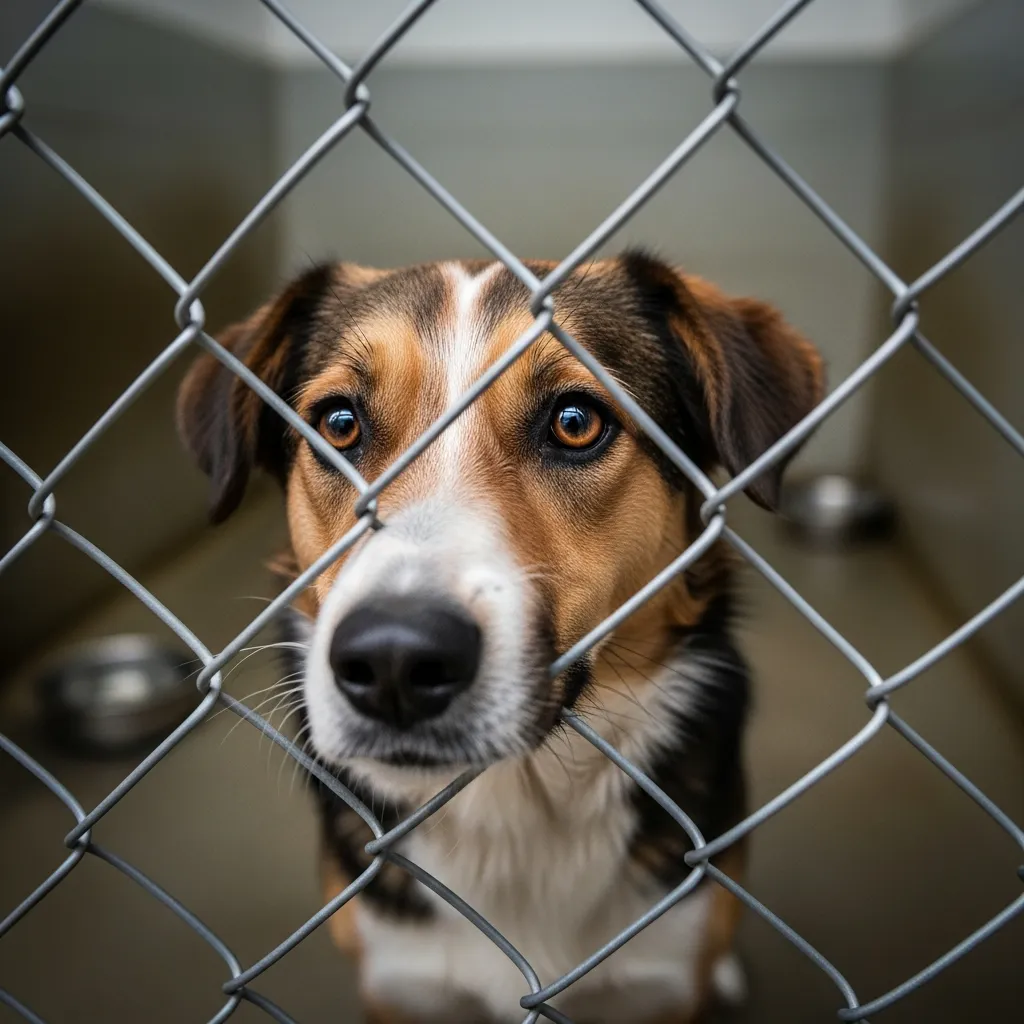
People often picture "animal abuse" as the worst-case headline — a fighting ring, a hoarding house, a beating caught on camera. Those are real and they're horrifying, but they're a small slice of what the law and the welfare community actually mean by the term. The day-to-day reality of animal abuse is much quieter: a chained dog with no shelter from heat, a cat left behind in an abandoned apartment, a litter of puppies sold to whoever shows up with cash, a horse standing in mud with overgrown hooves nobody has trimmed in two years.
This guide walks through what animal abuse actually means in 2026, how it shows up, why it matters for adopters, and what to do if you witness it. For the legal taxonomy of how cruelty cases are charged, see What Are the 4 Types of Animal Abuse?. For the rights-based framework that defines what animals are owed in the first place, see What Are 10 Animal Rights?.
Animal cruelty laws in the United States vary by state, but the federal Preventing Animal Cruelty and Torture (PACT) Act of 2019 sets the national floor. The PACT Act makes it a federal crime to intentionally crush, burn, drown, suffocate, impale, or otherwise subject any non-human mammal, bird, reptile, or amphibian to serious bodily injury.
Every state now has felony-level animal cruelty statutes, but the threshold differs. Common statutory definitions include:
- Intentional infliction of pain, injury, or death without legal justification (e.g., not licensed hunting, not humane euthanasia, not slaughter under USDA-regulated practice).
- Failure to provide necessary sustenance — food, water, shelter appropriate to the species and climate, and veterinary care for an injury or illness that any reasonable owner would treat.
- Abandonment — leaving an animal at a property, on a roadside, or in a vehicle in conditions that risk suffering or death.
- Animal fighting and bestiality — both are now federal felonies.
- Confinement in cruel conditions — chaining without adequate shelter, leaving in a hot vehicle, prolonged crating in waste.
The American Society for the Prevention of Cruelty to Animals (ASPCA) maintains a state-by-state cruelty law tracker for anyone trying to understand the rules where they live.
Active vs. passive cruelty
Welfare investigators usually divide animal abuse into two big categories.
Active cruelty is the intentional infliction of harm — beating, kicking, burning, poisoning, shooting, organized fighting, or sexual abuse. These cases are rarer than passive cruelty in raw numbers, but they're the ones most strongly correlated with violence against humans. Decades of research connect active animal cruelty to domestic violence, child abuse, and later violent crime — which is why the FBI added animal cruelty as a Group A offense in its national crime database in 2016.
Passive cruelty is neglect — the failure to provide necessities. It includes starvation, dehydration, untreated injuries and disease, lack of shelter, severe filth, and hoarding. Passive cruelty is far more common than active cruelty and produces more total animal suffering, but it's often underreported because people don't recognize "just neglect" as a crime. It is. In every state.
A meaningful share of shelter pets — cats, dogs, horses, rabbits, birds — are in shelters because they were removed from cruelty or neglect situations. That history shapes who they are when you meet them.
- Some animals show no lingering effects and bond as readily as any other pet.
- Some show fear, body-handling sensitivities, food guarding, or specific phobias (men, brooms, raised voices) that fade with patient handling.
- A small number need long-term behavioral support and a household ready to provide it.
The good news: a published behavioral history on the pet's profile tells you which group a specific pet falls into *before* you take them home. Shelters that disclose history honestly produce dramatically better adoption matches and lower return rates. For the broader picture of what shelter trauma looks like and how it heals, see the truth about rescue trauma and understanding shelter dog behavior — what it really means.
Some of the most common forms of cruelty don't look like cruelty at first glance:
- Tethering or chaining outdoors for prolonged periods without adequate shelter, water, or socialization. Many cities and states now restrict or prohibit this.
- Hot-car confinement. Interior temperatures rise 20°F in 10 minutes on a 70°F day. Cracking the windows does not help meaningfully. This is criminal in most states and Good Samaritan laws in many states protect people who break a window to rescue an animal.
- Hoarding. Keeping more animals than the owner can feed, clean, or provide veterinary care for is recognized as a form of cruelty even when the hoarder believes they're "rescuing." Hoarders are responsible for tens of thousands of animal deaths and severe welfare cases each year.
- Backyard breeding and puppy mills. Producing animals in conditions that prioritize volume over welfare — overbred mothers, no veterinary care, filthy enclosures, early separation from littermates — is a form of cruelty even when individual animals appear healthy at point of sale. See the case for adopting instead of buying.
- Cosmetic mutilation. Declawing cats, ear cropping, tail docking, and debarking are now classified as inhumane procedures by the AVMA when performed for non-medical reasons, and several states and most of Europe ban them.
This is the part that makes prosecutors and child-welfare workers pay attention. Multiple long-running studies — including research from the FBI Behavioral Analysis Unit, Northeastern University, and the Massachusetts SPCA — show that intentional animal cruelty in childhood or adolescence is one of the strongest behavioral predictors of later interpersonal violence. In domestic-violence households, animals are abused as a control tactic in roughly 70% of cases where pets are present, and abused partners cite fear for the pet as a primary reason for staying. This is why most states now allow pets to be included in protective orders and why "safe haven" foster networks for DV survivors' pets exist in every major city.
If you see an animal in immediate danger — a dog locked in a hot car, an animal being struck, a starving or unsheltered animal — call 911 or your local animal control. For non-emergency suspected cruelty or neglect, call your local humane society, animal control, or the police non-emergency line. Provide:
- The exact address (or as precise a location as you can give).
- A description of the animal and the conditions.
- Photos or video if you can document them safely without trespassing.
- Your contact information if you're willing to be a witness (you can usually request anonymity).
Don't try to confront the owner yourself. Cruelty cases need a documented chain of custody to be prosecuted, and direct confrontation often results in the animal disappearing before investigators arrive.
How PawMates Pro helps you adopt with full information
Every pet on PawMates Pro has a published behavioral and medical history written by the partner shelter — including any documented cruelty or neglect background, current handling notes, and the kind of household environment the pet is most likely to thrive in. The deterministic compatibility score factors that history against your experience, household composition, and time-at-home so the pets at the top of your feed are pets *your* household can actually support. You see the history before you swipe, not after you sign.
Frequently asked questions
Is neglect really considered animal abuse?
Yes. Every U.S. state defines failure to provide food, water, shelter, or necessary veterinary care as a form of cruelty, and severe neglect cases are charged as felonies in most states. Passive cruelty produces more total animal suffering than active cruelty.
Is leaving a dog tied up outside considered abuse?
Prolonged tethering without adequate shelter, water, and social contact is restricted or illegal in many states and most major cities. Even where it's legal, it commonly meets the bar for neglect when conditions are inadequate.
What's the difference between animal cruelty and animal abuse?
In everyday usage they're synonyms. In statute, "cruelty" is the more common legal term and "abuse" is the more common public term. Both refer to the same underlying conduct.
Can I be charged with abuse for not taking my pet to the vet?
If a reasonable person would have sought treatment for an obvious injury or illness and the failure to do so caused the animal to suffer, yes. This is a common neglect charge.
What should I do if I see a dog locked in a hot car?
Note the license plate, ask nearby businesses to page the owner, and call 911 or animal control. Many states now have Good Samaritan laws protecting people who break a window to rescue an animal in immediate danger — but check your local law and call authorities first.
Are puppy mills illegal?
Most are technically licensed under USDA Animal Welfare Act commercial breeder rules, but those rules are minimal and widely under-enforced. Many state and local laws now restrict pet store sourcing from commercial breeders, and a growing number of cities ban retail pet sales of dogs and cats outright.
For the related conversation on identifying organizations that *do* meet welfare standards, see how do I know if a pet rescue is legitimate? and pet adoption scams and red flags.
Keep reading: understanding animal abuse and animal rights
The legal definition of animal abuse sits inside a broader framework of cruelty law and animal rights. These PawMates guides explain the rest.