A stray dog trots up to a Good Samaritan in a parking lot. A litter of kittens turns up under a porch. Animal control picks up a frightened shepherd on a county road. In every case, the same question follows: what happens now? Most people imagine an animal simply gets "put up for adoption." The real journey from stray to adoptable is longer, more careful, and a lot more interesting than that. Here's what actually happens behind the shelter doors.
Step 1: Intake and the first scan
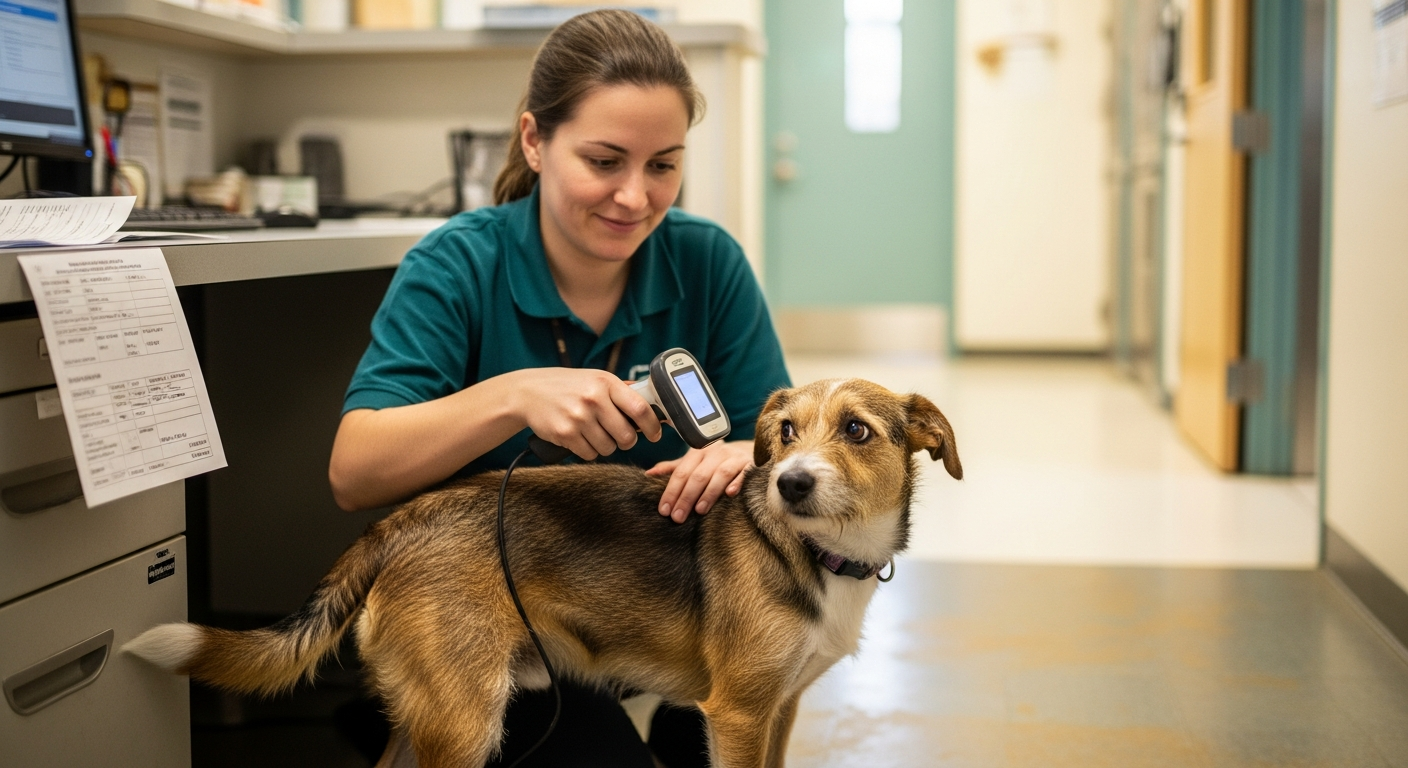
The moment an animal arrives, the clock — and the paperwork — starts. Staff record where the animal was found, their condition, and any identifying details. Then comes the single most important step for getting a lost pet home fast: a microchip scan. A universal scanner is passed over the animal twice, because chips can migrate and a single quick pass can miss them.
If there's a chip, staff run the number through the universal microchip lookup to find the registry and, hopefully, a current phone number. This is exactly why keeping your chip registration up to date matters so much — a chip with stale contact info is almost as bad as no chip at all. (If you've recently adopted, here's why microchipping and registering properly is critical.)
Step 2: The stray hold
Here's the part most people don't know: a found animal usually can't be adopted out right away, even if they're friendly and healthy. Most jurisdictions require a stray hold — a legally mandated waiting period (often 3 to 7 days, though it varies widely by location) during which the shelter must give the original owner a chance to reclaim their pet.
The stray hold exists for a heartbreaking reason: the animal in front of the staff might be someone's beloved, desperately-missed family member. During this window, the pet is housed, fed, and cared for, but held in reserve. Shelters post found animals, check lost-pet reports, and wait. Only when the hold expires with no owner claim can the animal move toward adoption.
Step 3: The vet check
Whether during or right after the stray hold, the animal gets a medical evaluation. Depending on the shelter's resources, this can include:
- A nose-to-tail physical exam
- Core vaccinations (and a rabies shot where due)
- Deworming and flea/tick treatment
- Treatment for any injuries, infections, or illness
- Spay or neuter before the animal goes home
A modern shelter records all of this on a single profile. At a PawMates Pro shelter, that medical history is bound to a permanent PawMates Pet ID, so it doesn't reset to zero every time the animal moves between a vet, a foster, and the adoption floor. When you adopt, that continuity is what lets you start with a real health record instead of a blank page — and it's the foundation of what a lifetime medical record makes possible.
Step 4: The behavior assessment
Next, staff get to know the animal as an individual. How do they respond to handling, to other animals, to noise, to food, to gentle play? This isn't a pass/fail exam — it's a way to understand the pet so they can be matched to the right home. A dog who guards food, a cat who needs a quiet adult-only household, a pup who adores other dogs: all of this shapes the profile and helps prevent a mismatched adoption (and a return). It's worth remembering that a shelter is a stressful place, and the animal you meet there is often a muted version of who they'll be once they decompress at home.
Step 5: Photos, profile, and listing
Only now does the animal become "adoptable." Staff or volunteers take photos, write up a personality description, and publish the listing. This step matters more than people realize — a good photo and an honest, warm description can be the difference between a two-day stay and a two-month one. (It's a big reason black cats and dark-coated pets get overlooked: they're genuinely harder to photograph.) Shelters using PawMates Pro publish straight into a swipe-based adopter app, which is part of how the right person finds the right pet faster.
Step 6: Matching, meeting, and home
From there it's the part you know: someone spots the pet, applies, meets them, maybe goes through a quick home check, and brings them home. Every step before this one existed to make sure that this animal, with this person, has the best possible shot at forever.
Frequently asked questions
How long does a shelter hold a stray before adoption?
It depends on local law, but a stray hold is commonly 3 to 7 days. The hold gives the original owner a window to reclaim a lost pet before the animal can be made available for adoption.
Do shelters check for a microchip?
Yes — scanning for a microchip is one of the very first things done at intake, usually with two passes of a universal scanner, because reuniting a lost pet with their owner is faster and kinder than adoption.
What happens to a stray's medical care during the hold?
The animal is housed, fed, and given urgent medical care during the stray hold. Routine vaccinations, spay/neuter, and a full vet workup typically happen during or right after the hold, before adoption.
Why isn't a friendly stray adoptable right away?
Because they might be someone's lost pet. The legally required stray hold protects owners by guaranteeing a reclaim window, even when the animal seems unowned.
The next time an adoption feels slow, remember everything that happens before a pet ever appears in your feed. It's not bureaucracy for its own sake — it's a careful, legally-bound process built to get lost pets home and set adopted pets up to stay.
Related reading
- Are home checks really necessary? — the last step of the journey, from the adopter's side.
- The emotional weight shelter staff carry — the human cost of doing all of this, every day.
Keep reading on the PawMates adopter blog.