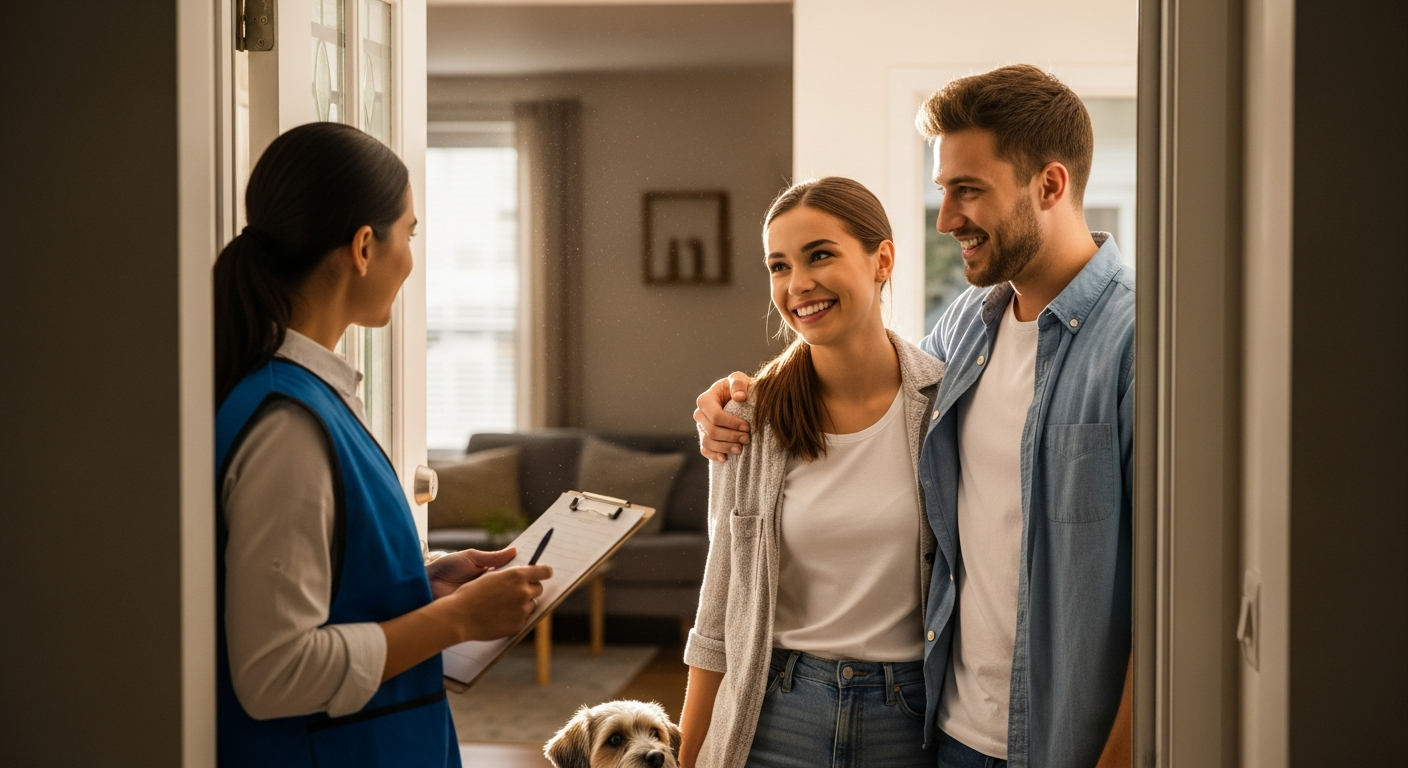
You filled out the application, you nailed the interview, you've already picked out the bed and the bowls — and then the rescue says, "Great! The next step is a home check." For a lot of would-be adopters, that sentence lands somewhere between flattering and nerve-wracking. Are they going to judge my apartment? Run a white glove over the baseboards? Tell me I can't adopt because my yard is too small?
Take a breath. A home check is not an inspection of your housekeeping. It's a short, practical conversation about whether your space and routine fit the specific animal you want to bring home. Here's what it actually is, why shelters do it, and how to sail through it.
What a home check really is
A home check (sometimes called a home visit) is a brief look — in person or, increasingly, over video — at where the pet will live. The goal is simple: make sure the match is safe and realistic for both you and the animal. A volunteer or staff member wants to picture the dog or cat in your actual life, not the idealized version on paper.
It is not a test you pass or fail based on income, decor, or square footage. Plenty of perfectly happy pets live in studio apartments, and plenty of struggling pets came from houses with big yards. Reputable rescues know this.
Why shelters do home checks at all
Every home check traces back to one thing: reducing the chance the adoption falls apart and the animal comes back. Returns are hard on the pet, hard on the staff, and hard on you. A few minutes up front prevents a lot of heartbreak later. Specifically, a home check helps confirm:
- Basic safety. Is there a fence if the dog is a fence-required breed? Are there obvious escape routes for a flighty cat? Is the balcony railing wide enough for a kitten to slip through?
- Household agreement. Is everyone who lives there actually on board? A surprising number of returns happen because one family member never agreed to the pet.
- A fit for this animal. A high-energy working dog and a top-floor walk-up with no outdoor access may not be a great pairing. A senior cat who needs quiet may not thrive with four toddlers. The check is about this pet, not pets in general.
- Landlord reality. If you rent, does your lease actually allow the animal, including any breed or weight limits? This is the single most common reason adoptions unravel, and it's far kinder to sort it out before the pet moves in.
What they are NOT looking for
Let's kill the myths. A good home check is not looking for a spotless house, an expensive home, a fenced acre, or a stay-at-home owner. Dust is fine. Clutter is fine. Renting is fine. Working full-time is fine. If a "rescue" is shaming you over things like this, that's a red flag about them, not you.
In-person vs. virtual home checks
Since 2020, video home checks have become normal and are often just as effective. You walk through on a phone call, show the rooms, the yard or nearest green space, and where the food, crate, or litter box will go. It's faster for everyone and removes the "stranger in my house" discomfort. If a long drive or a scheduling crunch is the only thing standing between you and your pet, ask whether a virtual option is available.
How to prepare (a simple checklist)
You don't need to stage your home. You just need to show you've thought it through:
- Have everyone in the household present, or at least available to say hello.
- Know your lease or HOA pet rules and have them handy if you rent.
- Pet-proof the obvious hazards: secure loose cords, move toxic plants and cleaners, check fence gaps and screen integrity.
- Have a plan for the basics — where the pet sleeps, eats, and toilets, and who handles walks or litter.
- Prepare your own questions. A home check goes both ways; it's your chance to ask the rescue about the animal's history and needs.
How modern shelters make this less painful
The friction in adoption usually isn't the home check itself — it's the back-and-forth, the lost paperwork, and the silence between steps. Shelters that run PawMates Pro keep your application, references, and home-check status in one place, so you're not re-sending the same documents three times or wondering whether you've been ghosted. When the process is organized, the home check becomes what it's supposed to be: a quick, friendly final step, not a mysterious gatekeeper.
It also helps to understand what the staff on the other side are juggling. If a response takes a day or two, it's rarely about you — see the emotional weight shelter staff carry for the fuller picture, and what actually happens when a stray enters a shelter for everything happening behind the scenes before a pet is ever listed.
Frequently asked questions
Are home checks legally required to adopt a pet?
No. Home checks are a policy each shelter or rescue sets for itself, not a legal requirement. Many shelters do a quick conversation or virtual walk-through instead of an in-person visit, and some skip it entirely for certain adoptions.
Can I be denied adoption because of my home?
You can be redirected to a better-matched animal, but a good rescue won't reject you over cosmetic things like clutter or a small space. Denials usually come down to genuine safety issues, a lease that prohibits the pet, or a household that isn't in agreement.
Do I need a fenced yard to adopt a dog?
Usually not. A fence is sometimes required for specific high-flight-risk or high-energy dogs, but most dogs do beautifully with leashed walks and a committed routine. Ask the shelter what this particular dog needs.
What if I rent?
Renters adopt all the time. Just confirm your lease allows the pet — including any breed or weight restrictions — before you apply, since landlord rules are the most common reason an adoption falls through.
The bottom line: a home check is a safety conversation, not a judgment of your life. Show up prepared, ask your own questions, and treat it as the last friendly step before your new family member comes home.
Related reading
- What actually happens when a stray enters a shelter? — the journey every shelter pet takes before they're ready to meet you.
- The emotional weight shelter staff carry — why patience with the process is one of the kindest things you can offer.
For more adoption guides, browse the PawMates adopter blog.