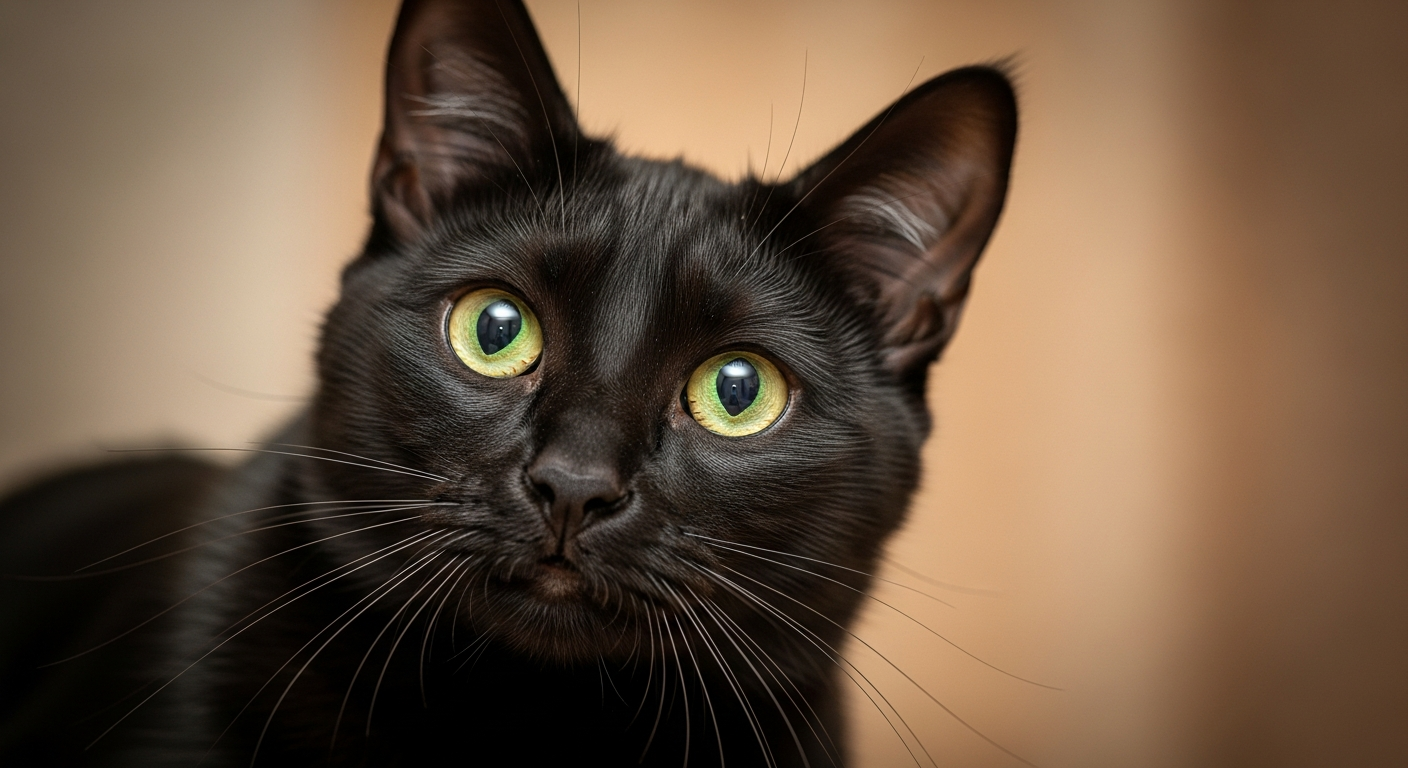
Walk through almost any shelter's cat room and you'll notice something: the black cats are often the ones who've been there longest. They're just as sweet, just as playful, and just as ready for a couch to claim — yet they're consistently passed over. It's a phenomenon real enough to have a name: black cat syndrome. Here's why it happens, why none of it is the cats' fault, and why a black cat might be the best decision you'll ever make.
Why black cats get overlooked
The reasons are a tangle of old superstition, modern technology, and simple bad luck:
- Centuries of superstition. In parts of Western culture, black cats got tied to bad luck, witches, and Halloween folklore. It's nonsense — in plenty of other cultures black cats are symbols of good fortune — but the cultural residue lingers and nudges people, often unconsciously, away from them.
- They're genuinely harder to photograph. This is the big, underrated one. A black cat's features — the expressive eyes, the subtle face — disappear into a dark blob in a quick, poorly-lit phone photo. Online adoption is overwhelmingly visual, and a listing photo that doesn't capture a cat's personality gets scrolled right past. The cat isn't less adoptable; the picture just failed them.
- They blend together. In a row of kennels, several solid-black cats can look similar at a glance, making it harder for any one of them to stand out and "pick you."
- Sheer numbers. Black (and black-and-white) is one of the most common cat coat colors, so there are simply more of them waiting, which lengthens the average stay.
The cost of being overlooked
Longer shelter stays aren't just sad — they're hard on the cat (more stress, more time in a kennel) and hard on the staff who advocate for them. Every extra week a healthy cat waits is a week another animal can't take that space. This is part of the quiet weight shelter staff carry: watching wonderful animals get passed over for reasons that have nothing to do with who they are.
The case for adopting a black cat
- Personality has no color. Affection, playfulness, and that perfect head-bonk aren't tied to coat. You're adopting a cat, not a color.
- They show off your home beautifully (and hide cat hair on dark furniture, if we're being practical).
- You're choosing the underdog. Adopting a long-stay cat opens a kennel and lifts a real worry off the staff.
- They're often ready to go. Many overlooked adults are already vetted, vaccinated, fixed, and litter-trained — no kitten chaos required.
How shelters are fixing the photo problem
The single biggest lever isn't fighting superstition — it's better listings. Good lighting, a non-black background, catching the eyes, and an honest, warm description can transform a black cat's adoption odds almost overnight. This is exactly where modern tools help: shelters running PawMates Pro publish rich, photo-forward profiles into a swipe-based adopter app, giving every cat — including the hard-to-photograph ones — a real chance to make a first impression. When the listing finally captures the cat's actual personality, "black cat syndrome" starts to disappear.
If you're scrolling and a black cat's photo doesn't quite grab you, look again — and read the description. There's a good chance you're looking at the most overlooked, most ready, most grateful cat in the building. And if you're curious about everything that cat went through to get to your screen, here's what happens when a stray enters a shelter.
Frequently asked questions
Is black cat syndrome real?
Yes — many shelters report that black cats and black-coated pets wait longer for adoption and can be overlooked. The leading drivers are lingering superstition and the simple fact that black cats are harder to photograph well, which hurts them in a heavily visual, online adoption world.
Are black cats less friendly?
Not at all. Coat color has no bearing on personality, temperament, or friendliness. A cat's behavior comes from genetics, socialization, and individual character — never from being black.
Why are black cats harder to photograph?
Their dark fur absorbs light, so without good lighting and a contrasting background, their eyes and features wash out into a dark shape. Better lighting and thoughtful photos dramatically improve their listings and adoption odds.
Should I adopt a black cat?
If you want a loving companion, absolutely. Black cats are just as wonderful as any other, they often wait the longest, and many are already vetted and ready to go — so adopting one helps a cat who truly needs it.
Don't let an old superstition or a bad photo cost you a great cat. Some of the best companions in any shelter are the ones in the back, dressed in midnight, waiting for someone to look twice.
Related reading
- Why cats knock things off tables — your future black cat's favorite hobby.
- The emotional weight shelter staff carry — why choosing the overlooked cat means so much.
Find more adoption stories on the PawMates adopter blog.