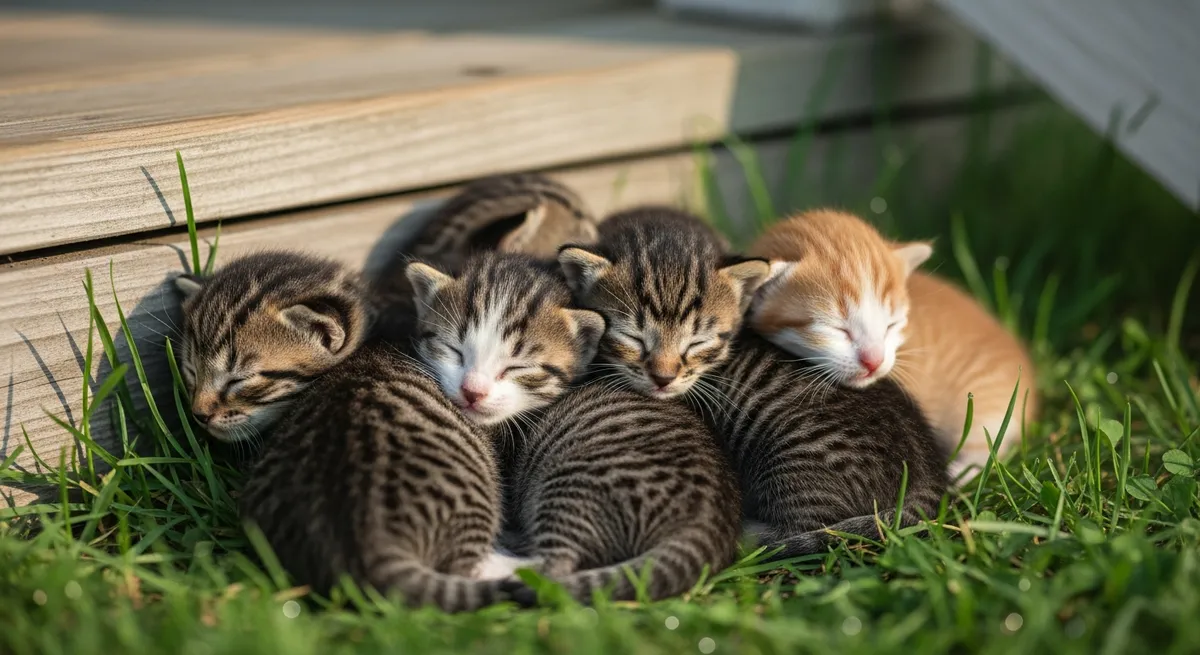
You are walking past a shed, a wood pile, or the bushes by your porch when you hear it — a faint, high-pitched mewing. You look closer and find a litter of kittens, eyes barely open, no mother in sight. Your heart lurches and your first instinct is to scoop them up and rush them to the nearest shelter. Please pause. That well-meaning rescue is, more often than not, the wrong first move — and knowing the right one can be the difference between life and death for those kittens.
The single most important rule: wait and watch
Here is the truth that surprises almost everyone: kittens found outdoors are usually NOT orphaned. Mother cats leave their litters for hours at a time to hunt, eat, and avoid drawing predators to the nest. A mom who is out foraging — or who is hiding nearby because a human is standing over her babies — is the best possible caregiver those kittens could have. No human, no shelter, and no bottle can match her.
So before you do anything, wait and watch:
- Step back to a distance where you are out of sight and scent (mom will not return if she senses you).
- Monitor for several hours — ideally observing from a window or from far away, returning periodically.
- A common method is to lightly sprinkle flour around the nest and check later for paw prints, or to monitor from a distance, to confirm whether mom is coming back.
If the kittens are clean, plump, sleeping quietly, and bunched together, that is a strong sign mom is caring for them. The best outcome is almost always to leave them with her until they are old enough to be weaned, then trap the whole family for TNR or socialization and adoption.
When you SHOULD intervene
Waiting is the default, but it is not absolute. Step in if:
- The kittens are in immediate danger — a road, a flooding area, extreme heat or cold, a predator threat, or a site about to be disturbed (mowing, construction).
- Mom has clearly not returned after many hours of careful watching, and the kittens appear hungry, cold, dirty, or are crying continuously.
- A kitten is visibly sick or injured, or appears weak and unresponsive.
- You have confirmed mom is deceased.
If one or more of these is true, the kittens may genuinely need help.
If you do need to step in
Caring for neonatal kittens is demanding and time-sensitive, so your goal is to stabilize and get expert guidance fast:
- Warmth first, always. Cold is the number one killer of neonatal kittens. They cannot regulate their temperature. Provide gentle, indirect warmth (a towel-wrapped heating pad set low, with room for them to move off it). Never feed a cold kitten.
- Do NOT give cow's milk. It causes dangerous diarrhea. Kittens need kitten milk replacer (KMR), and very young kittens require bottle feeding every two to three hours around the clock.
- Call before you carry. Contact your local shelter, a rescue, or a vet right away. Many shelters are stretched thin during kitten season and would rather coach you through fostering the litter than take in fragile bottle babies they cannot safely house.
- Keep them contained and quiet, away from other pets, while you get guidance.
Why "call the shelter first" matters so much
It feels counterintuitive, but rushing healthy, mom-dependent kittens into a shelter can lower their survival odds, not raise them. A shelter is a stressful, germ-heavy environment that is genuinely dangerous for neonates, and during the summer surge, staff are already overwhelmed — see the summer surge: when shelters need community support most. By calling first, you let the experts tell you whether to wait, whether to foster with their support, or whether the litter truly needs to come in. You become part of the solution rather than another emergency on a full day.
If you are able to foster the litter with the shelter's guidance, you may save every one of them — and you will be doing exactly the kind of work described in the best ways to help shelter pets this summer.
Don't forget the adults
Whenever possible, the whole family should eventually be trapped so mom (and any other community cats) can be spayed or neutered through TNR. That is how a single found litter becomes the end of a line rather than the start of next year's flood. It is the prevention side of the kitten-season story.
Where records come in
If kittens do come into care and are eventually adopted, their early medical events — first deworming, vaccines, spay/neuter, microchip — all need to be tracked from day one. Shelters running PawMates Pro keep each kitten's record connected through every hand-off, so adopters leave with a real lifetime medical record tied to a durable PawMates Pet ID and shared with their vet, on their consent, via the VetPetz bridge — turning a roadside rescue into a lifetime of organized care.
The bottom line
Finding kittens is a moment that calls for a cool head, not just a warm heart. Wait and watch first, because mom is usually the answer. Intervene only when they are truly in danger or truly alone — and when you do, prioritize warmth, skip the cow's milk, and call the shelter before you carry them in. Done right, you give those kittens their best possible shot, and you take pressure off a system already stretched to its limit.
Frequently asked questions
Should I take kittens I found straight to a shelter?
Usually not right away. Most found kittens are not orphaned — mom is often nearby and is their best caregiver. Wait and watch first, and call your shelter for guidance before removing them.
How do I know if the mother cat is coming back?
Step well out of sight and scent and monitor for several hours. Clean, warm, plump, quietly sleeping kittens suggest mom is caring for them; you can also check for her paw prints near the nest.
When should I rescue kittens immediately?
Step in if they are in immediate danger, visibly sick or injured, crying and clearly cold or hungry after many hours with no mom, or if you have confirmed the mother is gone.
What should I never do with newborn kittens?
Never feed a cold kitten and never give cow's milk. Warm them gently first with indirect heat, use kitten milk replacer, and contact a shelter, rescue, or vet for proper instructions right away.
Related reading
- What is kitten season and why does it matter? — why summer brings so many litters.
- The best ways to help shelter pets this summer — fostering and other ways to step up.
- The summer surge: when shelters need community support most — why shelters are stretched thin.
For more adoption and pet-care guides, browse the PawMates adopter blog.