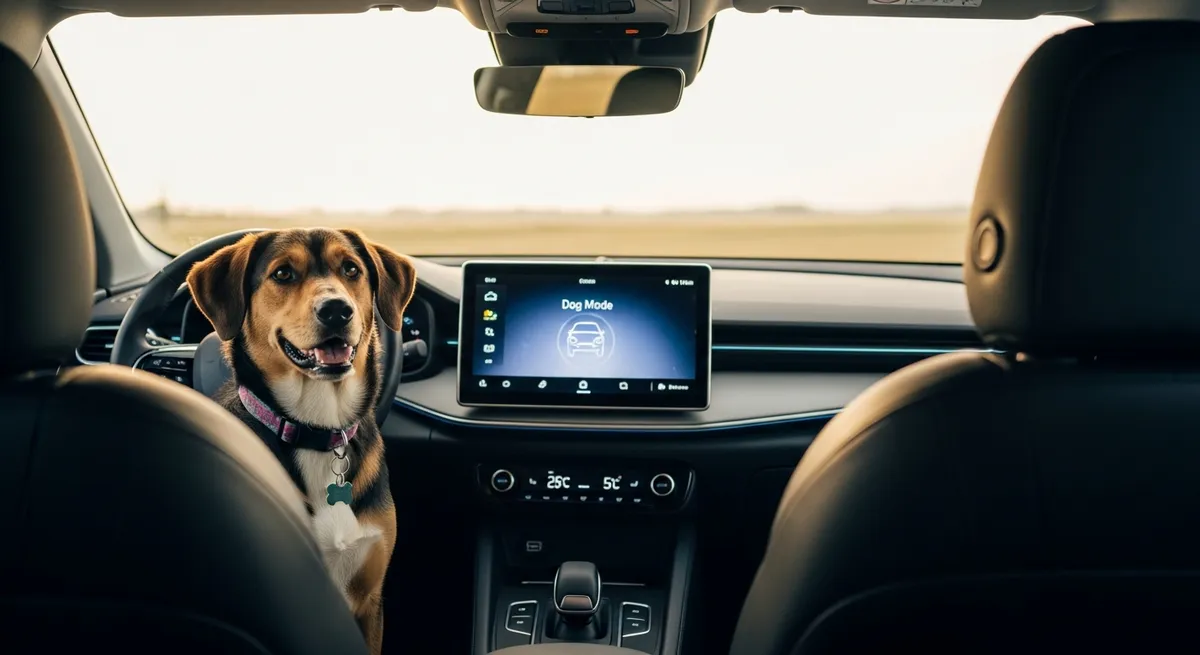
You run into the pharmacy for "just two minutes." It is 78 degrees outside — pleasant. But inside a parked car, the temperature can climb past 100 degrees in ten minutes and past 120 in half an hour, even with the windows cracked. Every summer this math turns deadly for dogs whose owners meant no harm at all. It is the single scariest part of running errands with a dog in the car.
Tesla built a feature specifically for that moment, and it is one of the most genuinely useful pieces of pet-safety technology to come out of the car industry in years. It is called Dog Mode — and it is a big reason a lot of dog owners end up loving their EV.
What Dog Mode actually is
Dog Mode is a setting that keeps your car's climate control running after you get out and walk away. Instead of the cabin baking (or freezing in winter), the air conditioning or heat stays on to hold a comfortable temperature you set.
Just as important, it puts a large, friendly message on the car's center screen so a passerby does not panic, smash your window, or call the police on you. The screen shows something like: "My owner will be back soon. Don't worry! The cabin is being kept at a comfortable temperature," along with the current interior temperature. That reassurance is the part people underestimate — it tells a worried stranger that this is a deliberate, safe situation, not a forgotten pet.
How it works, step by step
1. You set the temperature you want the cabin held at, then switch on Dog Mode from the climate menu.
2. You leave and lock the car. The climate system keeps running on battery power — no idling engine, no carbon monoxide, no noise.
3. The screen displays the reassurance message and the live cabin temperature for anyone walking by.
4. The car watches its own battery. If the charge drops toward a low threshold (around 20 percent), the car sends a notification to your phone so you can come back before climate control is at risk.
5. You can check in remotely. Through the phone app you can see the cabin temperature in real time and even adjust the climate from wherever you are.
It is the difference between "I have to leave my dog at home for every errand" and "my dog can come along and wait in a cool, calm cabin."
Why this matters so much for dog owners
Heatstroke in dogs is fast, silent, and often fatal. Dogs cool themselves mainly by panting, which barely works in a hot, enclosed car. By the time a dog is in distress, organ damage may already be underway. The tragic part is that almost none of these cases involve cruelty — they involve a good owner who badly misjudged how quickly a parked car heats up.
Dog Mode dramatically reduces that risk for the routine, low-risk errand. Paired with the on-screen message, it also protects you from the very real scenario of a Good Samaritan breaking your window because they could not tell your dog was safe.
The honest caveats — read this part
Technology is a safety net, not a force field. Use Dog Mode wisely:
- It depends on battery. Dog Mode draws power. Do not engage it at 8 percent charge and disappear for an hour. Leave with a healthy buffer and heed the low-battery alert immediately.
- It is not a license to be gone for a long time. It is built for short absences. The longer you are away, the more can go wrong — battery, a rare software glitch, a dead phone you cannot get alerts on.
- Glitches happen, rarely. Like any software feature, Dog Mode has occasionally been reported to disengage after an update or fail to behave as expected. Always confirm it is actually running and the screen message is showing before you walk away.
- Keep your phone charged and in signal. The remote monitoring and low-battery warnings only help if you can receive them.
- Know your local laws. Some states and cities prohibit leaving an animal unattended in a vehicle regardless of climate or technology, and a posted message will not exempt you. This post is not legal advice — check the rules where you live and travel.
- Hot pavement still burns paws. Dog Mode protects the cabin, not the walk across the asphalt to get there.
When in doubt, the safest choice is still to bring someone who can stay with the dog, or leave the dog at home.
Beyond Dog Mode: why EVs suit pets in general
Dog Mode gets the headlines, but several other things make electric cars — Teslas and otherwise — quietly great for animals:
- Cabin Overheat Protection. A separate feature that can keep the interior from exceeding a set temperature for hours after you park, as a backstop against extreme heat.
- Remote climate pre-conditioning. Cool the car down (or warm it up) from your phone before you even load the dog in, so they never experience the hot-car shock.
- A quiet, low-vibration ride. No rumbling engine means a calmer cabin — a real benefit for anxious or noise-sensitive dogs, and for newly adopted pets still learning that car rides are safe.
- Flat floors and roomy interiors. Many EVs have generous cargo space and a low, flat load floor that is easier for older or mobility-limited dogs to get into.
None of this replaces a crash-tested harness or crate — please still secure your dog properly on every drive — but the baseline comfort is hard to beat.
Where connected pet care fits in
A cool cabin keeps your dog safe in the parking lot. A connected medical record keeps them safe everywhere else. If the worst ever happens on the road — an accident, a sudden illness, a heat emergency at a rest stop three states from home — the emergency vet who treats your dog is flying blind without their history.
This is exactly the gap connected pet care is built to close. When you adopt from a shelter running PawMates Pro, your pet arrives with a real profile — vaccines, medications, allergies, behavioral notes — not a manila folder. That information lives in a lifetime medical record that travels with the animal and can be shared, with your consent, to whatever clinic is treating them. The microchip is how a stranger or shelter looks your pet up, but the chip number is only the doorbell — the record itself is tied to a durable PawMates Pet ID, so the history stays attached even if contact details or chip registries change. (If you think the chip alone stores your dog's medical history, you are not alone — see the biggest misconceptions about pet microchips.)
Think of it as two halves of the same instinct: you buy the car with Dog Mode because you want to protect your dog in the small, everyday moments — and you keep their record connected because you want them protected in the big, unexpected ones. (Not chipped and registered yet? Start with why microchipping is critical.)
The bottom line
Is "buy a Tesla" practical advice for every adopter? Of course not — EVs are a big purchase, and a feature like Dog Mode is a perk, not a substitute for good judgment. But it is a glimpse of where pet ownership is heading: tools designed around the reality that our animals come everywhere with us, and that keeping them safe should not depend on us never making a mistake. Whether that is a car that refuses to overheat or a medical record that refuses to get lost, the best pet technology does the same thing — it watches out for your dog when you cannot.
Frequently asked questions
What is Tesla Dog Mode?
It is a setting that keeps the car's climate control running after you leave, holding a comfortable cabin temperature for a pet left inside, while showing a message on the screen so passersby know the animal is safe and the owner will return.
Is it safe to leave my dog in a Tesla with Dog Mode on?
For short errands, with a healthy battery charge, a charged phone in signal, and confirmation that Dog Mode is actually running, it is far safer than a normal parked car. It is not meant for long absences, and some local laws prohibit leaving animals in vehicles regardless — so check the rules where you are and use your judgment.
Does Dog Mode drain the battery?
Yes, it uses power to run climate control. The car monitors its charge and alerts your phone if the battery gets low, but you should always leave with a comfortable buffer and respond to that alert promptly.
How is Dog Mode different from Cabin Overheat Protection and Sentry Mode?
Dog Mode actively holds a set temperature for a pet inside and posts a reassurance message. Cabin Overheat Protection is a separate backstop that limits how hot the parked cabin gets. Sentry Mode is a security feature that records activity around the car — unrelated to climate.
Do I still need to restrain my dog while driving?
Absolutely. Dog Mode is for when the car is parked. While driving, always secure your dog in a crash-tested harness or crate — an unrestrained dog is a danger to themselves and everyone in the car.
Related reading
- The future of connected pet care — how the technology protecting your pet keeps getting smarter.
- What if every pet had a lifetime medical record? — the safety net that travels with your dog everywhere.
- The biggest misconceptions about pet microchips — what the chip does and does not store.
For more adoption and pet-care guides, browse the PawMates adopter blog.