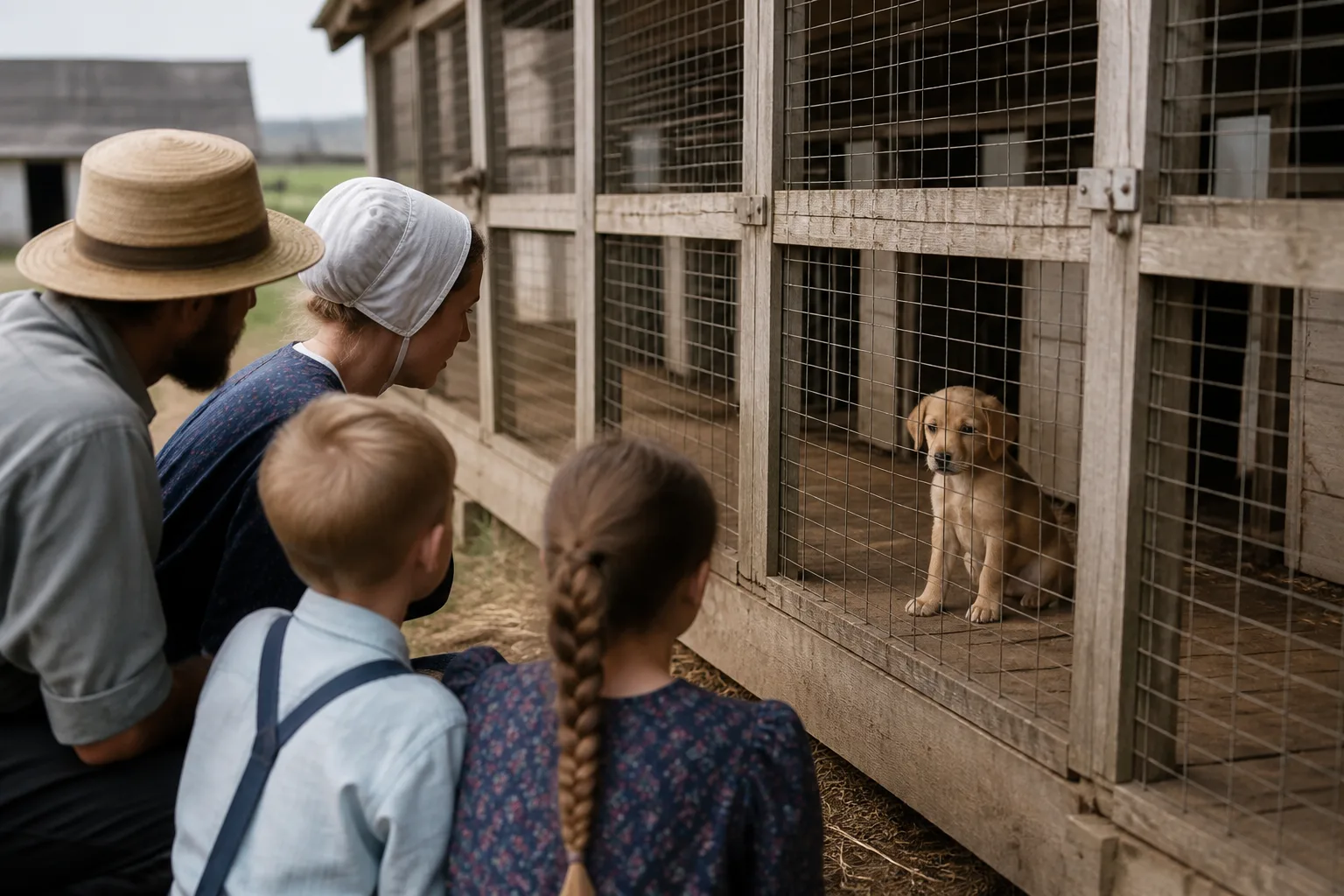
Roadside "Amish puppies" ads, Facebook Marketplace listings from Amish country, and weekend farm stands selling litters by the highway all sound wholesome. A barn. A buggy. A basket of puppies. It feels like the opposite of a pet store. For a lot of families, that feeling is exactly why they buy.
It is also why this is a bad idea.
This is not an attack on Amish faith or culture. Many Amish families keep working dogs and farm animals with real care. The problem is commercial puppy breeding sold as a simple farm adoption — high-volume litters produced for cash, often with little veterinary oversight, little socialization, and almost no screening of who takes the animal home. If you are looking for a healthy family pet, buying from that pipeline is a gamble you do not want to take.
What "adopting from the Amish" usually means
True adoption means a shelter or rescue places an animal that already needed a home. What people call "Amish adoption" is usually a purchase from a commercial breeder in Amish country — Lancaster County (PA), Holmes County (OH), northern Indiana, and similar regions with large commercial dog operations.
You are not saving a shelter dog. You are buying a puppy that was bred to be sold. That distinction matters for your wallet, your heart, and the animal's welfare.
Why this is a bad idea
1. The animals are bred for volume, not for lifelong homes
Commercial breeding rewards litter size and quick turnover. It does not reward temperament testing, health screening of parents, or matching a puppy to a family's lifestyle. Puppies leave as inventory. When the priority is selling the next litter, the dog's long-term welfare is secondary.
2. Care is often inadequate for a companion animal
Reports from animal-welfare investigators, veterinarians, and rescues that repeatedly pull dogs from this pipeline describe the same pattern:
- Limited or no routine veterinary care before sale
- Missing or incomplete vaccines and parasite prevention
- No spay/neuter (you inherit that cost and risk)
- Little handling or socialization with people, kids, noises, and household life
- Crowded or barren housing that does not prepare a dog for a living room
A puppy that looks cute at eight weeks can still arrive with giardia, kennel cough, parasites, congenital issues, or deep fear of normal home life. "They looked fine in the crate" is not a health guarantee.
3. You get almost no history — and no safety net
A responsible shelter or rescue can tell you what they know: medical work already done, behavior notes, intake story, and what support looks like if the adoption struggles. (See what actually happens when a stray enters a shelter.) A roadside sale usually gives you a first name, a cash price, and a shrug.
If the puppy gets sick next week, there is often no contract, no return policy worth the paper, and no post-placement support. Compare that with structured post-adoption check-ins and shelter follow-up built for keeping pets in homes.
4. Impulse sales create impulse returns
Cash-and-carry puppies are designed for impulse. No application. No conversation about energy level, kids, other pets, or landlord rules. That is how families end up overwhelmed at week three — and how those same dogs show up at shelters a month later, now harder to place because they have already been through one failed home. (Why animals get returned after adoption is written for shelters, but the pattern is the same.)
5. Your money funds the next litter
Every purchase tells the seller the model works. If the business is high-volume breeding with poor welfare, paying for a puppy is not a rescue act. It is a reorder. If you want to help dogs, adopt from a shelter or donate to one — do not bankroll the next commercial litter.
"But it was cheaper than a breeder"
Cheaper upfront is not cheaper overall. A low cash price often means you pay later for:
- Emergency vet work the seller never did
- Spay/neuter, vaccines, microchip, and testing
- Behavior help for an undersocialized puppy
- Heartbreak if the dog has genetic or chronic issues
A shelter dog usually comes already vaccinated, altered, microchipped, and evaluated — which is why adopting from a shelter is often cheaper than buying once you count the first year. And rescuing is not free, but the fee buys real care that already happened.
What to do instead
- Adopt from a shelter or rescue. Browse real adoptable pets on PawMates and ask about medical and behavior history before you fall in love with a photo.
- If you want a specific breed, use a vetted rescue or an ethical breeder — one who health-tests parents, invites you to see where dogs live, screens buyers, and takes dogs back if needed. Ethical breeders do not sell out of a parking lot.
- Walk away from red flags: cash only, no vet records, cannot see the parents or housing, pressure to decide today, "AKC papers" used as a substitute for health testing, sellers who discourage questions.
- Never confuse a farm aesthetic with animal welfare. A barn photo is marketing. Records, socialization, and lifelong responsibility are welfare.
Frequently asked questions
Is every Amish dog seller a puppy mill?
No. The warning is about commercial breeding sold as casual farm adoption, which is common in Amish country tourist and roadside markets. Judge the operation by welfare, veterinary care, and transparency — not by the seller's clothing or accent.
Are Amish puppies healthier because they are "raised on a farm"?
Not automatically. Farm-raised can mean outdoor exposure and work-dog genetics, or it can mean minimal handling and no vetting. Ask for records. If there are none, believe that silence.
What if I already bought a puppy this way?
Get a full vet exam immediately — fecal test, vaccines, heartworm plan, and a schedule for spay/neuter. Start gentle socialization. If you are in over your head, contact a local shelter or rescue for support before the situation becomes a return crisis. Do not quietly re-list the puppy as free. (See Never Offer Your Pet for Free.)
Is buying from a pet store better?
Usually not. Many pet-store puppies also come from high-volume commercial breeders. Shelter and rescue adoption remains the clearest way to avoid funding that pipeline.
This is an opinion piece based on experience of the author.
Related reading
- Is it cheaper to get a dog from a shelter?
- Is rescuing a dog from a shelter free?
- Never Offer Your Pet for Free
- Should I give my dog away for free?
- What actually happens when a stray enters a shelter
- Best dogs for first-time pet owners
Ready for a better way to meet your next pet?
Skip the roadside crate. Browse adoptable dogs and cats from real shelters and rescues on PawMates, read more on the Home Furever blog, or start with a shelter near you that already invested in the animal's medical care before you ever met them.