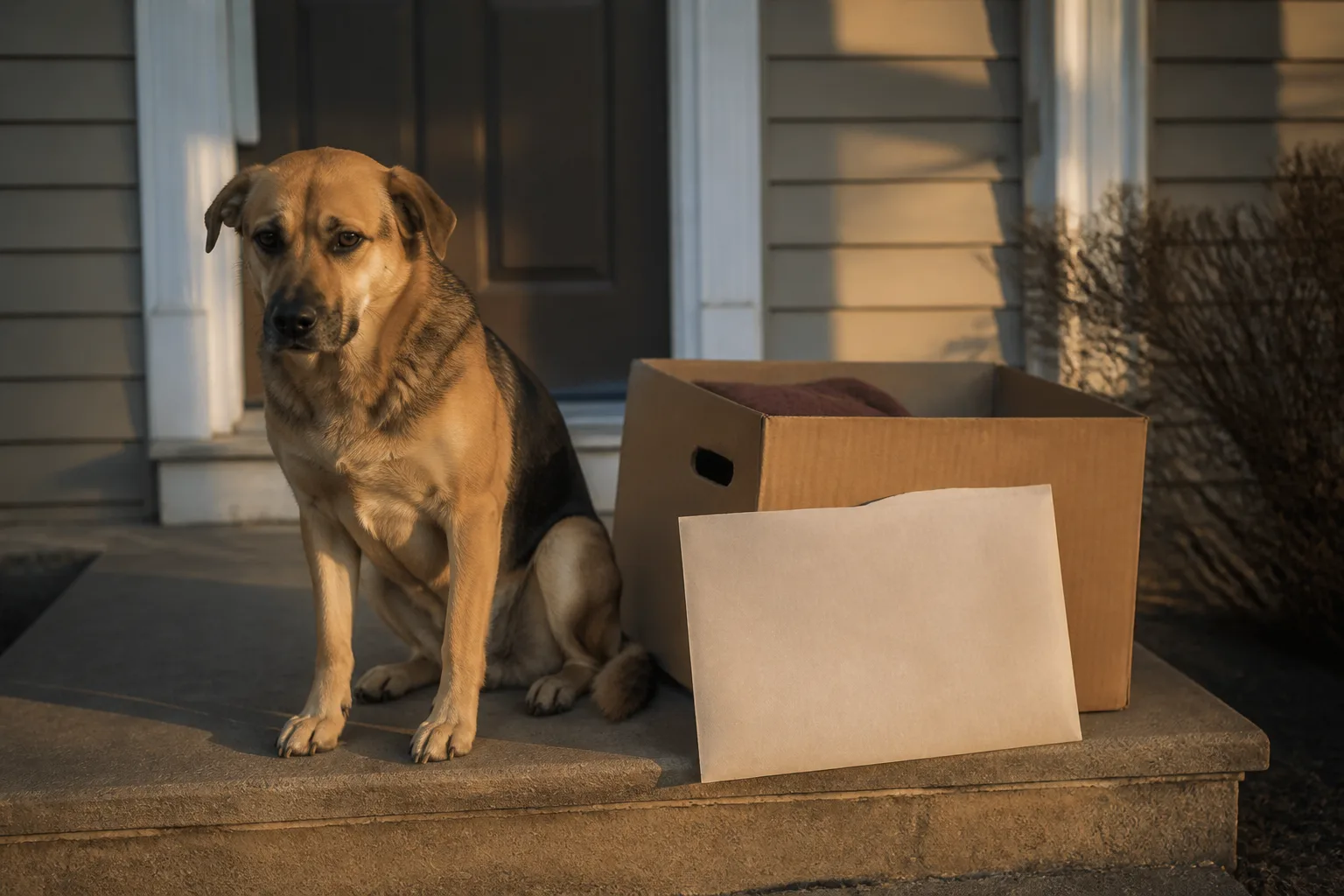
If you can no longer keep your dog or cat, "free to a good home" feels kind. No money changes hands. Someone who needs a pet gets one. You find a home fast.
It is one of the most dangerous ways to rehome an animal.
Never offer your pet for free. Not on Facebook Marketplace. Not on Craigslist. Not with a cardboard sign. Not in a neighborhood email list. A free pet attracts the wrong people first — and once the animal leaves with a stranger, you usually never learn what happened next.
Why free pets are a magnet for harm
1. People who collect free animals for the wrong reasons
Animal-welfare groups and shelters have warned for years that free listings are trolled by people who want disposable animals: dogfighting bait, unsupervised breeding stock, resale flips, or neglect situations where "free" means "no questions asked." You cannot screen intent from a polite message and a fake smile at curbside pickup.
2. Flippers and backyard breeders
Some buyers collect free or cheap pets to breed them immediately, then dump the parents or sell the litters. Your loving dog becomes a production animal. Your cat becomes part of a kitten mill. A rehoming fee and a real application make that business model much less attractive.
3. Unprepared owners who bounce the pet again
Even well-meaning people treat free animals as low-commitment. No fee often means no pause to ask: Can I afford vet care? Does my landlord allow this? Is everyone in the house on board? Those pets get re-listed within weeks, each move adding fear and behavior damage. Free is not kind if it creates a chain of failed homes.
4. You lose every lever of protection
When you charge nothing and skip screening, you typically also skip:
- A written adoption agreement
- Vet reference checks
- Proof of landlord approval
- A home conversation about kids, other pets, and fencing
- A requirement that the pet be returned to you or a shelter if the home fails
Once the leash changes hands in a parking lot, your ability to protect that animal is gone.
What "free" really costs the pet
A free transfer often means the new person inherits:
- No medical records
- No behavior history
- No support if things get hard
- No obligation to keep the pet altered or microchipped
That is the opposite of how responsible shelters place animals. Shelters charge a fee not to make money off you, but to recover care costs and to filter for commitment. We break down that math in Is rescuing a dog from a shelter free? and Should I give my dog away for free?.
How to rehome a pet the safer way
1. Call your original shelter or rescue first
Many organizations want their animals back if an adoption cannot continue. That is a feature, not a failure. Ask about owner surrenders, waitlists, and whether they can help with a managed rehome.
2. Use a screened rehoming pathway
Platforms built for responsible rehoming (with applications and fees) are safer than open classifieds. A little friction is the point.
3. Charge a rehoming fee
A modest fee — often $50 to $300 depending on species, age, and medical status — does two jobs. It deters impulse collectors, and it signals that this animal has value. You can donate the fee to a rescue if keeping money feels wrong.
4. Screen like a rescue would
Require:
- A written application
- Vet contact (or willingness to establish vet care immediately)
- Landlord or HOA proof if they rent
- Meet-and-greet with every household member and resident pets
- A signed agreement that the pet comes back to you or a named rescue if the placement fails
5. Never do a no-questions parking-lot handoff
Meet in a safe public place if needed, but only after screening. Bring medical records. Confirm microchip registration will be updated. Take a photo of their ID if your local laws and comfort level allow, and never let pressure ("I have to take him tonight or not at all") skip your process.
Before you rehome: can the problem be solved?
A surprising number of "I have to give them away" moments are fixable:
- Behavior issues — training help and management plans prevent many surrenders (common behavior issues after adoption)
- Cost spikes — ask about pet food banks, payment plans, and low-cost clinics
- Housing pressure — temporary foster through a rescue beats a free listing
- Time crunch — dog walkers, daycare, or enrichment can bridge a hard season
If you are in crisis, contact a local shelter before you post anything public. A hard conversation with a professional is safer for your pet than a viral free ad.
Special warning for cats and litters
"Free kittens" ads are among the riskiest posts online. Free cats are more likely to be dumped outdoors, used for breeding, or treated as disposable. If you have an unexpected litter, contact a rescue about TNR, foster support, and responsible placement — and get the mother spayed. Free kitten boxes create the next free kitten boxes.
Frequently asked questions
Is a $1 rehoming fee enough?
Better than zero, but not by much. Use a real fee that makes someone pause, plus an application. The fee is a filter, not a formality.
What if someone says they cannot afford a fee but seems perfect?
Partner with a rescue that can sponsor the fee, or accept a smaller fee after a full screening — not before. Kindness belongs in verified homes, not in skipped vetting.
Can I just give my pet to a friend?
A known friend or family member with a clear agreement can be reasonable. That is not the same as a public free listing. Still put expectations in writing: vet care, return clause, and no rehoming onward without your consent.
What if my pet has bitten or has serious behavior issues?
Do not free-rehome. Full disclosure to a shelter or behavior-savvy rescue is the ethical path. Hiding a bite history to make a free transfer happen puts people and the pet at risk. Start with My dog bit my child, what should I do? if that is your situation.
Related reading
- Should I give my dog away for free?
- Is rescuing a dog from a shelter free?
- Is it cheaper to get a dog from a shelter?
- Adopting from the Amish
- The most common behavior issues after adoption
- Are home checks really necessary?
Need a safer next step for your pet?
Do not post them for free. Contact a local shelter or rescue, use a screened rehoming path, and protect them the way you would want a stranger to protect your kid's best friend. For more guidance, browse the Home Furever adopter blog — or when you are ready for your next companion the right way, find adoptable pets on PawMates.