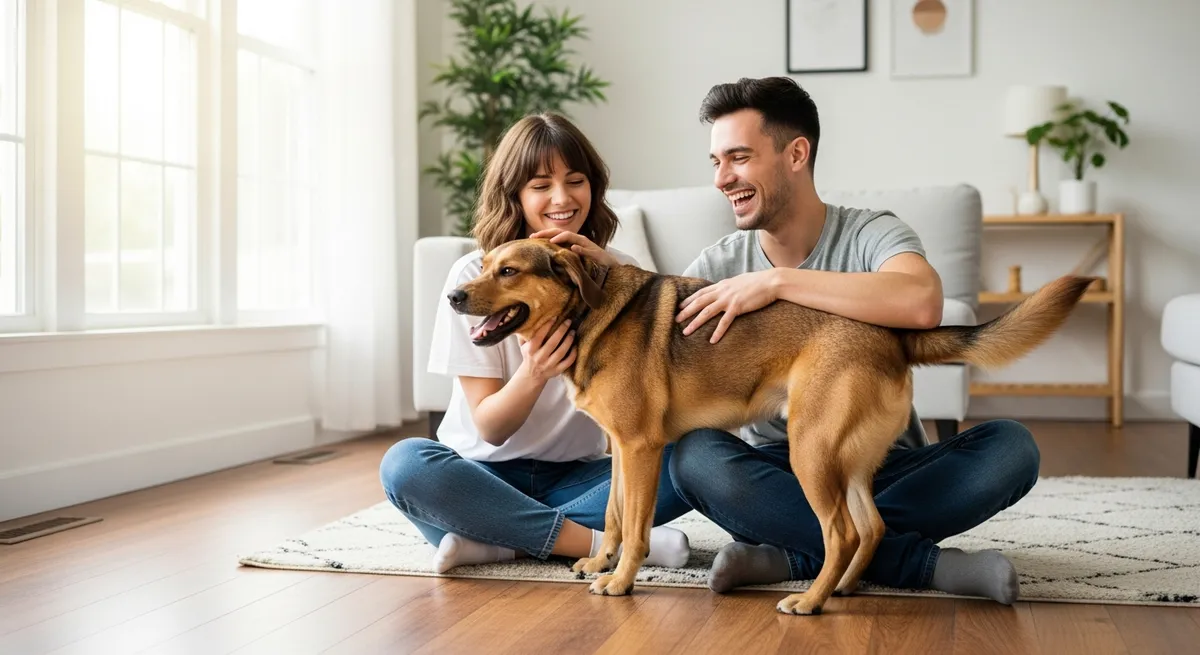
"What's the best dog for a first-time owner?" is the most-asked question at adoption events, and the most-misanswered. The honest answer isn't a breed list. It's a *temperament profile* that maps to your specific household — and the surprising news is that the dog who fits it best is almost always a mixed-breed adult from a shelter, not a particular breed.
Here's the framework, then a list of breeds and types that consistently work for first-time adopters, and what to actually look for in any individual dog.
The real first-time-owner profile
Before any breed conversation, score yourself honestly on these:
- Daily exercise floor: What's the *minimum* you'll reliably do, including rainy days, busy weeks, and the flu? (Not the aspirational answer.)
- Time alone: How many hours will the dog be home alone on a normal workday?
- Training time available: 10 min/day, 30 min/day, or "I'll train when there's a problem"?
- Tolerance for mess and noise: Shedding, drool, barking, mud, the occasional accident.
- Household: Kids? Other pets? A landlord with rules? Stairs? A yard?
- Budget: Can you absorb a $2,000 unexpected vet bill without panic?
- Future flexibility: Are you in this house for 5+ years, or moving soon?
A first-time owner who'll do 30 minutes of walking on a good day and zero on a bad day is a *low-energy adopter*, full stop, no matter how athletic they imagine they'll become with a dog. Adopt to that reality.
What actually predicts first-adoption success
The factors that consistently correlate with successful first adoptions:
1. Adult, not puppy. Puppies are hard. They bite, they don't sleep through the night, they need 4–5 outside trips a day for months, and you can't tell what their adult personality will be. An adult dog (2–7 years) shows you exactly what you're getting.
2. Medium energy, not high. A border collie will run a quiet household into the ground. A medium-energy dog needs a daily walk, not a daily 5K.
3. Already housetrained. Most adult shelter dogs are; ask the foster or kennel staff.
4. Already crate-introduced. Saves you the first month of crate training from scratch.
5. Foster-evaluated. A dog who's lived in a foster home for 4+ weeks is a dog whose behavior in a real household is *known*, not guessed at from a kennel.
6. No or low resource guarding. Easy to assess at the shelter; the kennel staff will know.
7. Some training already. A dog who knows "sit" and "leash walking" gives you a head start.
Notice that none of those factors are breed.
10 breeds and types that consistently work for first-time adopters
In rough order of typical first-time fit. Every individual dog varies; read the dog, not the label.
1. Adult Labrador retriever or Lab mix. Friendly, food-motivated (which makes training fast), forgiving of handler mistakes, social with people and most dogs. The downsides are real: heavy shedding, exercise needs (45–60 min/day for adolescents, less for seniors), and they steal food off counters until you train them out of it.
2. Adult golden retriever or golden mix. Same friendliness as Labs, often even more social, tend to be "softer" temperament. Heavy shedding and grooming needs. Watch for hip and joint issues in older dogs.
3. Cavalier King Charles spaniel. Small (12–18 lbs), legendarily affectionate, low exercise needs (30 min/day), excellent with children. Breed has serious heart and neurological health issues — adopt with eyes open and budget for vet care.
4. Adult beagle. Friendly, sturdy, great with kids. The two warnings: their nose runs the show (recall in open spaces is unreliable for life — keep them leashed), and they're vocal (the famous beagle bay).
5. Bichon frisé. Small, low-shedding, very social, low exercise needs. Need regular professional grooming ($60–$100 every 6 weeks). Mostly easy first dogs for apartment living.
6. Greyhound (especially retired track dogs). Counter-intuitively, retired racing greyhounds are excellent first dogs. They're lazy ("45 mph couch potatoes"), already crate-trained, gentle, quiet, and need only 2 short walks a day. Caveats: high prey drive (often not safe with cats or small dogs), thin skin, can't tolerate cold weather, must be leashed in unfenced areas.
7. Pug or French bulldog (with eyes wide open). Small, affectionate, low exercise needs. Major caveat: brachycephalic (flat-faced) breeds have serious breathing, eye, dental, and overheating problems. Vet bills run high. Reputable rescues who specialize in pugs and frenchies will be honest about this.
8. Adult mixed-breed "lab-shepherd-pit" type, 30–60 lbs, medium energy. This is actually the modal shelter dog and often the best first-time fit. The mix tends to dilute extreme breed-specific drives, and the kennel staff have spent weeks watching the actual personality. Trust the staff's assessment over the breed guess.
9. Senior dog of almost any breed (7+ years). Senior dogs are the great underrated category for first-time owners. They're calm, often house-trained and crate-trained, settled in personality, and need a fraction of the exercise of a young dog. The trade-off is shorter time together — but the bond is often the deepest. (See the hidden benefits of adopting a senior dog.)
10. American Staffordshire / pit-mix (with informed consent). Pit-type dogs are the most common dogs in U.S. shelters and many are excellent family dogs — short coat, easy maintenance, deeply bonded with their people, often great with kids. Two real considerations: many landlords and most homeowner insurance carriers have breed restrictions (verify *before* adopting), and a small subset have high dog-reactivity that requires management. A foster-evaluated, well-screened adult pit mix from a reputable rescue is often the best first dog in the building.
What's harder for first-time owners (with respect)
Not "bad" breeds — just breeds where the gap between what looks easy and what is easy is biggest.
- Working-line shepherds, malinois, border collies, Australian shepherds. Brilliant dogs, but they need a *job* and 90+ minutes of structured activity daily. Without it, they invent jobs you'll hate.
- Huskies and northern breeds. Stunning, but they're escape artists, prey-driven, vocal, and not naturally focused on humans the way retrievers are.
- Very small dogs (under 8 lbs) with kids under 6. Fragile, easily injured, often stressed by chaotic households.
- Very large breeds (over 90 lbs). Vet bills, food costs, joint problems, and the muscle-management piece are real.
- Working-line guarding breeds (Cane Corso, Presa Canario, etc.). Suspicious of strangers by design; they need experienced training before puberty.
None of this means "never." It means "not first."
How modern shelter software helps you find the right fit
The reason "first-time owner friendly" used to be guesswork is that adoption listings were just a photo, an age, and a sentence. That's changed. On PawMates Pro, the swipe-based browsing applies *hard compatibility filters* before you ever see a dog: if your Adopter Profile says you have small kids, dogs marked "not good with children" don't appear in your feed; if you don't have a yard, dogs flagged "needs yard" are filtered out; if you marked "first-time owner" or low handling experience, dogs requiring experienced handlers are removed.
Adopters can also set pet preferences for energy level (low/medium/high), age range (young/adult/senior), and size — which is exactly the right filter set for a first-time owner. Set energy to "low" or "medium," age to "adult" or "senior," and size to match your home, and you've eliminated most of the wrong-fit candidates before you swipe.
When you swipe right and the shelter reviews your application, they see a deterministic compatibility score (0–100%) on their dashboard that weights yard match, energy level, prior pet experience, kid/dog/cat compatibility, time-alone tolerance, and living situation. A first-time owner applying to an experience-heavy dog will see that mismatch reflected in the score, and the shelter will usually steer you toward a better fit. This isn't gatekeeping — it's the system working to prevent the mismatch that leads to returns.
Frequently asked questions
*What's the easiest dog to train for a first-time owner?*
Adult retrievers (Lab, golden), beagles, and most adult mixed-breed dogs of medium energy. Training ease correlates more with food motivation and biddability than with breed.
*Should I adopt a puppy as my first dog?*
Probably not. Puppies are 12–18 months of intensive work — house training, socialization windows, sleep disruption, biting, chewing. An adult dog gives you the same lifetime bond with about 10% of the first-year work.
*Are shelter dogs safe for first-time owners?*
Yes — *especially* shelter dogs from organizations that do thorough behavioral evaluations and foster placements. The dog you can see lived in a real home is a dog whose behavior is known.
*What's the best small dog for a first-time owner?*
Cavalier King Charles spaniel (with health caveats), bichon frisé, and adult small mixed-breeds (5–20 lbs) with moderate energy. Avoid the very tiniest dogs if you have kids.
For the questions to ask the shelter once you've found a candidate, see questions you should ask before adopting. For the financial picture, can I afford a pet? is the right next read.