A microchip is supposed to be the moment a pet stops being anonymous. In practice, for most pets in most U.S. shelters, the microchip is the moment a pet acquires a number that nobody can quite use. The number is registered to one of a dozen registries, the adopter never updates it, the partner vet can't read the medical record behind it, the lost-pet finder has no idea which registry to call, and the chip ends up as a static identifier on an otherwise empty record.
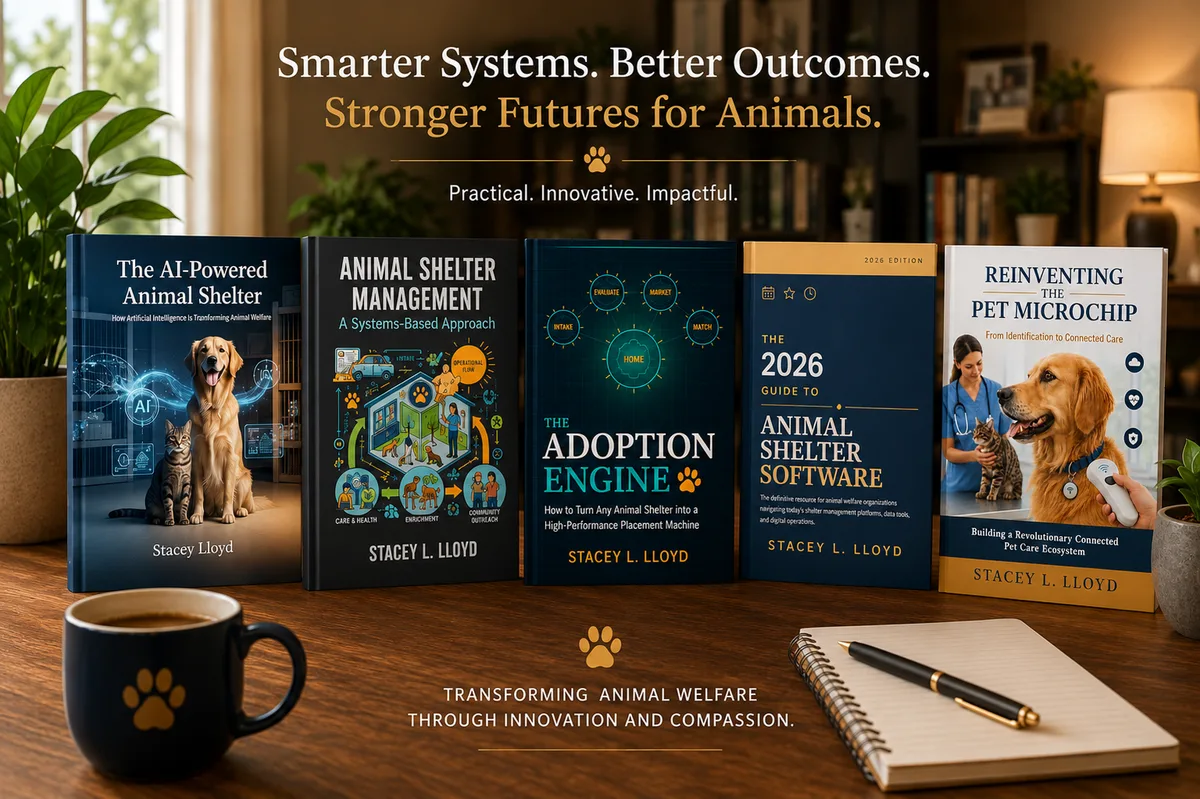
That gap is what Reinventing the Pet Microchip: From Identification to Connected Care is written to close. This is the newest book in the series, and the most operationally specific. This post summarizes what it covers, who it's for, and what shelter leaders will do differently after reading it.
What the book is about
The book is a field guide to the next generation of pet identification — moving the microchip beyond a static number into a connected, vet-readable, adopter-friendly medical and behavioral record that travels with the animal for life.
The core sections cover:
- What the microchip is and what it isn't. The history of ISO standards, the AAHA universal lookup, why the chip number alone is not a registration, and the failure modes the current system was never designed to prevent.
- The registry landscape. AKC Reunite, HomeAgain, 24PetWatch, Found Animals, Save This Life, Michelson Pet Quest, and the smaller registries — what each does, how they differ, and what shelters should know before recommending one.
- The lookup gap. Why a chip number alone often fails to reunite a found pet with its owner, and what changes when the lookup is connected to a real registration plus a real medical record.
- Connected care. What it means for the microchip to act as the bridge between the shelter's record, the adopter's account, and the partner clinic's chart. (How PawMates and VetPetz Share Medical Data Via Any Microchip covers the adopter-side mechanics.)
- Shelter operational playbook. Chip-at-intake protocols, registry recommendations at adoption, adopter education materials, and the documentation discipline that makes the chip actually useful for the rest of the animal's life.
- The adopter experience. What the modern adopter needs to know and what tools (lookup pages, vet-shared portals, lost-pet flows) make their first 30 days with a new pet measurably less risky.
- The future. Where pet identification is heading — connected vaccination records, longitudinal behavioral history, lost-pet detection networks — and what shelters can do today to be ready.
Who it's for
- Shelter executive directors and operations managers standardizing intake and adoption protocols around microchip and medical record handoff.
- Veterinary partners running clinics that work with shelter-adopted animals.
- Adopters who want to understand why their pet's chip matters and what to do with it.
- Anyone building or evaluating connected-care platforms in animal welfare.
Three takeaways shelter leaders will actually use
1. The chip is not the registration. Most shelter staff already know this. Most adopters do not. The book gives you the language and the handoff workflow to close the gap at adoption finalization, every single time.
2. The medical record matters more than the chip number. A connected medical record bridged by the chip — sharable with the adopter's chosen vet — is the thing that actually drives lifetime health outcomes. The chip is the index; the record is the asset.
3. Recommending a registry is part of the shelter's job. The book makes the case (and gives the talking points) for naming a default registry recommendation at adoption rather than leaving the adopter to figure it out alone. The reunification math improves immediately.
How this maps to PawMates Pro
PawMates Pro, with the VetPetz integration, implements the connected-care model the book describes — the chip is the bridge, the medical chart travels with the animal to the adopter's clinic, and the adopter has a self-service hub at the microchip lookup page that puts the AAHA universal lookup, the registry directory, and the medical-record explainer in one place. (For the adopter-facing explainer, see Microchipping: The Most Important 60 Seconds Of Your Pet's Life.)
FAQ
Is this book just for shelters?
No. Roughly a third of the book is written for adopters and clinicians. It is structured to be useful to all three audiences, and chapters are flagged so a reader can skip to the sections most relevant to them.
Does it endorse a specific registry?
No. It walks through the major registries, their strengths and weaknesses, and the criteria a shelter or adopter should use to pick one. It is intentionally not a directory of vendors.
What's the most actionable chapter?
For shelter leaders, the chapter on the adoption-finalization handoff. It is a step-by-step protocol that most shelters could deploy this month and that measurably improves lost-pet reunification rates within a year.
Related reading
- The AI-Powered Animal Shelter
- Animal Shelter Management: A Systems-Based Approach
- Microchipping: The Most Important 60 Seconds Of Your Pet's Life
- How PawMates and VetPetz Share Medical Data Via Any Microchip
Featured book — see full article for details.
To compare tier features and pricing for the platform that implements the connected-care model, see shelter pricing. More on the PawMates shelter blog.