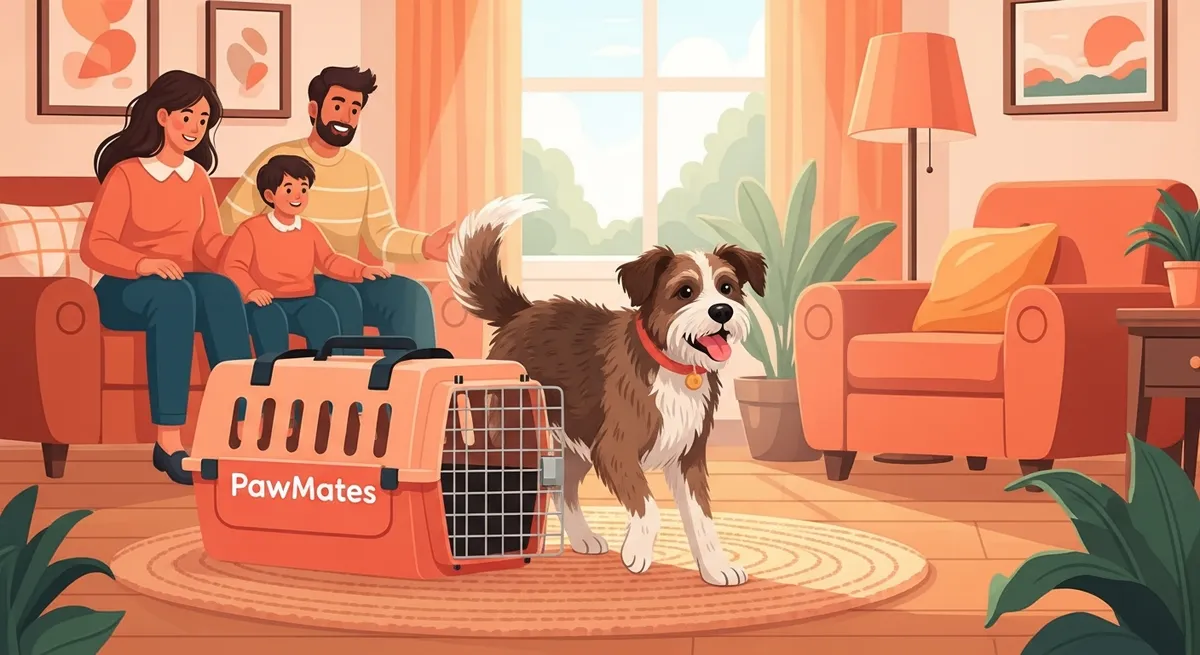
Returns are the most expensive thing a shelter can leave unaddressed. Every return resets length of stay, costs another medical clearance, and — worst of all — sends an animal back into a kennel that's now harder to place. PawMates Pro is built so that return prevention isn't a separate program. It's wired into the daily workflow, from intake to adoption to the months after the animal goes home. (For the broader operational view, see How to Reduce Animal Shelter Return Rates.)
Match quality, scored before staff says yes
Every adoption application opens to a compatibility score (0–100%) on the shelter dashboard. The score is deterministic, not a black box: it weighs yard match, energy level, prior pet experience, kid/dog/cat compatibility, and time-alone tolerance against the animal's known behavior and household needs. Each application also lists specific risk factors ("high-prey-drive dog applying to a household with cats") and concrete recommendations the reviewing staffer can act on. Staff still makes the final call — the score just makes the obvious-mismatch reviews fast and surfaces the subtle ones that used to slip through.
Honest behavior data, captured at intake
Returns trace overwhelmingly to behavior surprise — what the bio said versus what the adopter actually lived with. PawMates Pro forces honest behavior data on the way in:
- Bite history is a required structured field for owner-surrender intakes (none / minor / moderate / severe / unknown, plus optional notes). Staff can't skip it. The flag then follows the animal everywhere their record appears.
- Branched intake by scenario (stray, surrender, transfer, return, born-in-care) shows only the fields relevant to that scenario, so behavior history actually gets captured instead of buried in a free-text "notes" field on a form too long to finish. (Intake Solutions for Overwhelmed Shelter Staff covers the broader pattern.)
- Behavior and medical flags surface on the kennel card, the public listing, the application screen, and the foster's view of the same animal — one source of truth.
Returning animals pull forward their original record
When an adopter returns an animal, PawMates Pro looks the pet up by microchip or by the adopter's email, pulls forward the original record (medical, behavior, prior bio), and pre-fills the return intake. Staff don't start from a blank form, which means the bio that goes back on the public site reflects what was learned in the home — not a copy of the original listing that just failed.
The meet-and-greet that catches problems before paperwork
Most preventable returns get exposed at the meet-and-greet, when the actual household meets the actual animal. PawMates Pro requires staff to capture household members (name, age, relationship) and a meet-and-greet date/time before an application can advance to "approved to meet." A meeting without the spouse, the kids, or the resident dog is the single most common preventable cause of fall-throughs and early returns; the system simply doesn't let staff skip it.
The day before the meet, the system sends an automated reminder email so the appointment actually happens — and if the meet is rescheduled, the reminder resets so the new date is the one that gets confirmed.
Post-adoption check-ins at 3 days, 3 weeks, 3 months
Returns don't usually happen on day one. They happen at week two or week six, when the honeymoon ends. PawMates Pro automatically schedules and sends three structured check-ins on the calendar — at 3 days, 3 weeks, and 3 months post-adoption — invites the adopter to respond, scores the response, and surfaces critical concerns to shelter staff via email so a behavior consult or training referral can land before the adopter calls to return.
Patterns visible in real time, not at year-end
The Advanced KPIs dashboard surfaces return-relevant metrics live: pet removal reasons breakdown, adopter funnel conversion (Matches → Applications → Meet-ups → Adoptions), and length-of-stay trends. Patterns like "three returns this quarter where high-prey-drive dogs were placed in cat households" stop being a year-end discovery — they show up the week they happen, when the matching rule that produced them can still be tightened.
What this looks like together
The features above don't reduce returns in isolation. They compound: better intake data feeds the compatibility score, the score catches mismatches at application, the meet-and-greet workflow catches what the score missed, the post-adoption check-ins catch what the meet-and-greet missed, and the dashboard surfaces the patterns that catch what the check-ins missed. Each layer covers what the layer above it doesn't. (For the matching side specifically, How PawMates Pro Uses AI to Match Pets With Adopters goes deeper.)