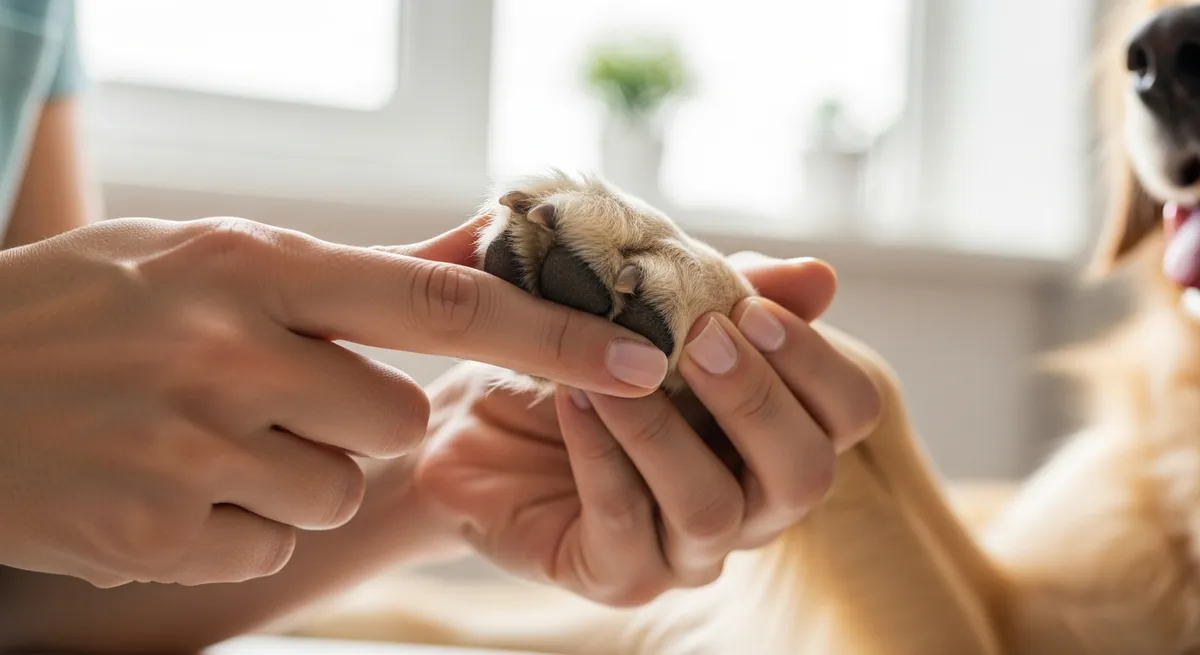
If your dog has started clicking loudly across the kitchen floor, splaying their toes when they walk, or licking at a back paw they never used to bother with, the culprit may be hiding in plain sight: their nails are too long, and they may be in pain because of it.
Overgrown nails are one of the most common — and most overlooked — sources of low-grade chronic discomfort in dogs. Because it comes on gradually, most owners never notice the day it crossed the line from "a little long" to "actively hurting." This guide covers how to tell whether your dog's nails are causing pain, why it happens, and what to do about it. (Spoiler for the how-to: the tool matters more than you think — see why clipping isn't always the right call and when grinding wins.)
How long is too long? The 3-second test
The rule of thumb veterinarians use: when your dog is standing on a hard, flat floor, no nail should touch the ground. If you can hear nails tapping the floor as your dog walks, or you can see them making contact when the paw is flat, they are too long.
There is one more test you can do without any tools. Look at your dog from the side while they stand. The nail should not extend past the pad. If it curves down to or past the floor, it is overdue.
Why long nails actually hurt — the biomechanics
This is the part most people miss. A long nail does not just look bad; it changes how your dog stands.
- It forces the toe joints backward. When a nail hits the ground, every step pushes the nail up into the nail bed and rotates the toe. Over weeks and months this puts constant pressure on the toe joints and can lead to splayed feet, sore joints, and an unnatural, rocked-back posture.
- It shifts weight off the paws and onto the joints. Dogs compensate for the discomfort by redistributing their weight, which loads the wrists, elbows, and hips differently than nature intended. In senior dogs, this can meaningfully worsen arthritis.
- The quick grows with the nail. Inside every nail is the "quick" — the living core of blood vessels and nerves. The longer the nail gets, the longer the quick grows out with it. That is why a badly overgrown nail can't simply be cut back to normal in one go: the nerve and blood supply now extend too far. The fix is gradual, which is exactly why your trimming method matters.
- Extreme cases curl into the pad. Left long enough — common in dewclaws, which never touch the ground to wear down — a nail can curve all the way around and grow into the paw pad, causing a painful infection. This is a vet visit, not a DIY trim.
Signs your dog's nails are causing pain
Dogs are experts at hiding discomfort, so the signals are subtle. Watch for:
- Clicking or tapping on hard floors that you didn't used to hear.
- Licking or chewing at the paws or a single toe, often a sign of irritation, a cracked nail, or an ingrown nail.
- Reluctance on slick floors — splayed toes and long nails reduce traction, and a dog that suddenly hates the hardwood or tile may be slipping and scared.
- Limping or favoring a leg with no obvious injury.
- Flinching, pulling away, or growling when you touch a paw they used to let you handle.
- Splayed or "flat" looking feet instead of the tight, arched, compact paw of a comfortable dog.
- A change in gait or posture, especially a rocked-back stance.
Any sudden limp, swelling, bleeding, foul smell, or a nail that is visibly cracked or growing into the pad warrants a call to your veterinarian rather than a home trim.
Why it sneaks up on adopters specifically
Newly adopted dogs are a high-risk group. A dog who spent weeks or months in a shelter kennel often has had limited opportunity to wear nails down on pavement, and intake-day nail trims aren't always possible if the dog is fearful. If you adopted from a shelter that runs PawMates Pro, your pet's intake and medical history — including grooming and any noted paw or mobility concerns — may already be in your adopter dashboard, so you start with context instead of guessing. (More on why a lifetime medical record changes everything below.)
What to do about it
1. Establish a schedule. Most dogs need a trim every 3 to 4 weeks. Dogs that walk daily on concrete may stretch longer; couch-loving and senior dogs need it more often.
2. Take it slow if they're already long. Because the quick has grown out, you cannot fix months of overgrowth in one session. Trim or grind a small amount weekly, and the quick will gradually recede over several weeks — letting you get back to a healthy length without hitting the nerve.
3. Choose the gentler tool. Heavy clippers can crush or crack thick nails. For many dogs, a rotary grinder is more comfortable and far more forgiving — here's the full breakdown of grinding versus clipping.
4. Make it positive. Pair every paw touch with high-value treats. A dog who learns that paw handling predicts chicken is a dog you can trim for the next 12 years.
5. When in doubt, delegate. A groomer or vet tech can do it in minutes and show you the technique. There is no shame in outsourcing nails.
Frequently asked questions
How short should a dog's nails be?
Short enough that they do not touch the floor when your dog stands on a flat, hard surface. From the side, the nail should not extend past the paw pad.
Can long nails really make my dog limp?
Yes. Overgrown nails alter posture and load the joints abnormally, and an ingrown or cracked nail is acutely painful. If your dog is limping, check the nails and paws first, then call your vet if you find anything abnormal.
My dog won't let me touch their paws. What now?
That avoidance is often learned from a past bad experience (a quicked nail hurts and dogs remember). Rebuild trust with treats and very short sessions, and let a professional handle trims in the meantime. Forcing it makes the fear worse.
Do indoor dogs need their nails trimmed?
Almost always more often, not less — they rarely walk on abrasive surfaces that wear nails down naturally.
The bottom line: long nails are not cosmetic, they are a comfort and mobility issue. Keep them short, keep them gradual, and use the gentlest tool your dog will tolerate.
Related reading
- Why clipping your dog's nails isn't always good: grinding vs. clipping — the tool that prevents cracked, painful nails.
- What if every pet had a lifetime medical record? — how a continuous health chart catches the small stuff before it becomes the painful stuff.
For more adoption and pet-care guides, browse the PawMates adopter blog.