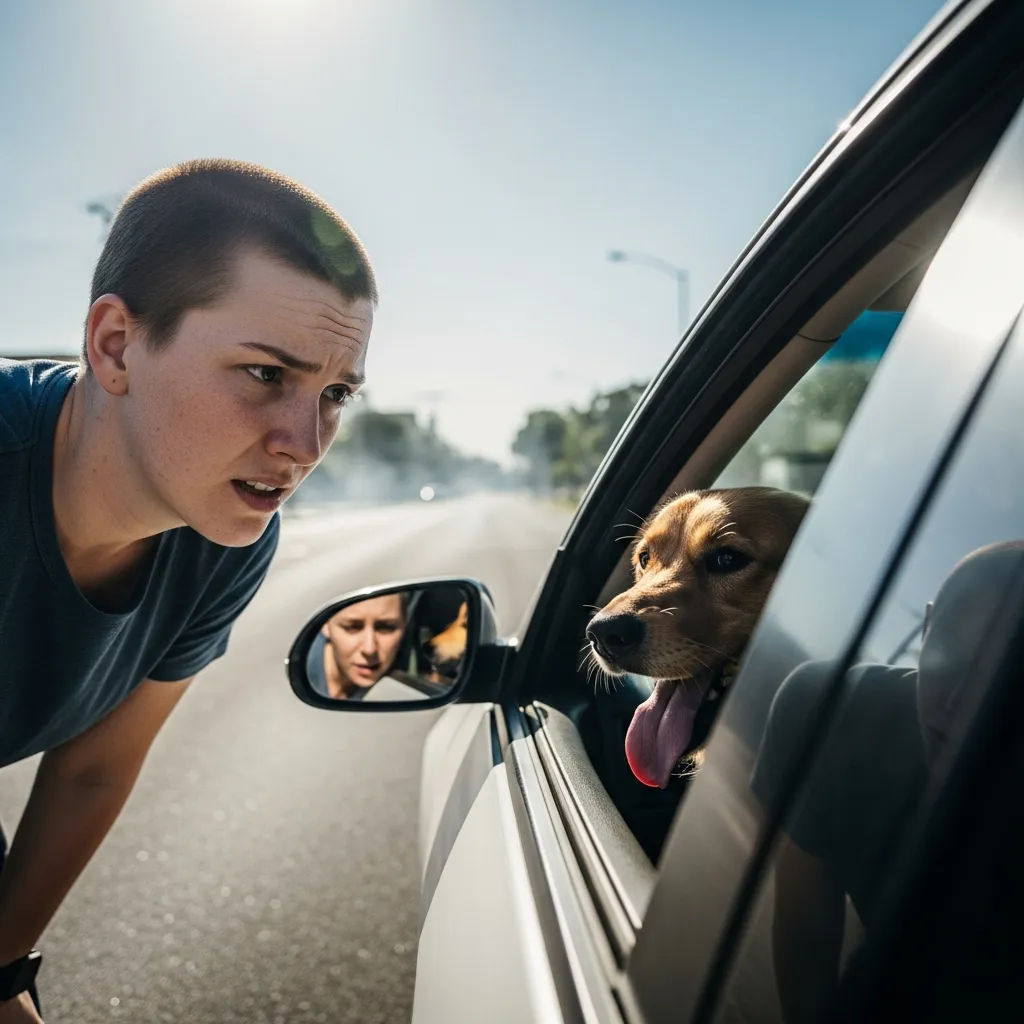
On a 70°F day, the inside of a parked car can hit 100°F in about 20 minutes and 120°F within an hour. Cracking the windows barely helps. Dogs cool themselves by panting, which only works when the surrounding air is cooler than their body temperature — once the cabin passes ~85°F, they can't shed heat fast enough and start spiraling toward heatstroke, organ failure, and death. If you see a dog in a hot car, you have minutes, not hours, to act.
This is one of the most common forms of unrecognized animal cruelty — most owners who do it don't think of themselves as abusers. They think they'll only be a minute. They almost always aren't. The good news is that the playbook for what to do is short, clear, and supported by law in most U.S. states.
Step 1 — Take note of the situation, fast. Write down the make, model, color, and license plate of the vehicle. Note the time you arrived and the approximate cabin temperature (use a weather app for outside temp; the inside will be 20–40°F hotter). Snap a photo or short video of the dog and the closed windows — it's evidence if anything escalates.
Step 2 — Look for the owner. Walk into the nearest two or three businesses (grocery store, restaurant, gym, veterinary clinic) and ask them to page the owner over the loudspeaker. Many stores will do this immediately if you give them the plate and a description of the dog. If the dog is in a parking lot, this is often the fastest fix.
Step 3 — Call 911 or local animal control. This is the right call, every time. Dispatchers in every U.S. state are trained to handle hot-car-dog calls and they know which agency in your area has the fastest response. Tell them: the address, the vehicle description, the breed and condition of the dog, the time you arrived, and what you've already tried. Stay on the line if they ask you to. The wait for an officer is usually short — 10 to 30 minutes in most jurisdictions — but during a heatwave it can be longer.
Step 4 — Stay with the dog. Do not leave. The owner may return and drive off; the officer needs you as a witness; the dog's condition can change minute by minute. Watch for signs of heatstroke: heavy panting that turns to slow shallow breathing, drooling, glazed eyes, vomiting, weakness, collapse. Once a dog reaches the collapse stage, you have only a few minutes to act before brain damage and organ failure begin.
Step 5 — Know your state's Good Samaritan law. As of 2026, more than half of U.S. states have laws that explicitly protect civilians from civil and criminal liability when they break a window to rescue an animal from a hot car. Most of those statutes require:
- You reasonably believed the animal was in immediate danger.
- You first tried to find the owner.
- You called law enforcement, animal control, or 911 before breaking the window.
- You used no more force than necessary.
- You stayed with the animal in a safe place until help arrived.
States with civilian rescue protection include California, Florida, Tennessee, Massachusetts, Ohio, Wisconsin, Indiana, Vermont, Oregon, Colorado, Arizona, and a growing list of others. States that protect only first responders (not civilians) include New York and Texas, though both criminalize the underlying conduct of leaving an animal in a hot car. The ASPCA and the Animal Legal Defense Fund both publish state-by-state trackers — check yours before you need to.
If you do break a window: stay on the phone with the dispatcher, photograph the dog's condition before and after, do not move the dog if you can avoid it, and do not give the dog ice water (sudden cooling triggers shock — use cool, not cold, water on paws and belly only). Stay until law enforcement arrives.
Cooling a heat-stressed dog while you wait. If you can safely access the dog (window cracked enough to reach in, or after a rescue), move them to shade if possible, offer cool — not ice cold — drinking water, and apply cool water or wet towels to the belly, paws, and inner thighs. Run the air conditioning in your own car if you can. Skip the ice bath. Get the dog to an emergency vet the moment they're out of the car — heatstroke causes delayed organ damage that may not be obvious for hours.
Why owners do it anyway. Almost every hot-car case is a "quick errand" miscalculation. The owner runs into the bank, gets stuck in line, takes a phone call, runs into a friend, and the dog is in a 130°F oven before they realize it. Some breeds — brachycephalic dogs like bulldogs, French bulldogs, pugs, boxers, Boston terriers — overheat in conditions that wouldn't bother other dogs. Senior dogs, overweight dogs, and dogs with heart or respiratory conditions are similarly high-risk. The honest rule is: if you wouldn't leave a toddler in the car at that temperature, don't leave the dog. For most pet owners who travel with their dogs, the right answer is to leave them at home in summer or use drive-throughs only.
Reporting the owner. If law enforcement arrives, the owner may be charged under state cruelty statutes — usually a misdemeanor for first-time hot-car cases, with felony exposure if the dog dies or is permanently injured. Provide your contact information and your photos to the responding officer; you may be asked to give a brief statement. This is a category of animal cruelty case that prosecutors take seriously precisely because of how preventable it is.
The PawMates Pro angle. A surprising number of dogs that end up in shelters started their journey with a hot-car call that escalated. Owners who have a hot-car incident on their record sometimes voluntarily surrender (out of guilt or fear of further charges); other times the dog is seized by animal control and placed for adoption after the case closes. If you adopted a dog with a hot-car or heat-related medical history, watch for cardiac and renal lab values at their next wellness visit and avoid summer car travel without AC running.
How PawMates Pro helps you avoid hot-car risk in the first place
The PawMates Pro pet profile flags every dog with brachycephalic anatomy (bulldogs, French bulldogs, pugs, boxers, Boston terriers), a senior age band, or any cardiac, respiratory, or heat-sensitivity history disclosed by the partner shelter. The deterministic compatibility score factors that risk against your household — including whether you live somewhere with hot summers and whether your daily routine involves car errands the dog would join. If the match is poor, the pet drops down your feed.
For dogs already in your home, PawMates Fund supports shelters that respond to hot-car seizures and rehabilitation cases, including dogs surrendered after a heat-related medical event the owner couldn't afford to treat.
Frequently asked questions
Is it illegal to leave a dog in a hot car?
In most U.S. states it is, either as an explicit hot-car statute or under general cruelty law. Penalties range from a fine for a first offense to felony charges if the dog is seriously injured or killed. Most major cities have local ordinances on top of state law.
Can I be sued for breaking a window to rescue a dog?
In most states with civilian Good Samaritan animal-rescue laws, no — provided you followed the required steps (called law enforcement first, reasonably believed the dog was in danger, used minimum force, stayed with the animal). Always call 911 first and check your state's law.
What temperature is dangerous for a dog in a parked car?
Cabin temperature, not outside temperature, is what matters. Once the interior passes ~85°F, dogs lose the ability to cool themselves. On a 70°F day the cabin can pass that mark in 10–15 minutes. On an 80°F day it's faster than five minutes. Cracking windows reduces the rate of heating only marginally.
What should I do if the dog looks unconscious or unresponsive?
Treat it as a medical emergency. Call 911 immediately and tell them the dog appears unresponsive. If you can safely get the dog out of the car, move them to shade, apply cool water to paws and belly, and get to the nearest emergency vet without delay. Do not use ice. Do not pour water in their mouth if they're unconscious.
What are the signs of heatstroke in dogs?
Heavy panting, thick drool, bright red gums, glazed or staring eyes, weakness, vomiting, diarrhea, disorientation, collapse, seizures. Brachycephalic breeds (bulldogs, pugs, boxers) and senior or overweight dogs hit these symptoms faster.
Should I just call animal control instead of 911?
Either works in most jurisdictions. 911 dispatchers will route the call to the right agency. In many areas the police will respond faster than animal control — especially evenings and weekends.
For the broader context on why hot-car incidents are treated as cruelty rather than mistakes, see what is the meaning of animal abuse? and what's the difference between animal cruelty and animal abuse?.
Keep reading: hot-car cruelty, abuse, and the law
Hot-car cases are one specific category of animal cruelty. These three guides cover the broader legal and definitional picture.