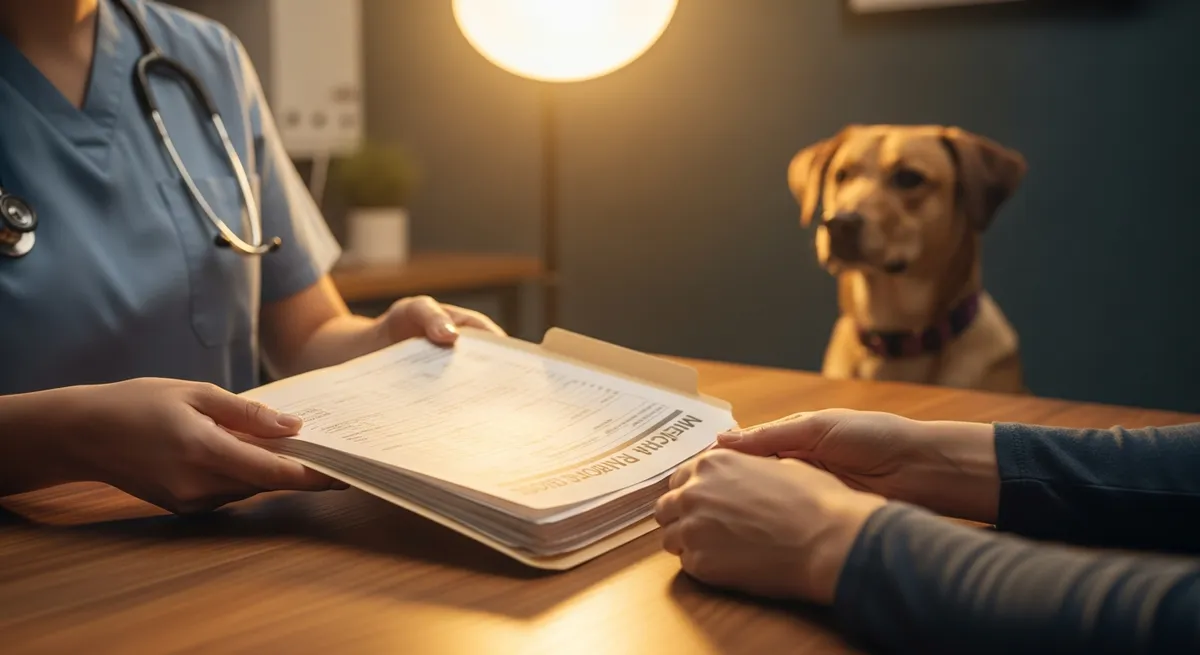
Yes — and any reputable shelter or rescue will offer this before you even ask. Vaccination records, spay or neuter status, microchip number, and any known medical history should all be available for the animal you're considering. If an organization refuses to share basic medical information, treat it as a serious red flag and walk away.
Here's exactly what records you should expect, why they matter, and what to do when an organization is reluctant to hand them over.
What "Medical Records" Should Actually Include
A complete medical packet at adoption typically contains:
- Vaccination history — dates and types of vaccines given (rabies, DAPP/DHPP for dogs, FVRCP for cats), with the next due dates
- Spay or neuter certificate — including the date of surgery and the vet who performed it (or a contract committing to spay/neuter for very young animals not yet old enough)
- Microchip number and registration paperwork — so you can transfer it to your name
- Parasite testing and treatment records — heartworm test results for dogs, FeLV/FIV for cats, intestinal parasite screens, and any treatment given
- Notes on any known medical conditions — allergies, chronic issues, current medications, previous surgeries or injuries
- Behavioral observations — particularly anything that could affect medical care (e.g., "muzzle required for nail trims," "anxious at vet visits")
- Vet clinic name and phone number — so your own vet can call for follow-up records or clarification
For dogs and cats coming out of long foster stays, you may also see dental records, cytology reports, x-rays, or ongoing treatment plans for chronic conditions. The more complete the packet, the better — but at minimum, vaccinations, spay/neuter status, and microchip info are non-negotiable.
Why These Records Matter
It's tempting to think "the shelter said she's healthy, that's enough." It's not. The medical packet is what you hand to your own vet at the first wellness visit, and it shapes the next year of care:
- Your vet uses the vaccine dates to schedule the next round and avoid double-vaccinating (which is wasteful and slightly risky).
- A documented spay/neuter saves you from an unnecessary surgical exam later.
- A previous heartworm-positive treatment changes how your vet monitors heart health going forward.
- A history of GI issues, skin allergies, or seizures gives your vet context for symptoms that show up months later.
- A microchip with no transferred registration is functionally useless if your pet ever gets lost — you need the paperwork to put it in your name.
Adopting a pet without records is like buying a used car without a maintenance log. You can do it, but you're flying blind on every decision afterward.
What's Reasonable for the Organization to Not Know
Sometimes "we don't know" is an honest answer, not a red flag. Shelters frequently take in:
- Stray animals with no prior history
- Animals from owners who surrendered with little or no information
- Animals from large-scale seizures (hoarding, puppy mills) where records don't exist
- Pets from rural transports where the source shelter had limited documentation
A good shelter will be upfront about what they *don't* know — "She came in as a stray, so we have no history before her intake exam on March 4" — while still providing complete documentation of everything they did *during* her time in their care. That's transparency. What's not okay is vagueness, contradictions, or refusal to share what they do have.
Specific Red Flags Around Medical Records
The following responses should make you reconsider:
- "We don't really do paperwork." A real organization documents medical care. They have to — for their own funding, vet partnerships, and license requirements.
- "We'll send the records after you take her home." Always get records before you sign and pay. They are part of what you're paying for.
- "She's up to date on everything, you don't need to worry about it." Vague reassurance is not a record. Ask for dates and the name of the administering vet.
- "Our records are confidential." Medical records on the animal you're adopting are not confidential from the adopter — you're about to become the legal owner.
- Records that don't match what you can see. If the records say she was spayed but the spay scar isn't visible, ask for clarification. If vaccine dates look copy-pasted across multiple animals, ask for the original vet invoices.
- The shelter can't tell you which clinic did the work. A reputable shelter has a regular vet partnership and will name the clinic without hesitation.
What to Do If You Suspect Records Are Incomplete or Inaccurate
Even at well-run shelters, mistakes happen. If something doesn't add up:
1. Ask for the originals. Most records are vet invoices, vaccination certificates, or surgical reports. Ask to see the originals (or scans of them), not just the shelter's internal summary.
2. Call the vet clinic directly. Once you have the clinic name, call to confirm the work was done and get a copy sent to your own vet. Reputable clinics will release records to the new owner with a quick verification.
3. Schedule a wellness exam in the first week. Your own vet can quickly confirm vaccination status (titers if needed), spay/neuter status (ultrasound or surgical exam if there's any doubt), and microchip registration. Bring all the records to that appointment.
4. Update the microchip immediately. Even a perfect record packet is useless if the microchip is still registered to the shelter or a previous owner. Transfer it to your name on the day you bring the pet home — see How to Update Your Pet's Microchip for the step-by-step.
What to Bring to Your First Vet Visit
When you take your newly adopted pet to your own vet for the first time, bring:
- All paperwork the shelter or rescue gave you
- The shelter or rescue's contact information (in case your vet needs to call)
- A list of any behaviors you've already noticed (eating, drinking, energy, GI, anxiety)
- Notes on what food the pet has been eating and on what schedule
- Questions about vaccine schedules, parasite prevention, dental care, and any specific conditions noted in the records
The first wellness visit establishes your pet's baseline with a vet who will see them for the next decade. Good records make that first visit far more useful.
The Bottom Line
Medical records are not optional and they are not a favor. A reputable shelter or rescue treats them as part of the adoption — handed over before you sign, with named vets you can verify, and clear documentation of what's known and what isn't. If an organization makes you feel pushy for asking, or stalls on producing records, that's the answer. Walk away and find an organization that operates with the transparency the pet deserves.
Frequently Asked Questions
What if the shelter says they'll send records "after I take the pet home"?
Politely insist on getting them before you sign and pay. Records are part of what you're adopting. A reasonable middle ground is to receive the full packet at the meet-and-greet or pickup appointment, but not later than the moment money changes hands. Once you've left with the pet, you have very little leverage to get records that may or may not actually exist.
Can I get a copy of the records sent directly to my vet?
Yes — and this is a great verification step. Ask the shelter for the vet clinic's name, then have your own vet's office request the records directly from that clinic. The records should match what the shelter gave you. If they don't, you have a real problem.
What if the pet's previous medical history is genuinely unknown?
That's okay, as long as the shelter is honest about it and provides complete documentation of what they did during the animal's time in their care. A pet with a clean intake exam, current vaccinations, spay/neuter, microchip, and parasite treatment from the shelter is in a perfectly good starting position even if their pre-shelter history is a blank page.
Should I expect to see x-rays, bloodwork, or other diagnostic tests?
Not by default for a young, healthy pet. These are usually only run when there's a clinical reason — a senior pet, a specific symptom, a chronic condition under management, or pre-surgical bloodwork before spay/neuter. If diagnostic tests *were* run, they should be in the packet. Don't assume their absence means something was hidden — most healthy intake exams don't generate x-rays.
My adopted pet has medical issues that weren't disclosed. What can I do?
Contact the shelter or rescue first — most will work with you, sometimes by covering vet bills, providing a partial refund, or offering to take the pet back if the issue is severe enough. If the rescue is uncooperative and you have evidence the issue existed before adoption, some states allow you to file a consumer complaint or pursue a refund through small claims court. The rescue's reputation in the adoption community is often a stronger lever than legal action — most reputable rescues will make it right rather than risk public review damage.
Related Articles
- How Do I Know If a Pet Rescue Is Legitimate?
- Pet Adoption Scams and Red Flags: How to Protect Yourself and Find a Legitimate Rescue
- Red Flags to Watch for When Adopting a Pet
- What Is the Difference Between an Animal Shelter and an Animal Rescue?
- Why Are Rescue Adoption Fees Higher Than Shelter Fees?
- The Advantages to Adopting a Pet in Foster