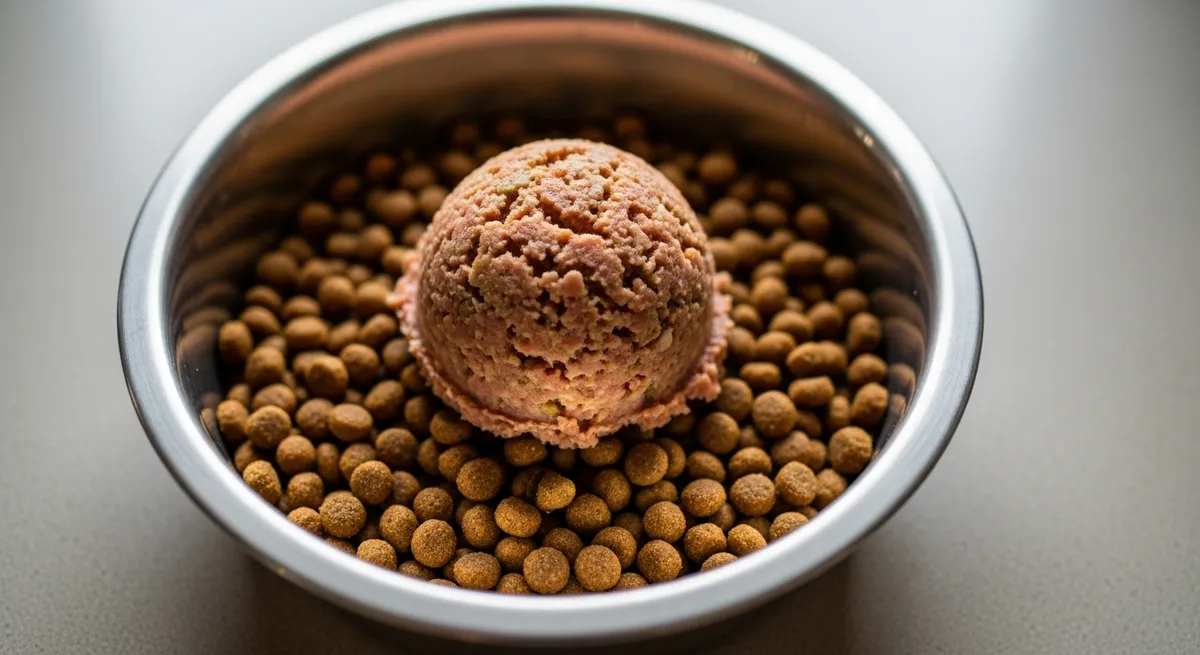
Calculate your pet's daily calorie target with help from the Pet Nutrition Alliance calorie calculator, then split that target between wet and dry food at your chosen ratio (50/50 is the most common starting point for healthy adults). Mix at meal time, refrigerate any leftover wet food within an hour, and recalculate every time you change the ratio so you don't accidentally double-feed. The single biggest mistake new owners make is *adding* wet food to the existing dry portion instead of replacing some of it.
Mixing wet and dry food is one of the most common and most underrated changes you can make to your dog or cat's diet. Done well, it captures the best of both formats — the hydration, palatability, and protein density of wet food, with the convenience, dental benefits, and cost efficiency of dry. Done poorly, it leads to overfeeding, GI upset, and an obese pet.
Why mix wet and dry at all?
Dry food (kibble) advantages:
- Cheaper per calorie. Often 1/3 to 1/2 the cost of wet food.
- Convenient to store, measure, and feed.
- Crunch may help slightly with dental tartar (though dental cleanings still matter).
- Long shelf life once opened (4–6 weeks).
- Easy for training treats and food puzzles.
Wet food (canned, pouch, fresh) advantages:
- 70–80% water content — major hydration boost, especially important for cats per the Cornell Feline Health Center and for any pet with kidney issues.
- More palatable for picky eaters and senior pets.
- Higher protein-to-carbohydrate ratio.
- Easier to chew for puppies, kittens, seniors, and pets with dental issues.
- Smell stimulates appetite for sick or recovering pets.
The math: how to combine without overfeeding
Most pet owners go wrong here. They keep feeding the same amount of dry food they were before and just add wet on top. The result is a 30–50% calorie increase, leading to weight gain over months.
The right approach:
1. Find your pet's daily calorie target. Your vet can give you this, or use the Pet Nutrition Alliance calorie calculator. Rough guide:
- Small dog (10–20 lbs): 250–400 kcal/day
- Medium dog (30–50 lbs): 600–900 kcal/day
- Large dog (60–100 lbs): 1,100–1,800 kcal/day
- Adult cat (10 lbs): 200–300 kcal/day
2. Read the calorie content on each food label. This is required information on every commercial pet food per AAFCO labeling rules. Look for "kcal/cup" on dry and "kcal/can" or "kcal/pouch" on wet.
3. Decide your wet/dry ratio. Common splits:
- 75% dry, 25% wet — budget-conscious, slight hydration boost.
- 50% dry, 50% wet — balanced, the most common recommendation.
- 25% dry, 75% wet — high hydration, common for cats and senior pets.
4. Calculate the actual amounts. If your dog needs 800 kcal/day and you want 50/50: 400 kcal from dry (about 1.15 cups if kibble is 350 kcal/cup) + 400 kcal from wet (2 cans if wet is 200 kcal/can).
5. Weigh, don't eyeball. A kitchen scale is more accurate than a scoop, especially for kibble where density varies.
When you change wet/dry ratios, recalculate. Adding wet food without removing dry is the single biggest cause of pet weight gain — a serious issue when over half of U.S. dogs and cats are now overweight or obese. For the broader budget picture of feeding a pet, see Can I Afford a Pet? Expenses You Should Know About.
Two common methods:
Mix in the bowl. Combine measured wet and measured dry in the same bowl. Works for most pets. The wet coats the kibble and increases palatability dramatically.
Layer or separate. Wet on one side, dry on the other. Useful for pets who pick out the wet and leave the dry.
For both, add 1–2 tablespoons of warm water to the wet food before serving to release more aroma. Don't add seasoning, oils, broth from the kitchen, or human food without checking with your vet — many human flavor additives (onion, garlic, certain spices, xylitol) are toxic to pets.
If your pet is currently on dry food only and you're adding wet for the first time, transition gradually over 7–10 days:
| Day | Old food | New mix |
|---|---|---|
| 1–2 | 90% | 10% |
| 3–4 | 75% | 25% |
| 5–6 | 50% | 50% |
| 7–8 | 25% | 75% |
| 9–10+ | 0% | 100% |
If at any point you see soft stool, gas, or vomiting, pause at that ratio for an extra 2–3 days. Senior pets and pets with chronic GI issues may need a 2–3 week transition.
For wet food: Refrigerate any unused portion immediately. Use opened wet food within 2–3 days. Don't leave wet food at room temperature longer than 1–2 hours. Warm refrigerated wet food slightly before serving.
For dry food: Store in the original bag, sealed, inside an airtight container — the original bag has a moisture barrier. Use within 4–6 weeks of opening for best nutritional value.
For mixed meals: Don't pre-mix and store. Mix at meal time, serve fresh.
Kittens and puppies: Wet food helps with hydration. Aim for 2/3 wet, 1/3 dry during the first 6 months, then transition. Feed 3–4 small meals per day.
Adult cats: Cats are biologically less inclined to drink water than dogs. Many feline veterinarians recommend at least 50% wet for adult cats — more if there's any hint of urinary or kidney issues. See the Cornell Feline Nutrition Center.
Senior pets: Dental issues often make crunchy kibble painful. Increase wet ratio, or soften kibble with warm water for 5–10 minutes.
Pets with medical conditions: Kidney disease, urinary issues, diabetes, IBD, allergies — talk to your vet before changing your pet's wet/dry ratio. See are shelter animals healthy? for more on chronic condition management in adopted pets.
- Free-feeding wet food. Wet food spoils. Always meal-feed wet. (In multi-pet households, see feeding multiple pets without chaos for how to keep separate diets straight at meal time.)
- Not adjusting kibble amount when adding wet. Leads to obesity over months.
- Using "topper" portions as treats on top of full meals. A "tablespoon" of wet topper is often 30–60 calories.
- Suddenly switching brands. Always transition gradually. (For other rookie pet-care pitfalls, see common mistakes new pet owners make (and how to avoid them).)
- Not checking the calorie label. Two wet foods with similar can sizes can differ by 50% in calorie density.
Frequently asked questions
Can I mix wet and dry food at every meal?
Yes. Many cats and dogs do best on mixed meals every day. Just calculate the calories so you don't overfeed.
Should I refrigerate the leftover from a can of wet food?
Yes, immediately. Cover the can or transfer to an airtight container and use within 2–3 days.
Is mixing wet and dry better than feeding just one?
For most healthy adult pets, mixing is the best of both worlds — better hydration than dry alone, lower cost than wet alone, and higher palatability than either format on its own.
Can I add water to dry food instead of using wet food?
Yes. Soaking kibble in warm water for 5–10 minutes boosts hydration and softens it for senior pets. It's not a complete substitute for wet food (no extra protein, no aroma boost), but it helps.
My pet eats only the wet and leaves the dry. What do I do?
Reduce the wet portion. Many pets prefer wet but will eat dry when there's not enough wet to fill them up.
Does mixing wet and dry food cause diarrhea?
Not when done gradually. Sudden additions can cause GI upset for a few days. Transition over 7–10 days and most pets adjust easily.
Should kittens and puppies eat wet food?
Yes. Wet food is especially valuable in early life for hydration and easier chewing.
How PawMates Pro supports your pet's nutrition from day one
Every pet on PawMates Pro has their current diet — brand, format, schedule — published on their profile by the partner shelter. That lets you continue the same food during the critical first 1–2 weeks of decompression (the worst time to introduce a diet change) and transition gradually if you want to switch. The compatibility score also factors special dietary needs (allergies, prescription diets, GI sensitivities) against your willingness to manage them.
Keep reading: feeding, health, and behavior basics
Mixing wet and dry food is part of the broader cost-of-care and welfare picture for adopted pets.