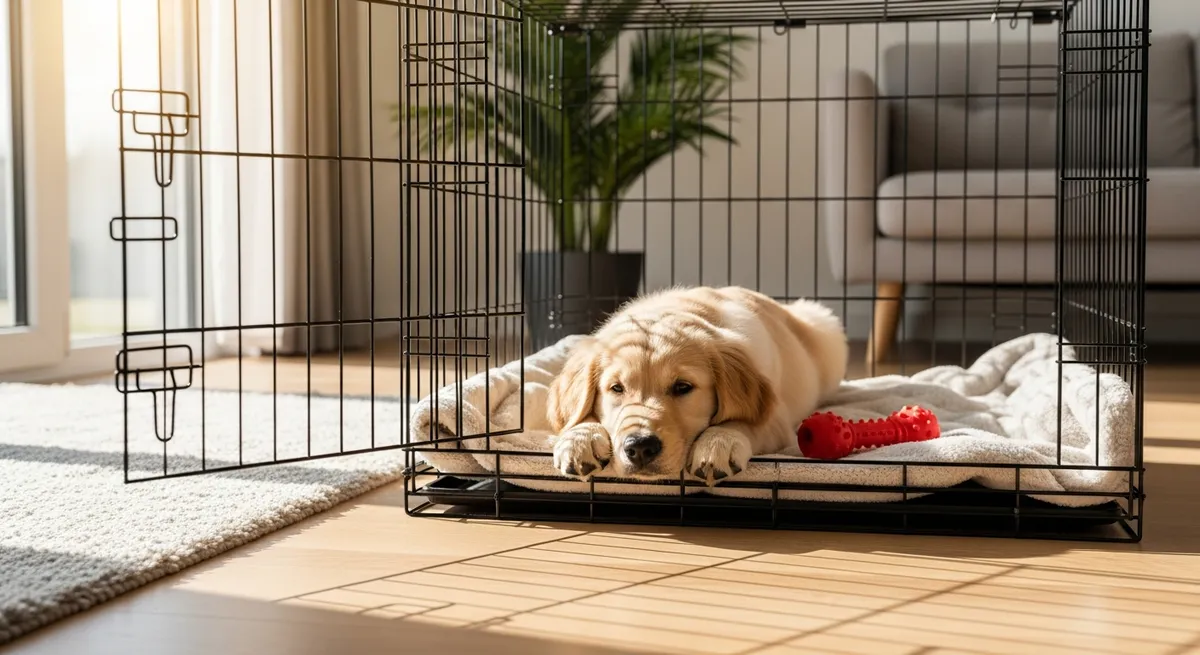
Crate training is one of the most misunderstood parts of bringing home an adopted dog. Done right, the crate becomes the dog's favorite room in the house — a calm, predictable space that speeds up house training, prevents destructive chewing, and gives a freshly adopted dog the decompression they need. Done wrong, the crate becomes a punishment box that creates lifelong anxiety around confinement.
The difference is almost entirely in the first two weeks.
Below is the field-tested do's and don'ts list, the same one many shelter staff hand to adopters at pickup, plus a step-by-step introduction plan for newly adopted dogs.
Why crate training works (the short version)
Dogs are *resting* animals far more than they are active animals — adult dogs sleep 12–14 hours a day. In the wild, that rest happens in small, enclosed spaces with one entrance. A crate replicates exactly that environment: dim, soft, defensible, and predictable. When a dog has consistent positive associations with the crate, they will choose it on their own — for naps, during thunderstorms, when guests overstimulate them, when the kids get loud.
A dog who never learned to be alone in a crate is also a dog who has never learned to be calm without you in the room. That single skill — settling alone — is the foundation for everything from house training to vet visits to safe car travel to surviving a future hospitalization. Skip it and you raise a dog who panics every time you leave the room.
The do's
- Do size the crate correctly. The dog should be able to stand up without ducking, turn around without contorting, and lie down fully stretched. Too big and they'll soil one corner and sleep in the other; too small and it becomes punishment. For puppies who'll grow, buy adult-size with a divider panel.
- Do feed every meal in the crate for the first two weeks. This is the single fastest way to build a positive association. The crate becomes the place where good things happen.
- Do put the crate in a *social* room. New adopters often stick the crate in a basement or laundry room "so the dog isn't disturbed." The opposite is what helps. A freshly adopted dog who can see and hear the family while resting acclimates faster. Move it to the bedroom at night for the first month.
- Do use a soft, washable bed and one safe chew. A frozen Kong, a Toppl, or a hard rubber chew. Keep one chew item exclusive to crate time so it has scarcity value.
- Do let them out on a schedule, not on demand. If you only open the door when they whine, you've taught them whining works. Open the door when they're *quiet*, even if it's only for two seconds of quiet.
- Do leave the door open during the day after week two. Once the crate is positive, leave the door propped. Many dogs will start using it as their go-to nap spot within a month.
The don'ts
- Don't use the crate for punishment. Ever. The crate is the safe room. The moment you angrily say "go to your crate!" after a chewed shoe, you have poisoned the only place the dog could decompress. House the dog elsewhere when angry; manage the environment so chewing isn't possible.
- Don't ignore prolonged whining the first three nights. Some whining is normal; sustained, escalating, panicked whining is not. A new adopted dog whining at 2 a.m. on night two is a dog asking whether they were just abandoned again. Quietly drop a hand near the crate or move the crate next to your bed. (See why your dog won't sleep the first few nights for the full first-week sleep protocol.)
- Don't crate longer than the dog can hold it. Adult dogs can typically hold their bladder 6–8 hours; puppies should not be crated longer than (their age in months + 1) hours. A 3-month-old puppy crated for 8 hours while you work will soil the crate and lose the house-training thread for weeks.
- Don't use a wire crate without covering it for anxious dogs. Many anxious or shelter-traumatized dogs settle far faster in a covered crate or a plastic airline-style crate. The cave effect is the whole point.
- Don't crate a dog who has shown signs of true confinement panic. A dog who breaks teeth, bloodies paws, or rips out toenails trying to escape the crate is not a "stubborn" dog — they have a separation- or confinement-related panic disorder, and continued crating will deepen the trauma. This is a "call a credentialed trainer or veterinary behaviorist" situation; see when to call a trainer vs. handle it yourself.
- Don't free-feed in the crate. Meal-feeding only. Food sitting in the crate all day removes the positive association and creates a soiling problem.
The 7-day crate introduction plan for an adopted dog
This assumes a dog with no prior crate trauma. If your shelter told you the dog has crate issues, slow this plan down by half and consult a trainer.
- Day 1–2: Crate door propped open in the living room. Toss treats inside throughout the day. Feed both meals inside with the door open. Dog comes and goes freely.
- Day 3–4: Continue meal-feeding. After the dog walks in for breakfast, gently close the door for 30 seconds while they eat, then open it. Repeat at dinner with 60 seconds.
- Day 5: Close the door for 5 minutes while you stay in the room reading. Open before they fuss. Repeat 3x.
- Day 6: Close the door for 10 minutes and leave the room briefly (1–2 minutes). Return calmly without fanfare.
- Day 7: Test 30 minutes alone in the house. Leave a frozen Kong. Set up a phone or camera so you can see how they actually do — many dogs who whine briefly settle within five minutes.
By week two, most dogs will go in voluntarily for naps. Week three, they're asking to go in. Week four, the crate door stays open and the crate is "their room."
For freshly adopted dogs specifically
Crate training pairs naturally with the 3-3-3 rule for shelter pets — three days to decompress, three weeks to settle, three months to feel at home. The first three days, the crate is mostly a safe retreat with the door open. By week three, you're working the structured 7-day plan. By month three, the crate is part of the dog's normal rhythm.
If you're filling out an adoption application for a dog who'll need crate training, the training plan field on the PawMates Pro Adopter Profile is one of the things shelter staff actually read. "I'll crate-train using positive reinforcement, feed all meals in the crate for the first two weeks, and never use the crate for punishment" is a 30-second sentence that signals you've done your homework. It often makes the difference between a quick approval and another round of follow-up questions.
Frequently asked questions
*How long can I leave my newly adopted dog in a crate?*
Adult dogs (over 1 year) with crate experience: up to 6–8 hours during the workday, with a midday break ideal. Newly adopted adult dogs in their first two weeks: build up gradually from 30 minutes. Puppies: their age in months plus one hour, capped at 5 hours.
*Should I crate my dog at night forever?*
No. Most well-adjusted adult dogs eventually sleep on a dog bed in the bedroom and don't need a crate at night. The crate is a transition tool for the first months, then becomes optional.
*My dog won't stop barking in the crate. What do I do?*
First: are you releasing them when they bark? Stop. Wait for two seconds of silence, then release. Second: is the crate in an isolated room? Move it next to where you sleep. Third: is the dog crated too long? Cut the duration in half and rebuild.
*Can I crate-train an older or senior adopted dog?*
Yes. The plan is the same; you just go slower (10–14 days instead of 7). Senior dogs often love crates because the world is finally quiet and predictable.
For the broader behavior context once your dog is settled in, see the most common behavior issues after adoption and how to fix jumping, barking, and chewing fast. For first-week setup, the first 7 days after adopting a pet: what to expect is the right companion read.